Designing for Eternity, Not for the Moment
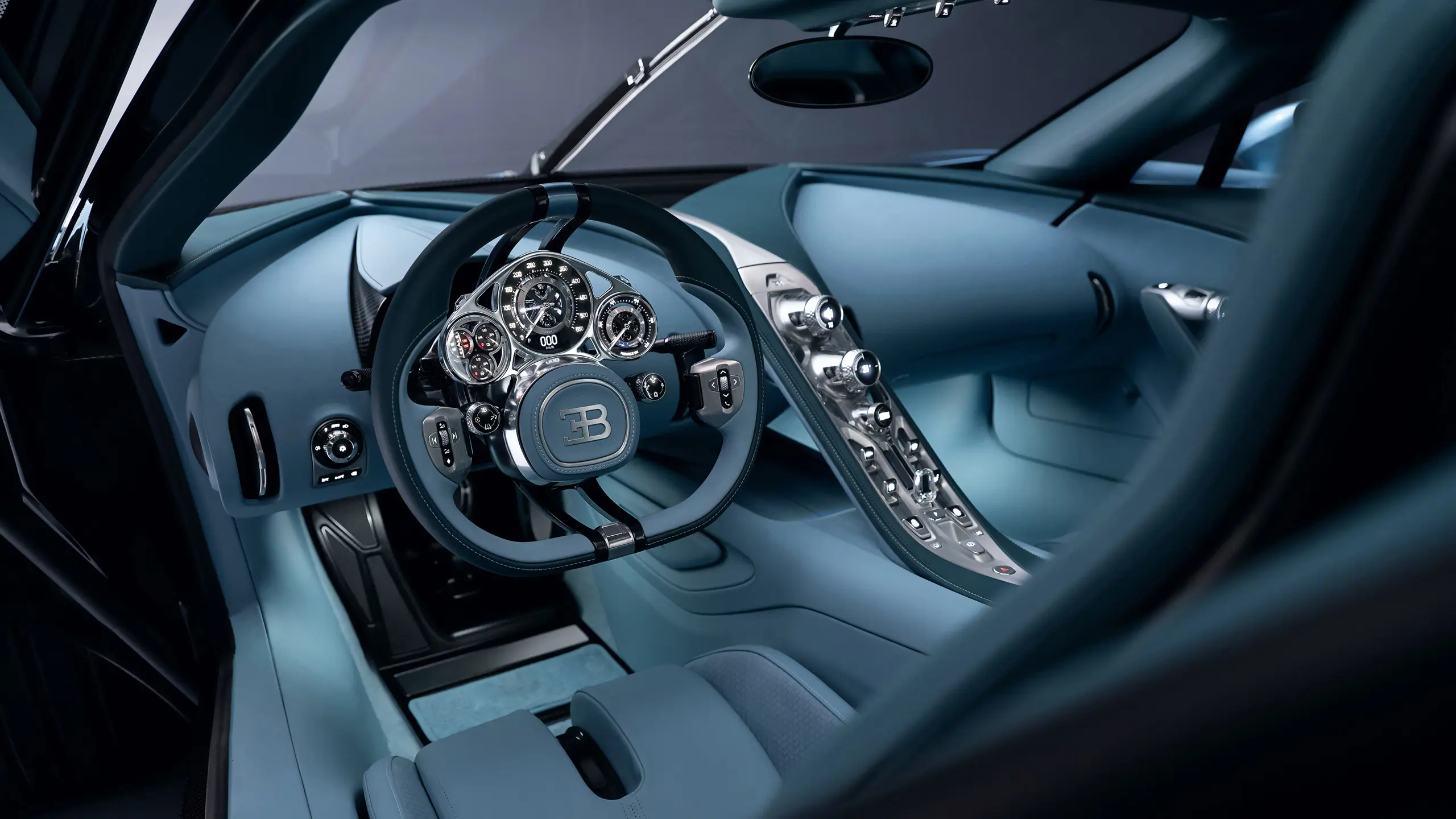
For Bugatti, design has never been about novelty. Across 116 years, the marque has pursued a far more demanding objective: timelessness. Each new model is expected not only to define its era, but to transcend it, to remain relevant, desirable and emotionally resonant decades into the future. Nowhere is that challenge more profound than inside the cabin. With the Tourbillon, Bugatti entered a new chapter, and the responsibility of shaping its interior fell to a design team acutely aware of the weight of history. As Chief Interior Designer Ignacio Martinez explains, the task extends far beyond form and material selection. It is about developing a coherent user sequence, one that feels intuitive, authentic and unmistakably Bugatti, from the first sketch to production reality. The Tourbillon’s interior is conceived not as a digital showcase, nor as a minimalist exercise, but as an enduring environment. One that reflects Bugatti’s lineage while resisting the pull of short-lived trends. In an era dominated by screens and software, the Tourbillon deliberately steps back, choosing permanence over immediacy, and mechanical beauty over digital excess.
Architecture of Heritage and “Car Couture”
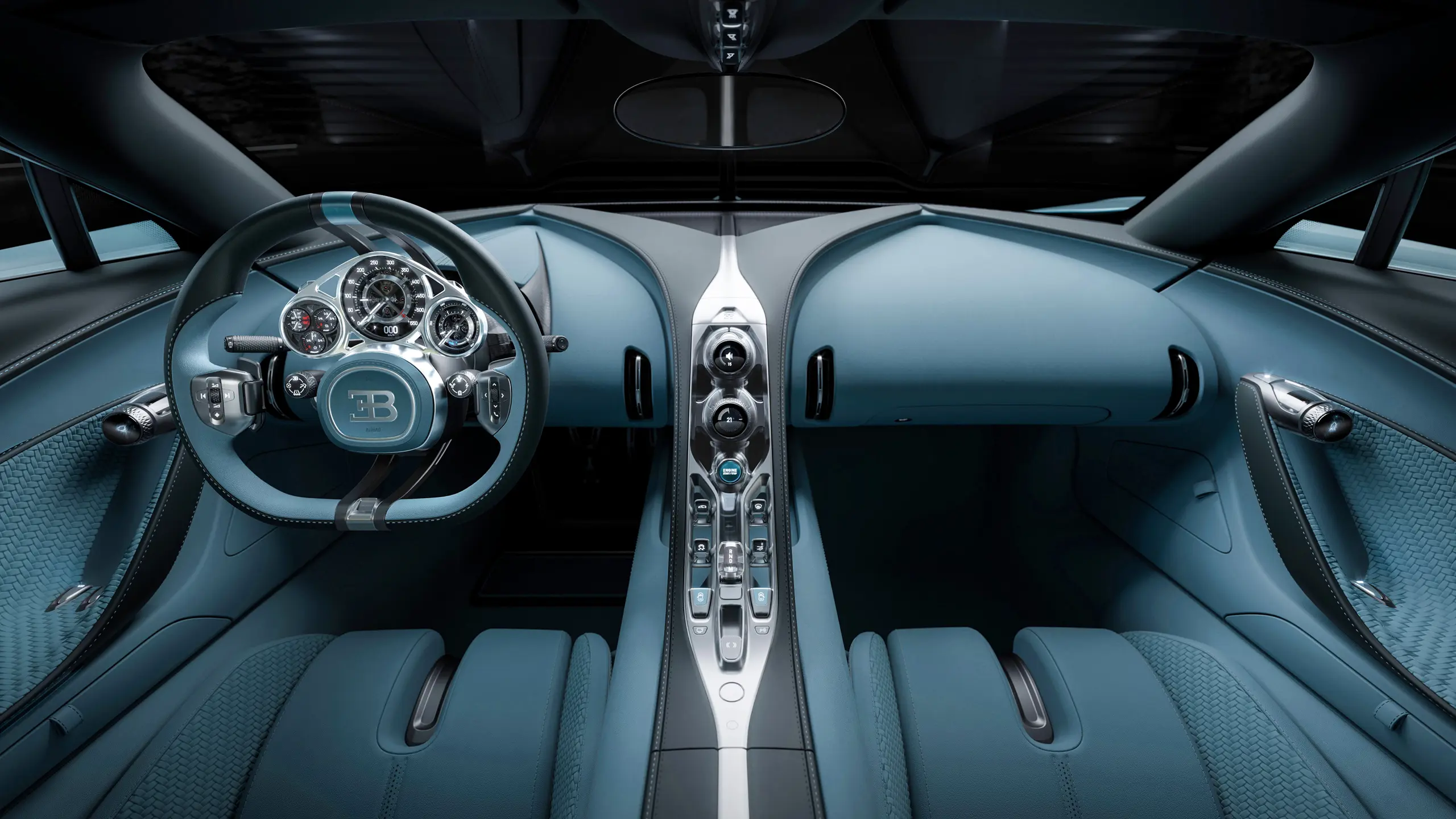
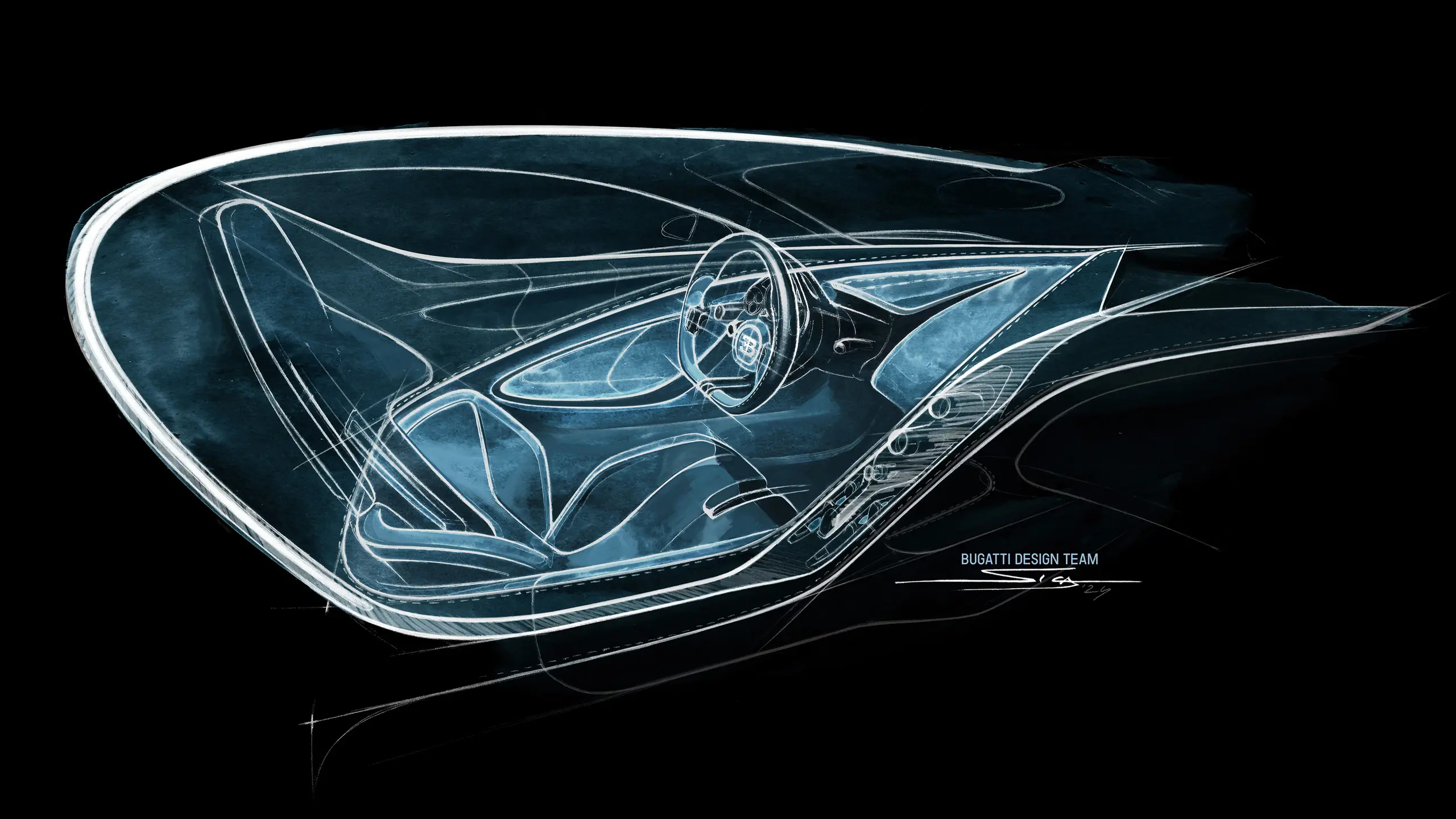
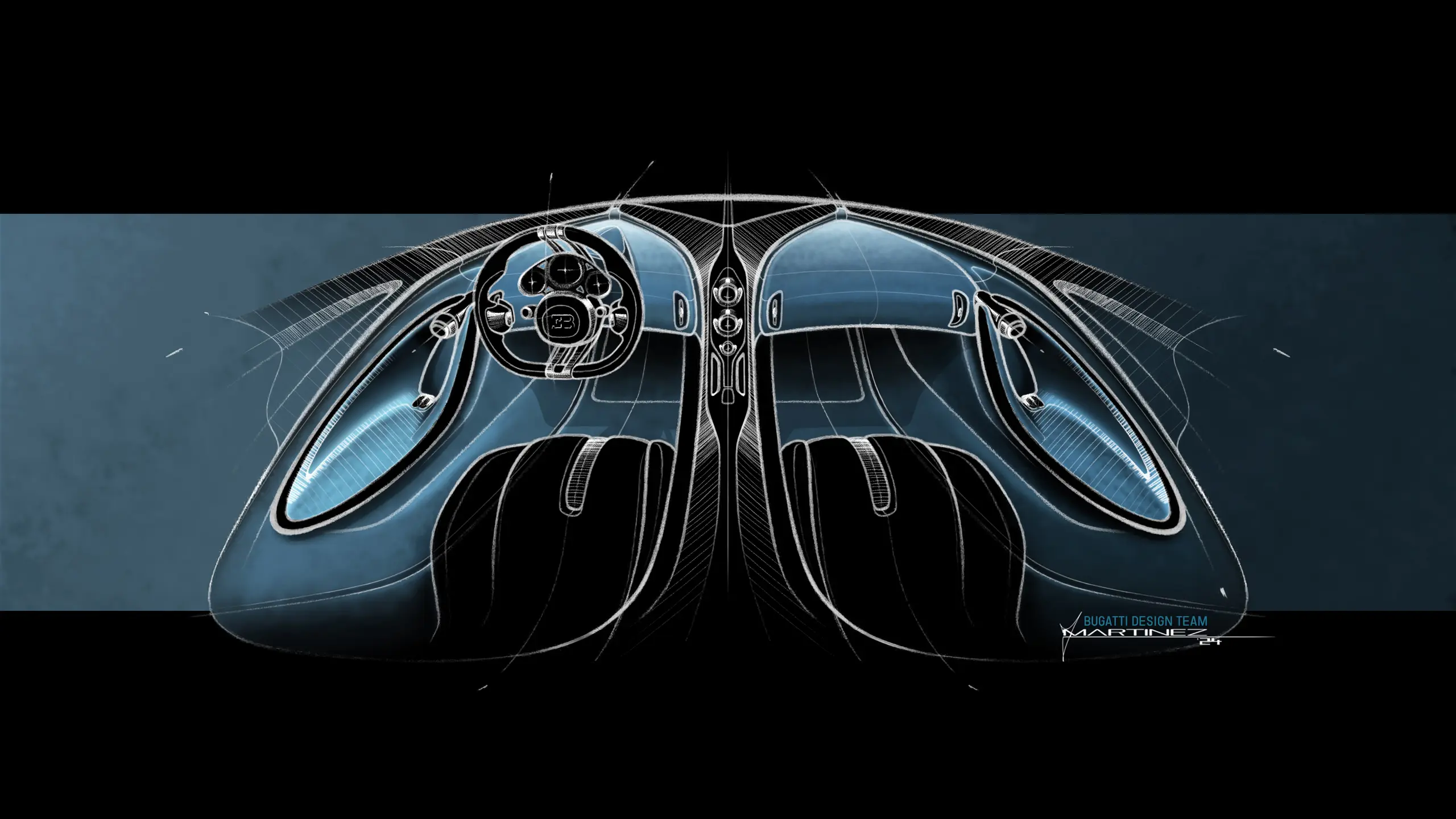
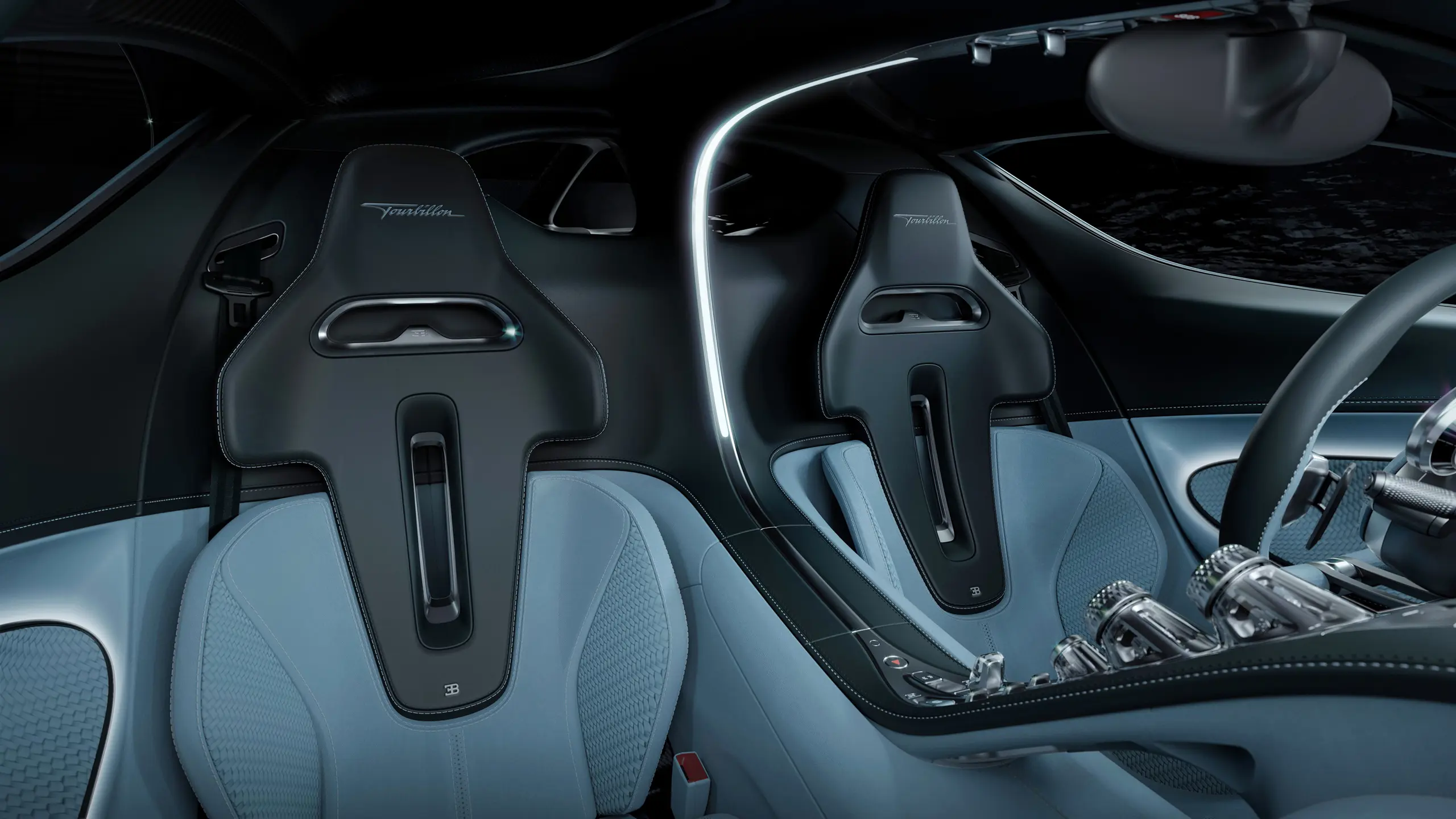
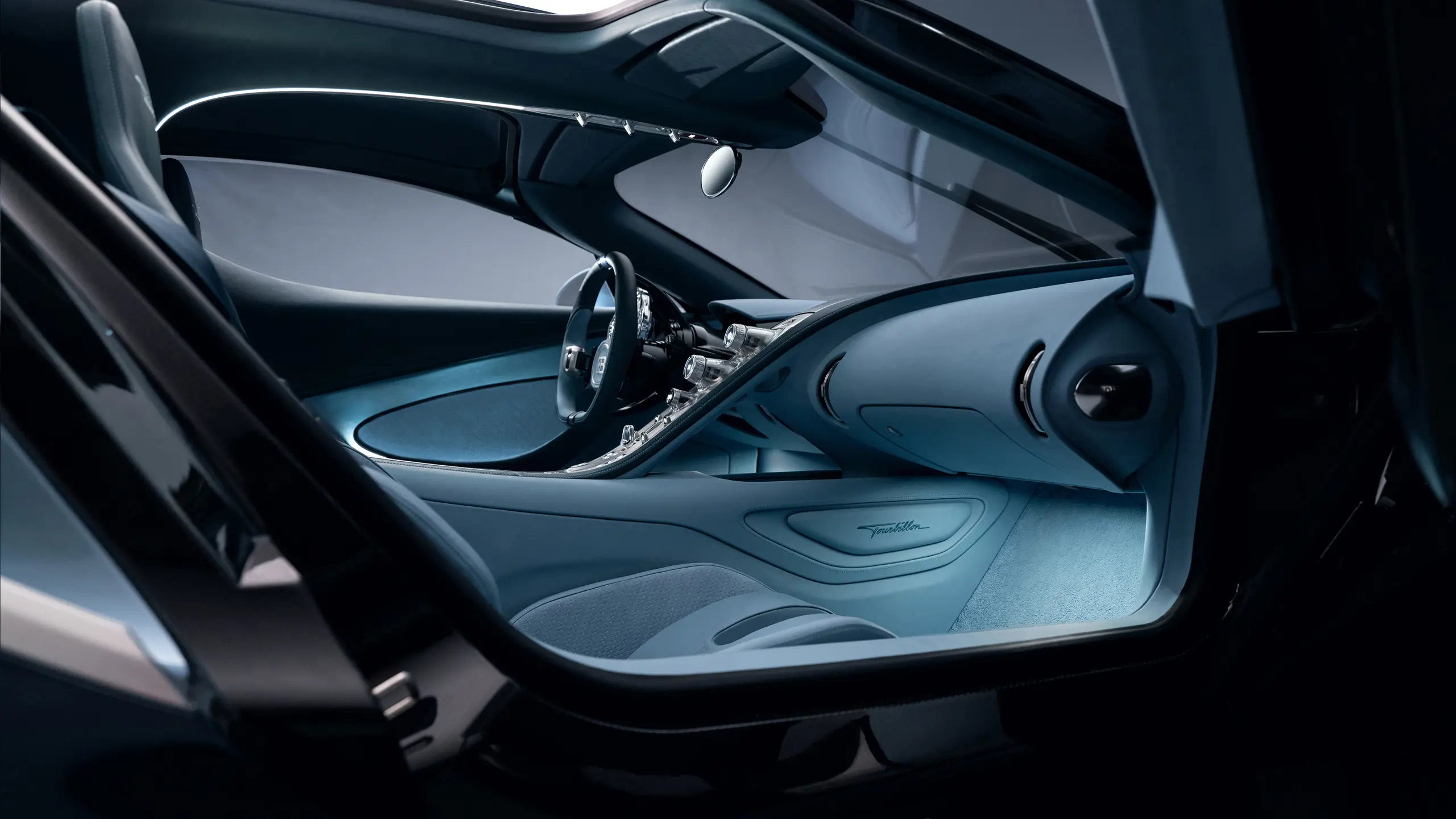
Tracing a direct line through Bugatti’s most revered creations, the Tourbillon’s cabin immerses its occupants in a space shaped equally by heritage and craftsmanship. Familiar design cues are not simply repeated, but reinterpreted with precision and restraint. The marque’s iconic center line and C-line, long defining Bugatti’s exterior identity, now converge within the cockpit. The result is a sculptural interior architecture that subtly divides the cabin into two distinct yet harmonious zones, one for the driver, one for the passenger. This central spine mirrors the exterior’s visual balance, reinforcing a sense of symmetry and purpose. Materiality plays a defining role. Beyond the traditional horizontal color split, Bugatti has expanded its interior palette with newly developed, tailor-made fabrics for seats and door panels. These sit alongside exceptionally supple leather, selected not only for tactile richness but for longevity. The approach, described internally as “car couture,” draws inspiration from Haute Couture, translating bespoke tailoring, layering and texture into the automotive realm. Yet beauty alone is not enough. Every aesthetic decision is balanced against the uncompromising demands of engineering. Airbags, seatbelt geometry, crash performance and occupant safety all impose constraints that must be seamlessly integrated. As Martinez notes, the Tourbillon is not a static concept; it is a road car, engineered for real-world use. The success of the interior lies in how invisibly these requirements are absorbed into the design, preserving purity without sacrificing function.
Analogue by Intention, Mechanical by Nature
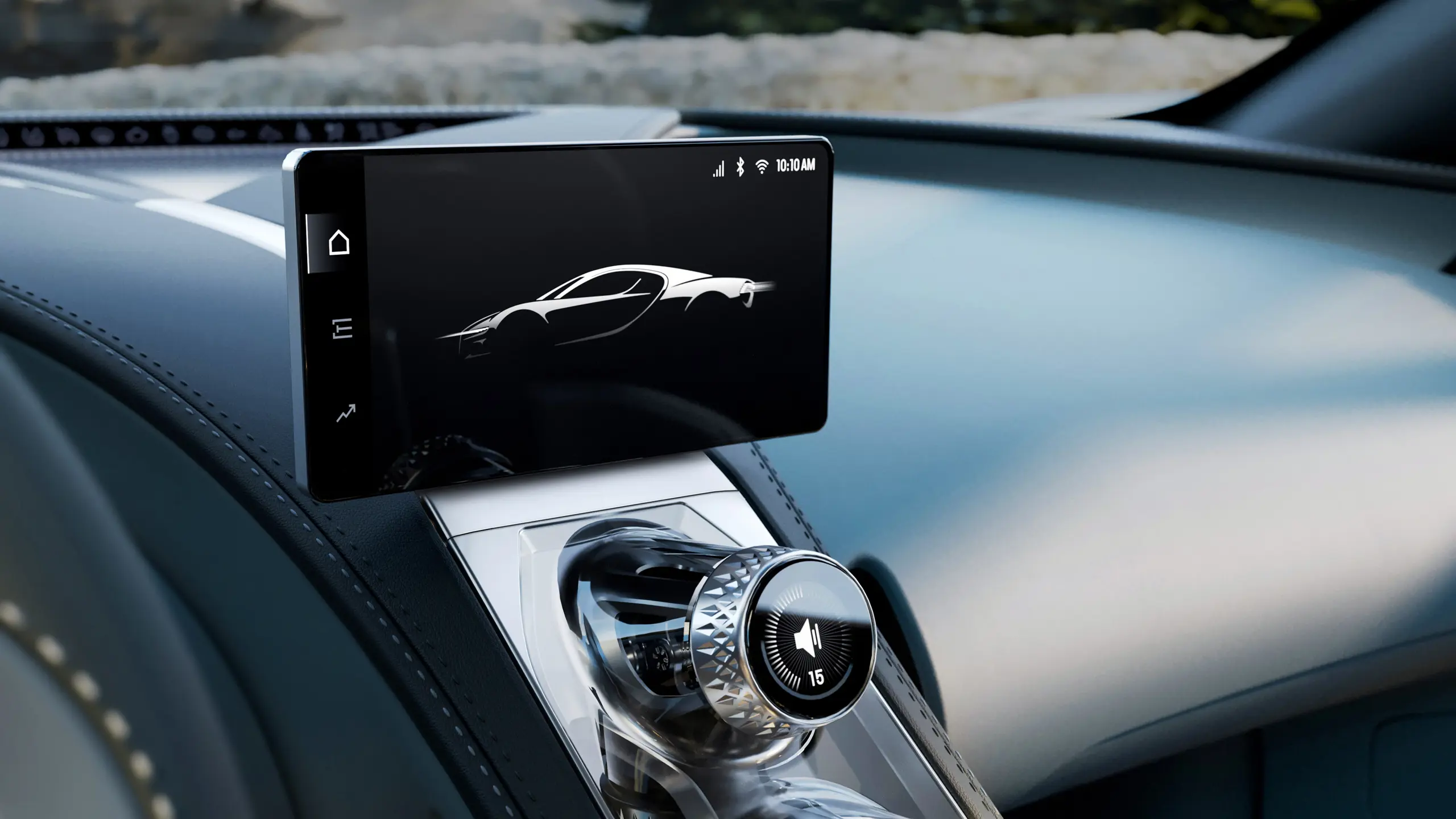
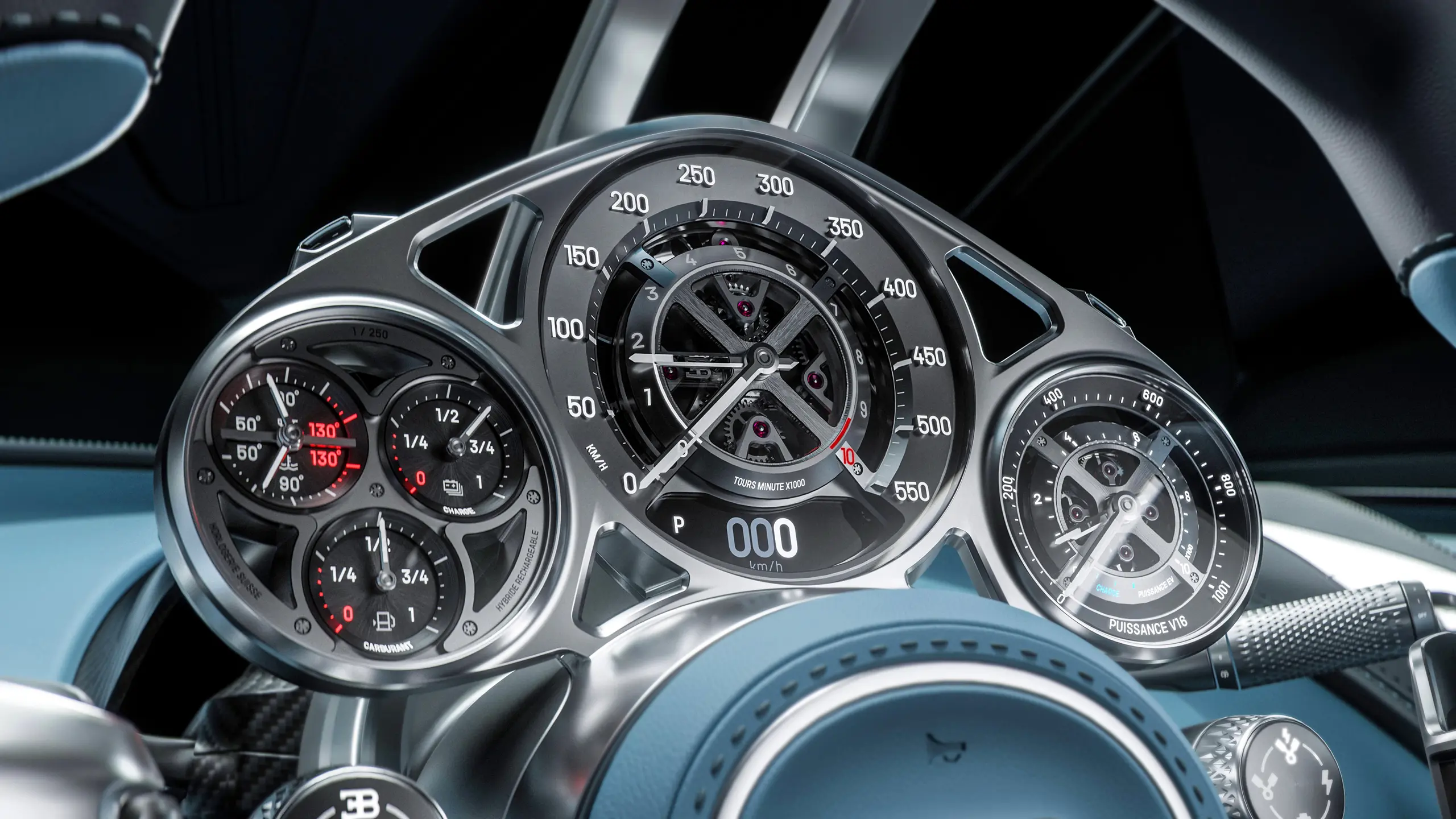
At the philosophical heart of the Tourbillon lies its name, borrowed from one of watchmaking’s most significant inventions of the early 19th century. Like its horological namesake, the Tourbillon is guided by a singular idea: the pursuit of timeless precision. For Bugatti Design Director Frank Heyl, that principle demanded a bold decision. In a digital age, the Tourbillon would embrace analogue technology. Not as nostalgia, but as a form of digital detox, a conscious rejection of interfaces destined to age faster than the car itself. Digital real estate is minimized, simplified and, crucially, hidden. The central display remains concealed within the dashboard until summoned, allowing the cabin to exist free of visual clutter. In its place, physical controls take precedence, engineered with exceptional attention to resistance, travel and haptic feedback. Every interaction is deliberate, tactile and deeply satisfying. This philosophy culminates in the Tourbillon’s most evocative elements: the steering wheel and instrument cluster. The fixed-hub steering wheel is a mechanical statement in itself, integrating controls and paddle shifters into a seamless rim that rotates around a stationary central airbag, a feat of engineering that is as functional as it is symbolic. Behind it sits the fully analogue instrument cluster, a masterpiece of mechanical design. Developed in collaboration with master watchmakers in Switzerland, each gear, spring and mechanism reflects the finest traditions of horology. Skeletonized dials, milled aluminum housings and crystal-enclosed displays echo the refined mechanical clarity of early 20th-century Bugatti models, where form followed function with unwavering discipline.

Simplicity as the Ultimate Luxury
What emerges from the Tourbillon’s interior is not opulence in the conventional sense, but clarity. A sense of calm born from precision, balance and confidence. This simplicity is not accidental; it is the product of deep design intelligence, guided by decades of Bugatti philosophy. Just as fine mechanical watches are passed down through generations, Bugatti envisions its cars as enduring objects, immune to fashion, grounded in craft, and defined by character rather than technology cycles. The Tourbillon’s cabin embodies this belief, offering an experience that rewards familiarity over time, revealing new details with every journey. By choosing analogue purity in a digital world, Bugatti has not stepped backwards. It has instead reaffirmed its position as a brand that designs beyond the present, crafting interiors not for the next update, but for the next generation. In the Tourbillon, the cabin is more than a place to sit. It is a manifesto, quietly stating that true luxury does not shout, does not age, and does not compromise.