A Story Fifteen Years in the Making
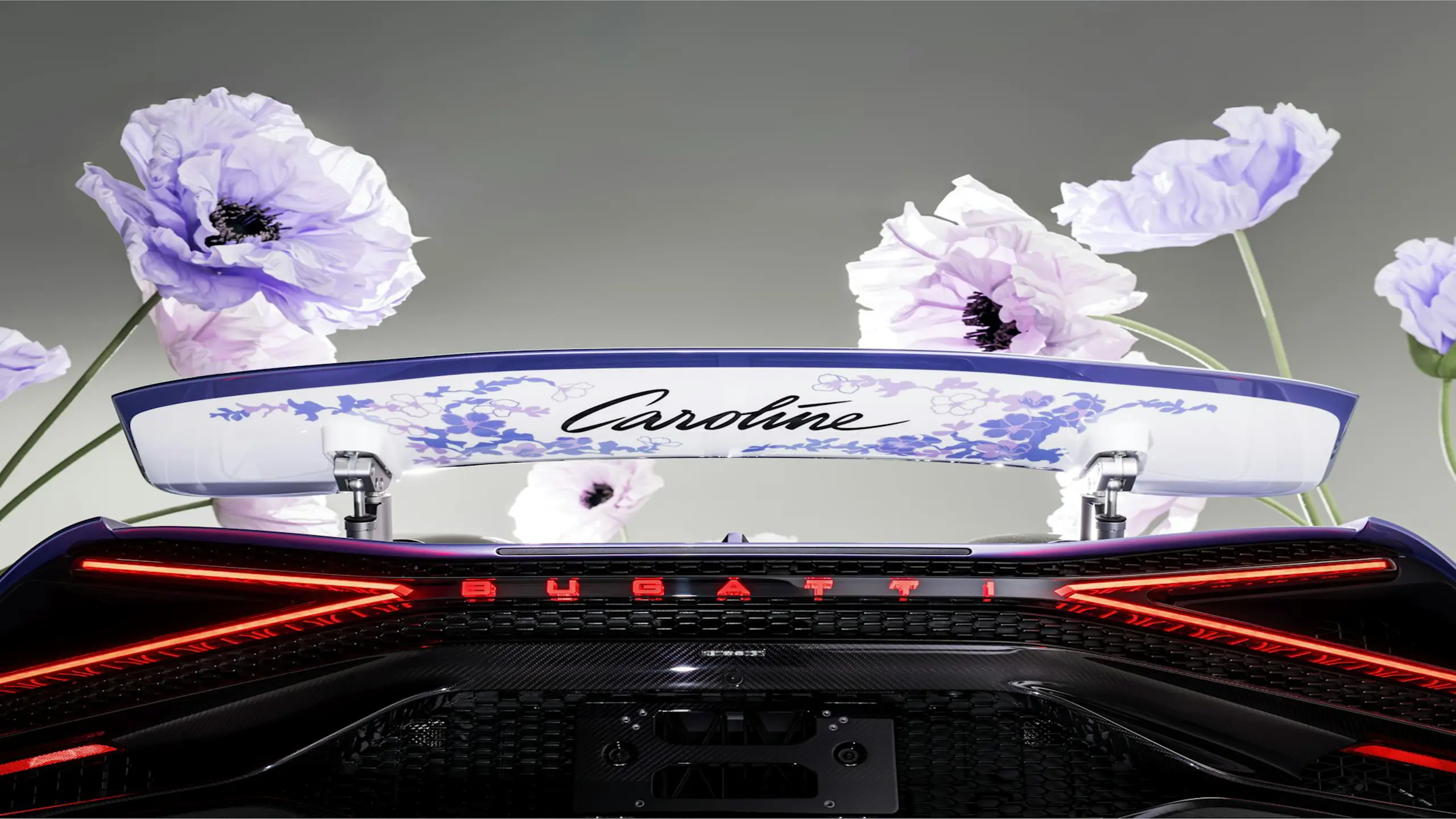
Some collaborations exist in a single moment. Others span decades, deepening with each return. The relationship between Bugatti and Königliche Porzellan-Manufaktur Berlin, KPM, belongs firmly to the second kind. Fifteen years ago, the two houses united to create 'L'Or Blanc', a porcelain-inspired interpretation of the Veyron Grand Sport that became one of the earliest and most celebrated expressions of Bugatti's individualization philosophy. That car drew its visual language from a KPM vase designed by Enzo Mari, white porcelain animated by flowing blue lines, their apparent simplicity concealing an extraordinary confidence of execution. Bugatti's designers, led by Frank Heyl, translated that same graphic purity onto the Veyron's sculptural surfaces by hand, tracing lines of light across the bodywork to reveal and celebrate the car's form. Now, at the closing of the W16 era, Bugatti and KPM return. 'Blanc Éternel' is not a recreation of what came before, but a considered answer to it, a commission that honors the origin of the story while expressing how profoundly the art of designing a Bugatti has evolved in the fifteen years that separate them.
The Digital Made Visible, the Invisible Made Physical
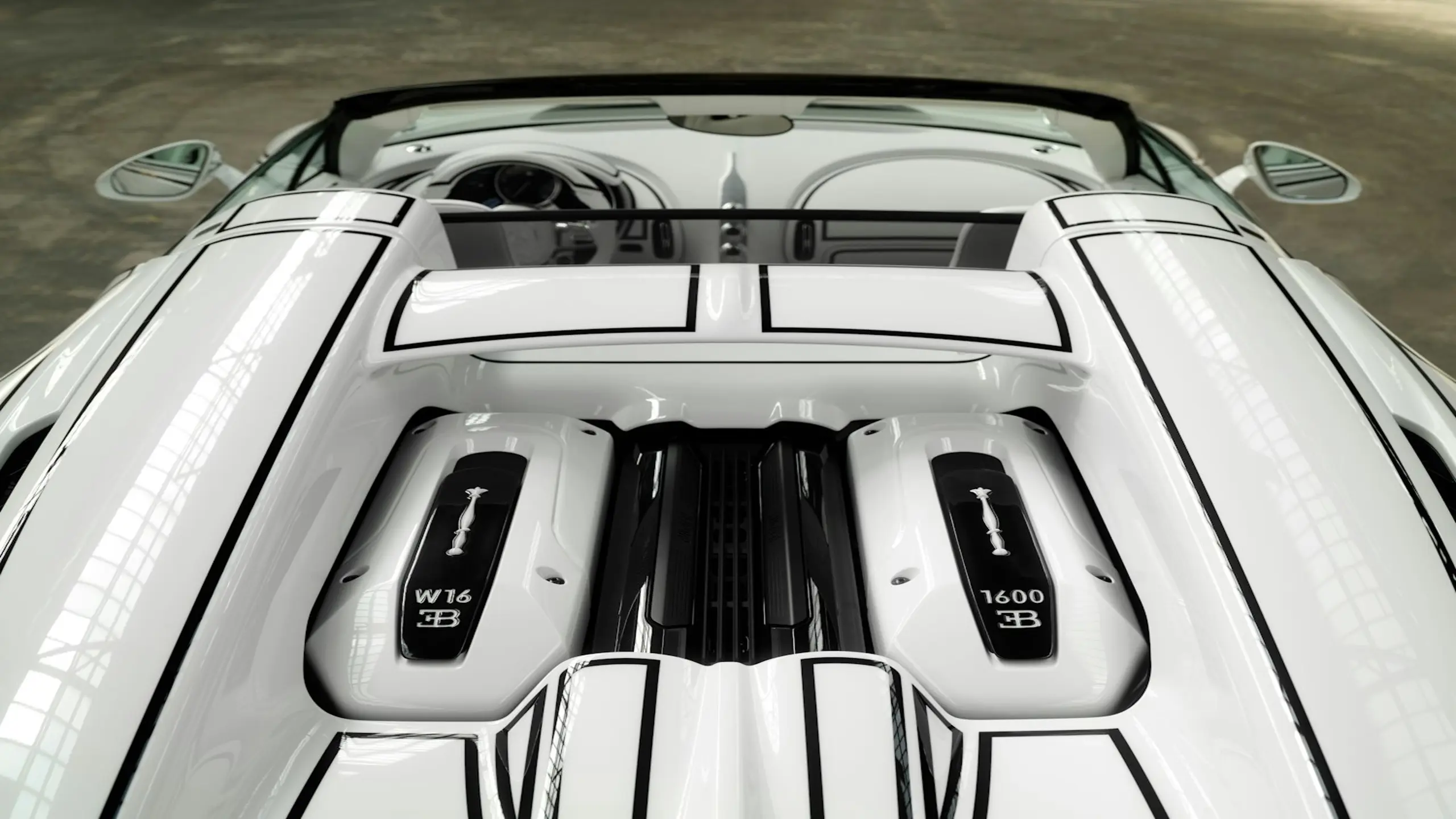
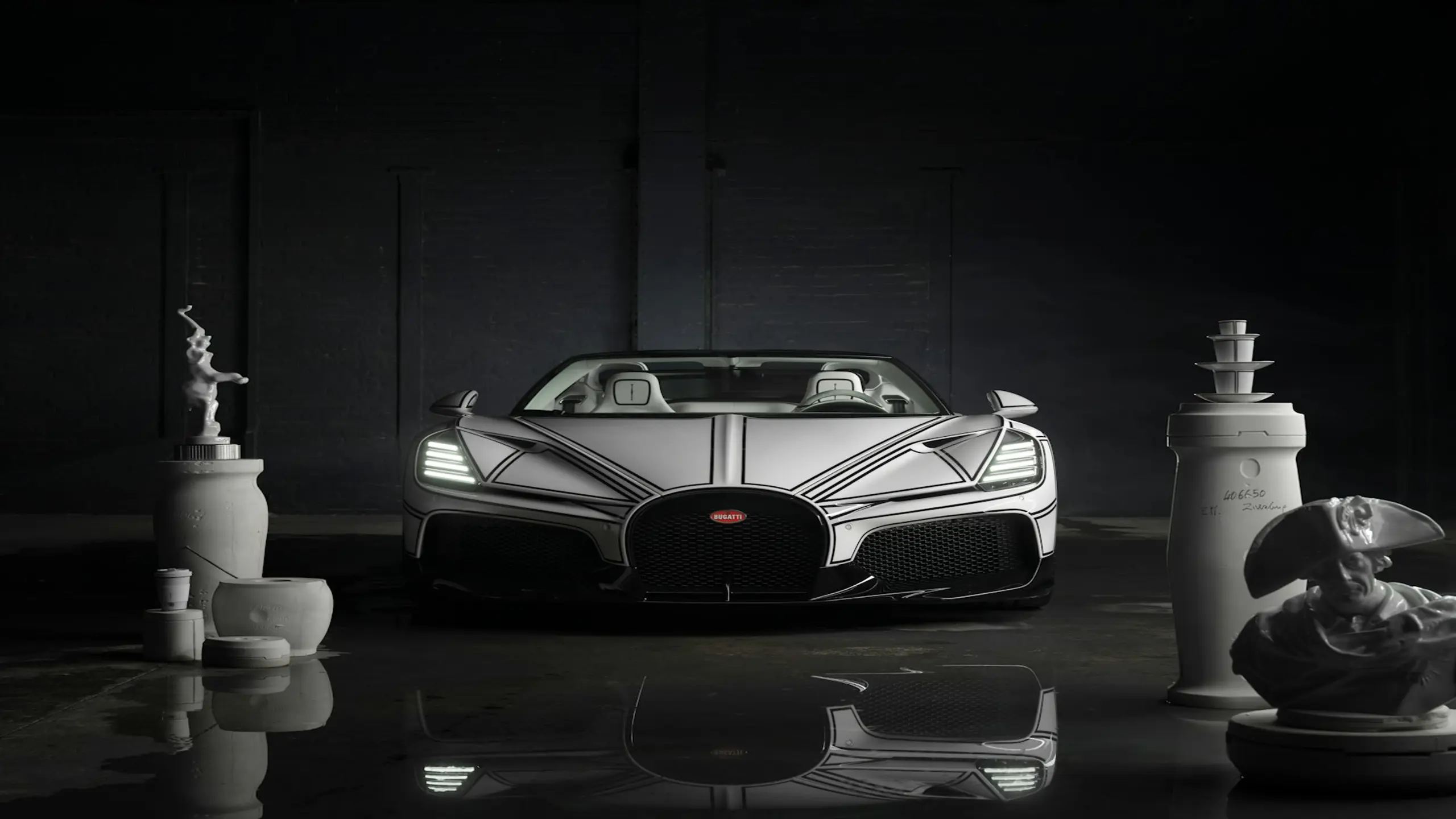
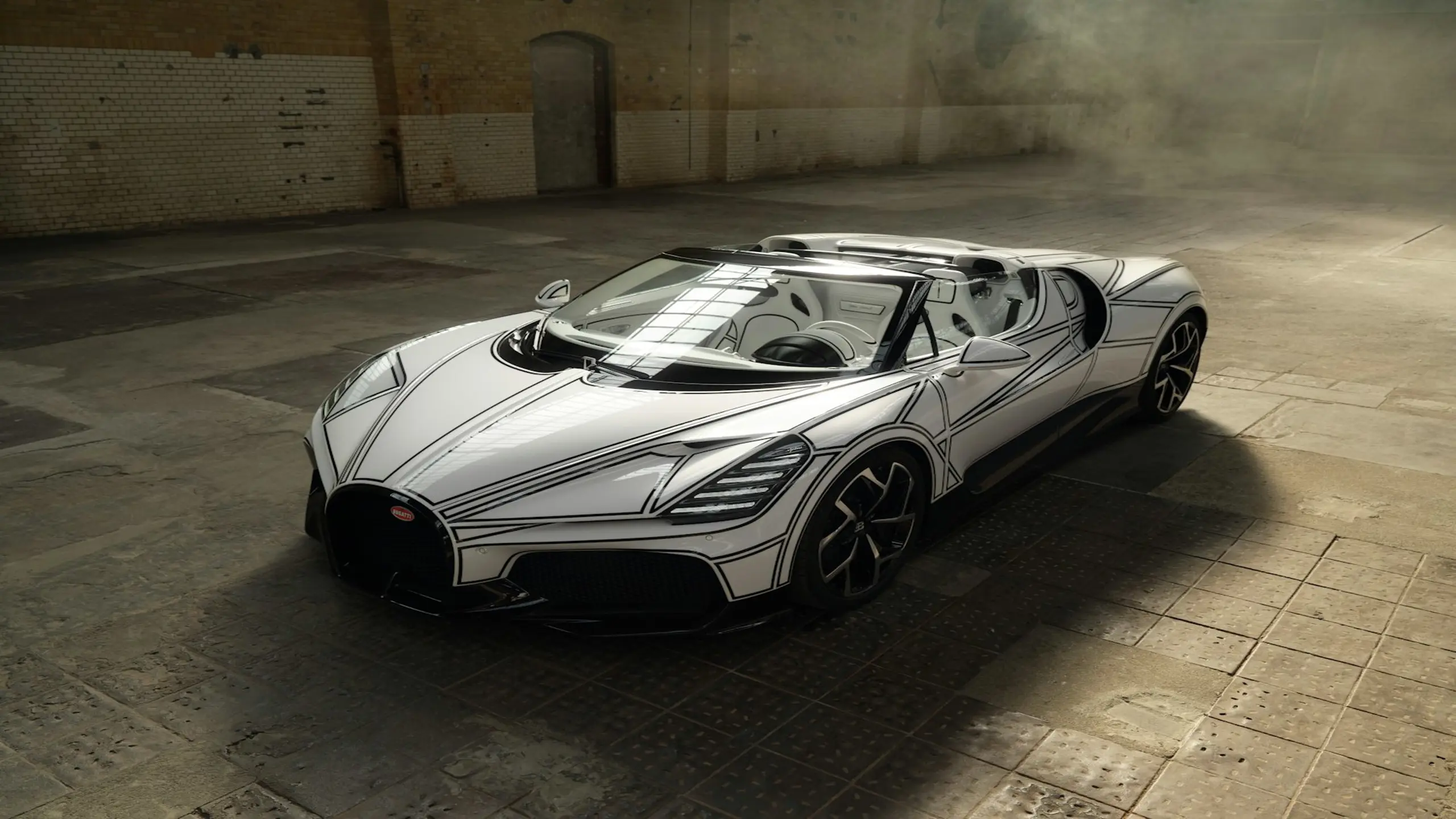
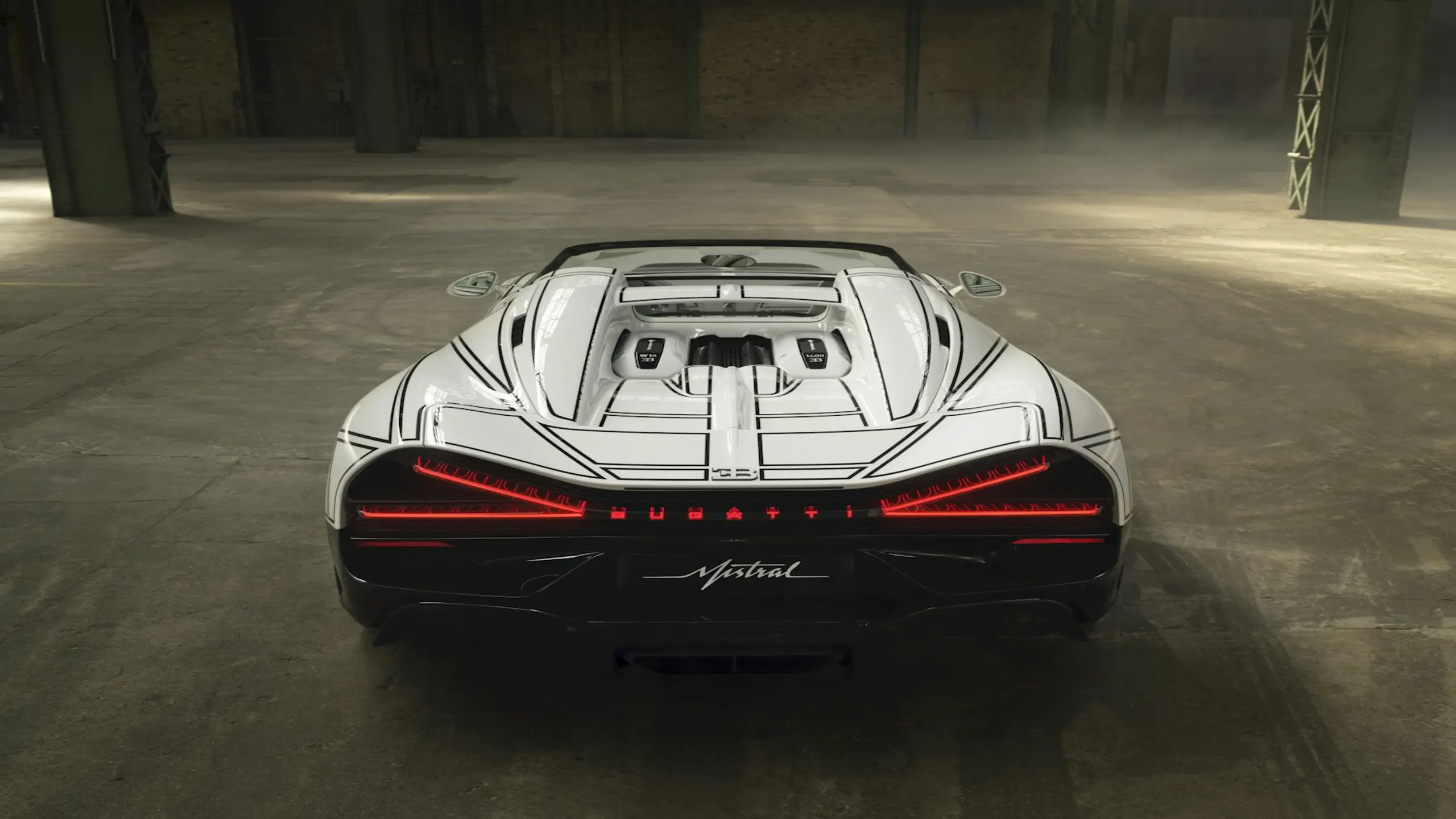
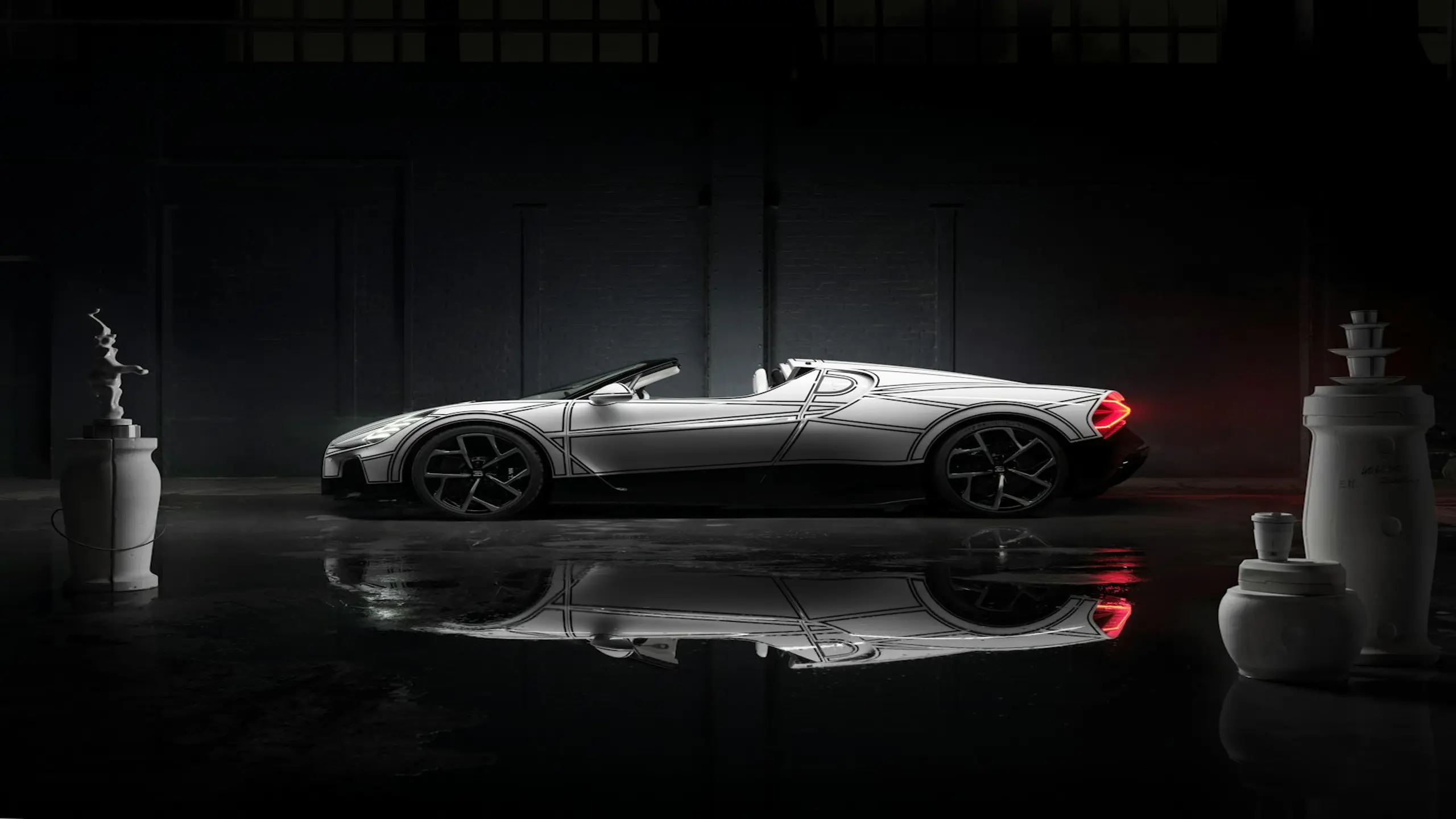
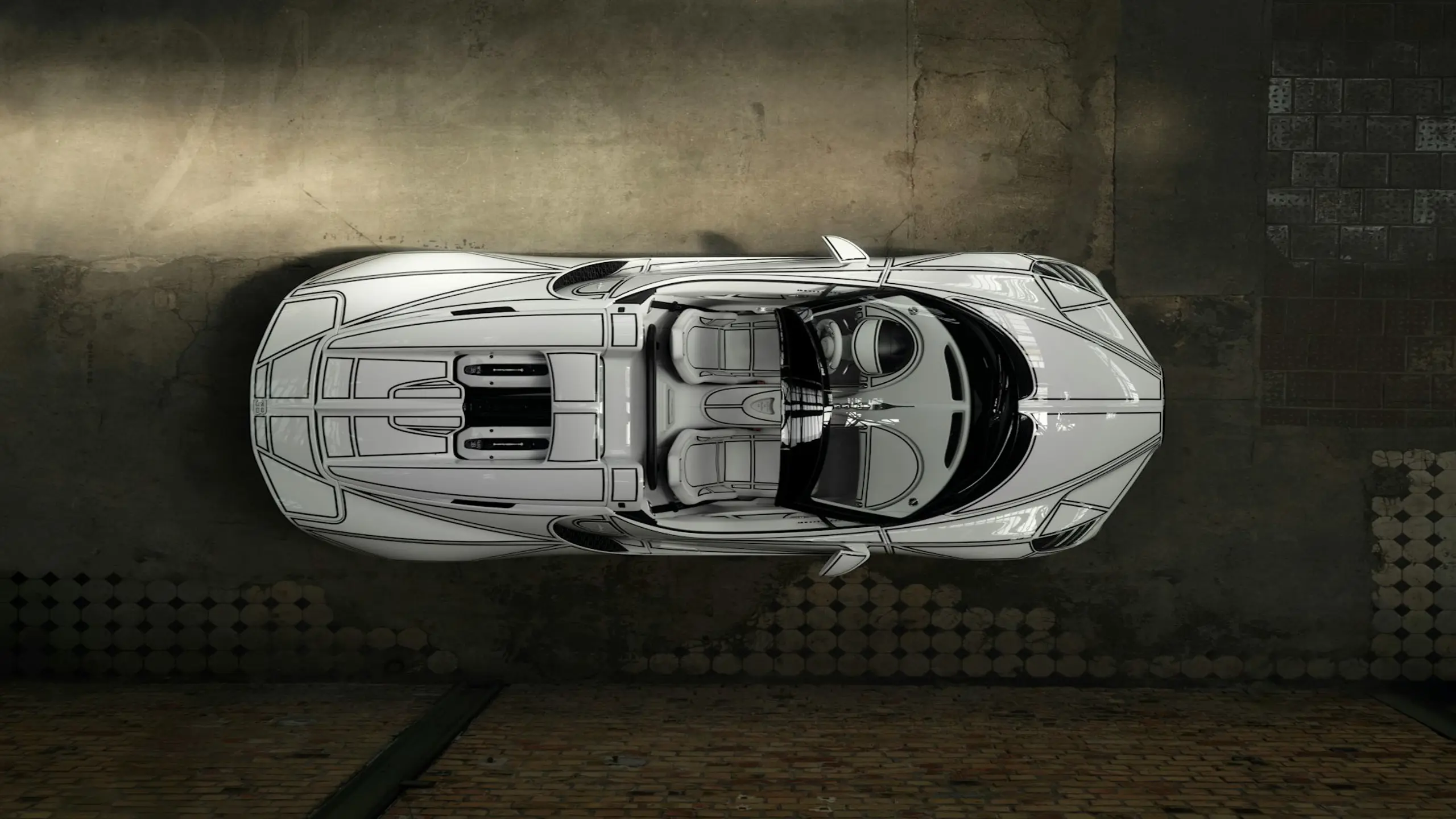
The W16 Mistral was developed through an entirely digital design process. Where earlier Bugattis were shaped over clay, the Mistral was constructed within a digital environment from a network of precisely controlled mathematical surfaces known as NURBS, Non-Uniform Rational B-Splines, whose interlocking geometries define every curve and transition of the finished car. For 'Blanc Éternel', this normally invisible architecture becomes the artwork itself. Fine black lines trace the underlying digital surface layout across the bodywork, mapping the geometric logic beneath the Mistral's seemingly effortless form and rendering the language of the screen permanently onto the language of the road. The name captures both dimensions of that ambition. 'Blanc Éternel' evokes the perpetual purity of white porcelain and the enduring significance of the W16 within Bugatti's history, the engine that began with the Veyron and ends, on public roads, with the Mistral. Through this single commission, the opening and closing chapters of that journey are united by a shared visual grammar of black against white, digital precision against timeless craft.
Lines Applied by Hand, Fired in a Kiln
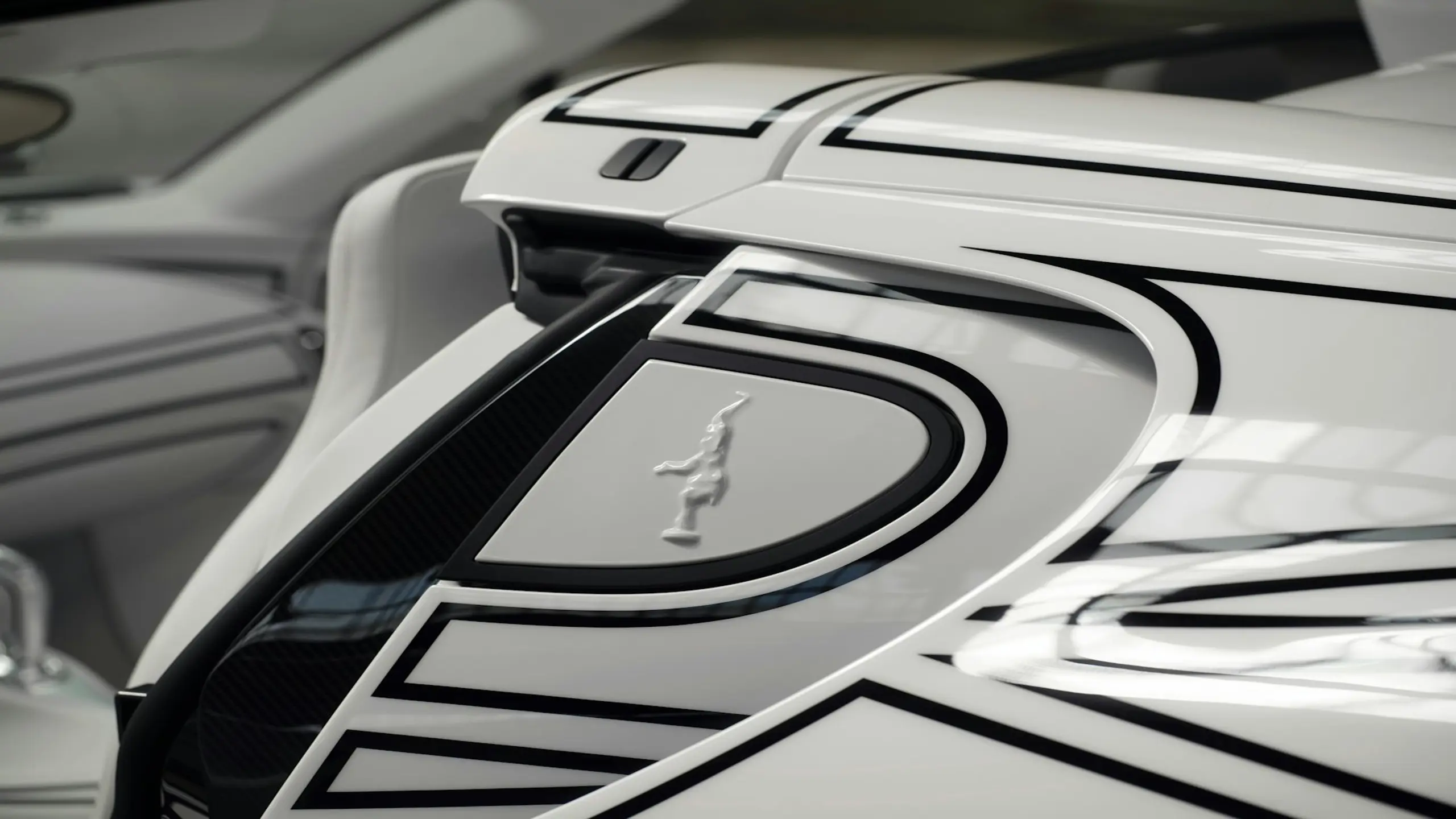
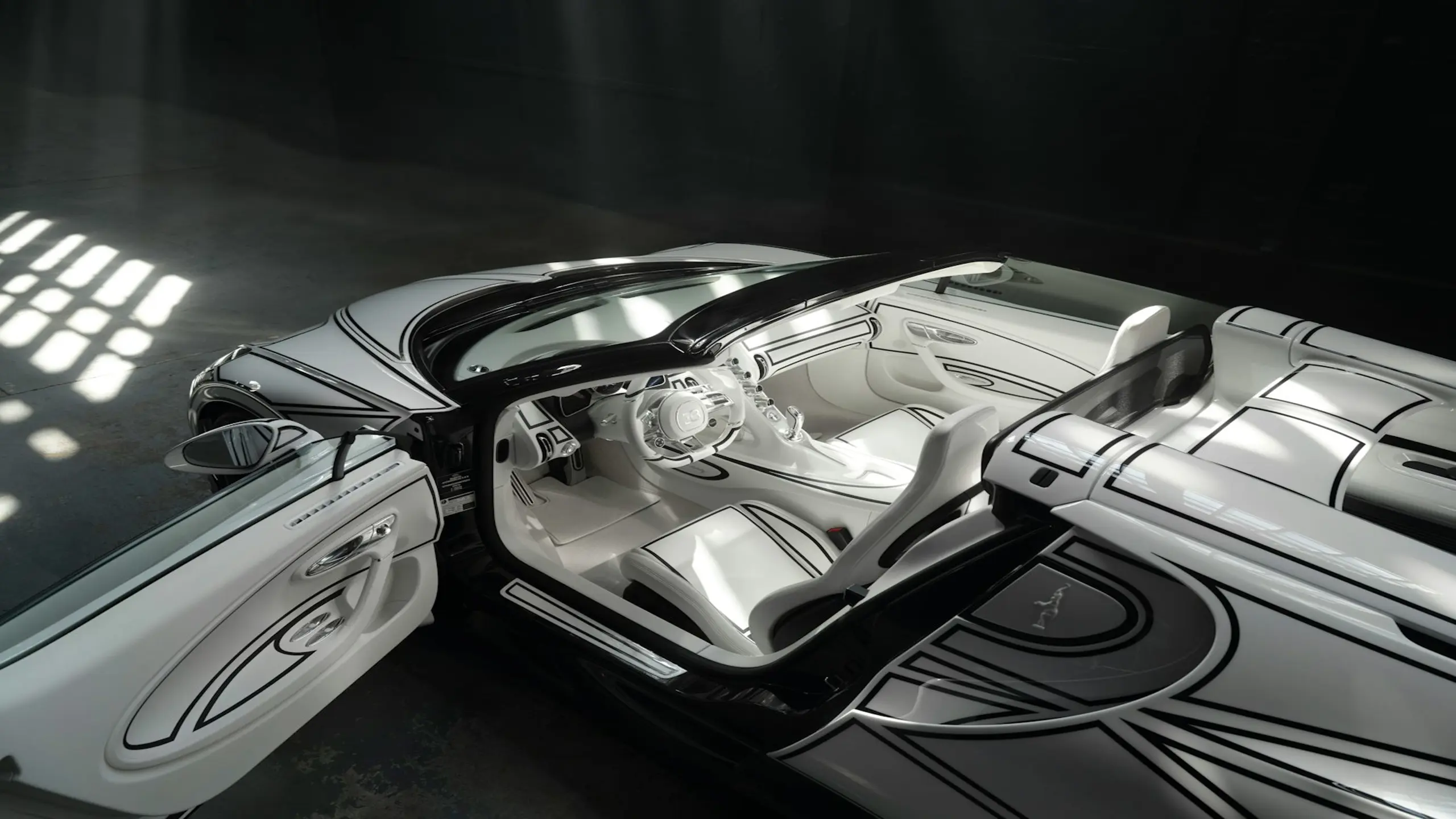
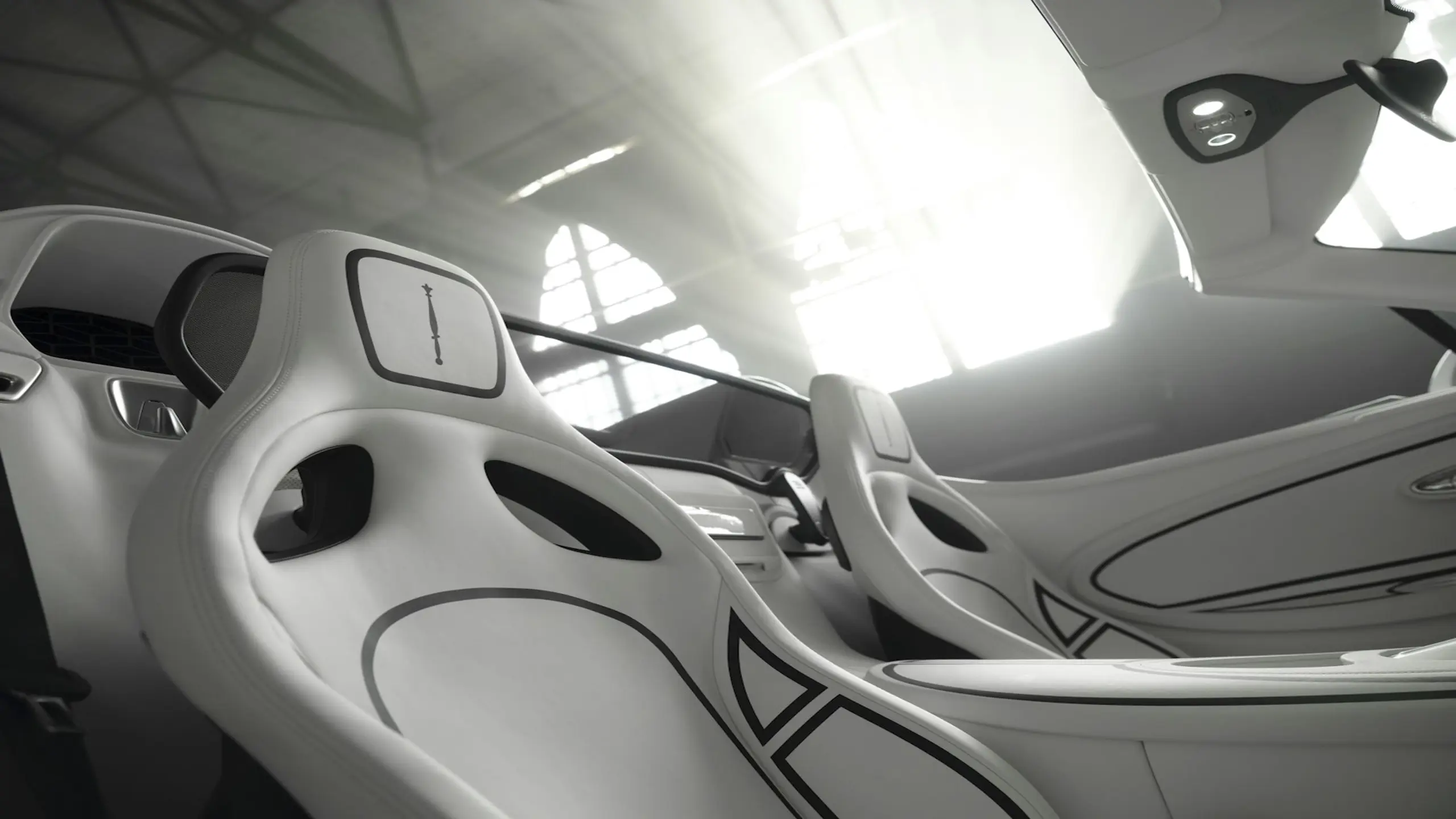
Despite its digital origins, every line on 'Blanc Éternel' was realized by human hands. The body is first finished in pure white and carefully prepared, before each black line is positioned using precisely applied tape. The surrounding areas are counter-masked, the original tape removed to expose the intended channels, and black paint sprayed through the resulting gaps, a process requiring extraordinary patience and an instinctive understanding of how a two-dimensional line must travel across a complex three-dimensional form. The same graphic language migrates into the cabin, where the line pattern is laid out and masked by hand onto white leather before black paint is applied directly to the surface, demanding an entirely new Bugatti process developed specifically for this commission. Porcelain punctuates both worlds. On the exterior, KPM-crafted pieces cover the EB emblem, the fuel and oil caps, and two engine cover inlays bearing KPM's royal scepter. Inside the cockpit, the material becomes something the driver physically encounters with every interaction: the speaker cover plate, gear-shifter shells, kneepad inlays, centre-console armrest inlay and window-lifter buttons are all crafted from genuine porcelain. Producing each piece demands its own form of precision, porcelain contracts by 17% as it fires in the kiln, meaning every component must be modeled to dimensions that anticipate that shrinkage exactly, so that the finished piece fits its designated position on the car without compromise.
A Fitting Bookend to an Incomparable Era
What 'Blanc Éternel' ultimately achieves is something beyond the sum of its techniques. It closes a circle that began with 'L'Or Blanc' and the Veyron, passed through the entirely digital conception of the Mistral, and arrives here, at a car where the logic of the screen and the patience of the craftsperson are not in tension but in genuine dialogue. As Frank Heyl reflects, the commission respects Bugatti's history without being constrained by it, fusing heritage with individual taste in a way that feels wholly new. To commemorate the renewed partnership, KPM and Bugatti have also created a limited-edition 'Blanc Éternel' porcelain collection, comprising the To-Drive Cup and KPM's iconic Aviator Cup in two sizes, limited to 1,000 handmade pieces, each one a smaller expression of the same pursuit of precision and purity that defines both houses. The Veyron established the W16 as an automotive icon. The Mistral represents its final roadgoing expression. Through 'Blanc Éternel', those two moments in history are held together, quietly and permanently, by a line drawn by hand.