A Decade of Genesis, Defined by Direction
Ten years is a brief moment in the life of an automotive marque. For Genesis, however, it has been enough to transition from an ambitious newcomer into a brand confident enough to define its own interpretation of luxury and performance. The G90 Wingback Concept, unveiled at Le Castellet to mark Genesis’ tenth anniversary, is not merely a celebratory design exercise, it is a statement of intent. Presented alongside the first Magma production model, the GV60 Magma, the Wingback Concept signals where Genesis sees itself heading: beyond traditional luxury, beyond expected performance archetypes, and into a space where emotion, balance and craftsmanship take precedence over raw aggression. This is luxury high performance, reinterpreted through a distinctly Korean lens. Chief Creative Officer Luc Donckerwolke personally drove the G90 Wingback Concept for its reveal, underlining how central the car is to Genesis’ creative direction. In his words, the concept serves as a “bridge between Magma and the One of One bespoke program”, a rolling manifesto that connects the brand’s performance ambitions with its growing focus on personalisation and craftsmanship. Rather than following prevailing trends, Genesis uses the Wingback Concept to question them. In a market saturated with SUVs, it deliberately explores a different typology, one rooted in elegance, long-distance refinement and architectural presence. The result is a car that feels measured yet powerful, expressive yet controlled.

Reimagining the Grand Tourer
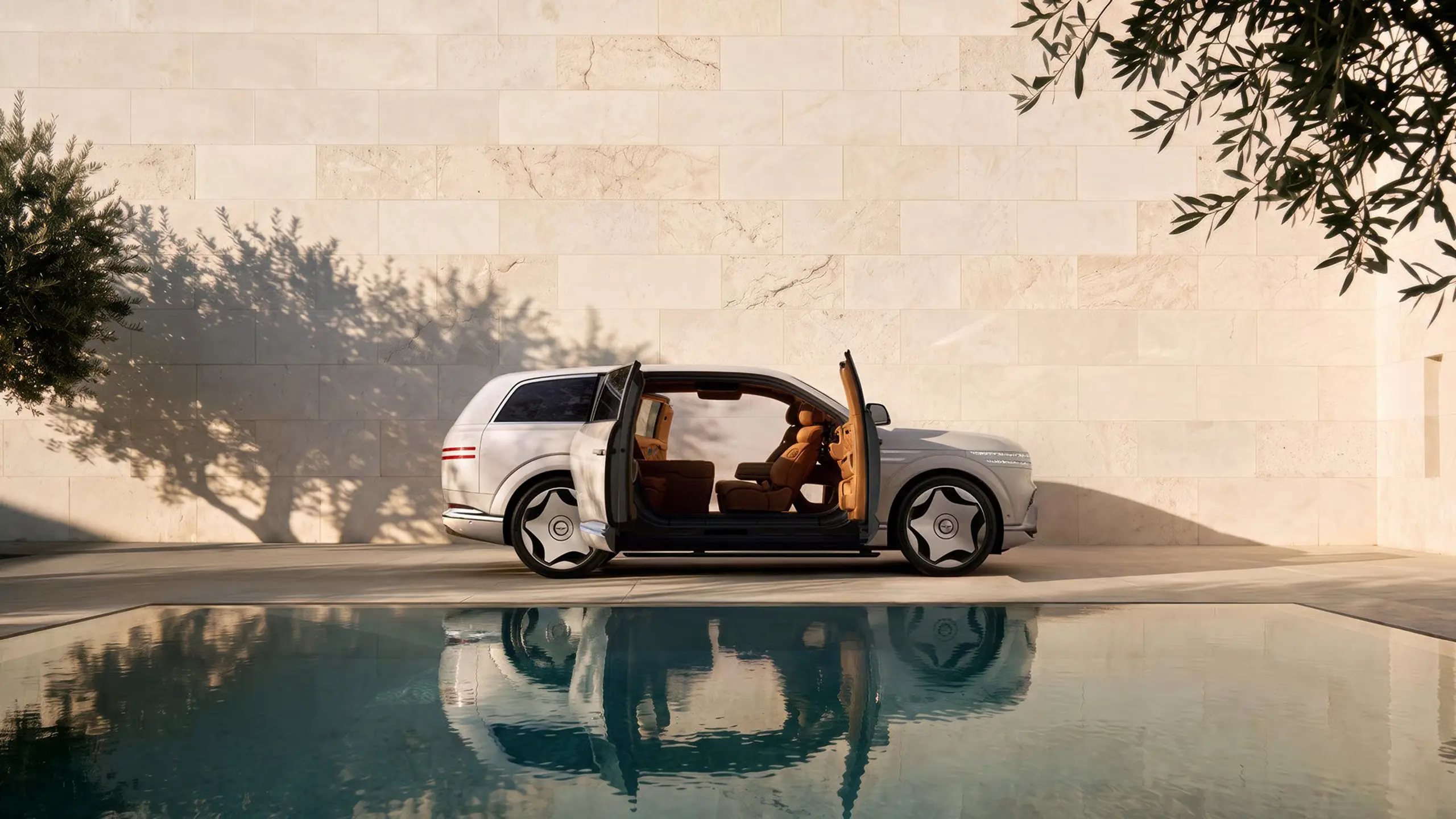
Built on the unmodified G90 flagship platform, the Wingback Concept retains the sedan’s imposing 3.2-metre wheelbase and 5.1-metre length, yet transforms its character entirely. Where the production G90 embodies formal luxury, the Wingback draws out latent dynamism from the same architecture, revealing how proportion and intent can redefine a familiar form. Signature Genesis design elements are intensified rather than replaced. The Crest Grille, Two-Line headlamps and sweeping Parabolic Line remain instantly recognisable, but they are sharpened and stretched to convey movement and purpose. The front fascia is more sculptural, featuring a Magma-badged bumper with large lower air intakes framed by functional canards, subtly signalling performance without theatrical excess. Flared wheel arches widen the stance and house bespoke 22-inch wheels wrapped in low-profile tyres, grounding the car visually and giving it a muscular, planted posture. Yet despite these additions, the Wingback never loses its aristocratic calm. This duality, power wrapped in composure, is at the heart of the Magma philosophy. In profile, the transformation becomes most apparent. The roofline flows rearward into a sleek grand tourer wagon silhouette, replacing the traditional sedan trunk with a sharply raked tailgate. The rear window is framed by twin spoilers, complemented by a performance-inspired diffuser that anchors the car visually. The effect is dramatic, but never overstated, a disciplined reimagining of luxury proportions.

Magma Beyond Colour
Finished in a deep, understated green, the G90 Wingback Concept makes an important point: Magma is not defined by orange. While Magma Orange has become a visual signature, Donckerwolke is clear that the philosophy runs far deeper. “Magma does not shout; it invites,” he explains. Where many performance brands chase extremes, Genesis pursues balance. Magma is designed to reward rather than intimidate, to complement the driver instead of challenging them. It is performance expressed through confidence, not confrontation. This ethos continues inside the cabin, where luxury and restraint take centre stage. The interior is upholstered in richly quilted Chamude, a suede-like material that enhances tactility while maintaining visual softness. Subtle green Magma stitching traces the seats, door panels and console, acting as a quiet reminder of the power beneath the surface. The seats themselves are sport-focused yet indulgent, featuring embroidered Magma logos, not as decoration, but as symbols of latent capability. Additional green accents appear on the steering wheel, dashboard and centre console, tying the cabin together into a cohesive, serene environment. The result is an interior that communicates performance through detail and materiality rather than overt visual drama. In many ways, the Wingback Concept’s interior captures Genesis’ most mature design thinking to date. It demonstrates how performance can coexist with calm, how power can be expressed without noise.


The Shape of Genesis to Come
More than a standalone showpiece, the G90 Wingback Concept serves as a strategic signal. It demonstrates that the Magma program is not confined to a single segment or body style, but is instead a flexible philosophy capable of spanning sports cars, coupes, convertibles, and unexpected typologies like this grand touring wagon. As Donckerwolke describes it, Magma represents “the materialisation of the iron fist in a velvet glove.” The Wingback embodies this idea perfectly: visually elegant, emotionally rich, yet underpinned by strength and intent. It shows how Genesis aims to evolve luxury performance without abandoning its core values of care, respect and balance. At just ten years old, Genesis has reached a level of design confidence that allows it to resist convention. The G90 Wingback Concept does not attempt to compete directly with legacy performance icons. Instead, it proposes an alternative future, one where luxury, performance and emotional resonance coexist without compromise. In that sense, the Wingback is not about what Genesis has achieved in its first decade, but about what it is becoming. It is a vision of luxury high performance that feels thoughtful, cultivated and quietly assured, a glimpse of a brand entering its most self-assured chapter yet.