When a Legend Returns to the Source
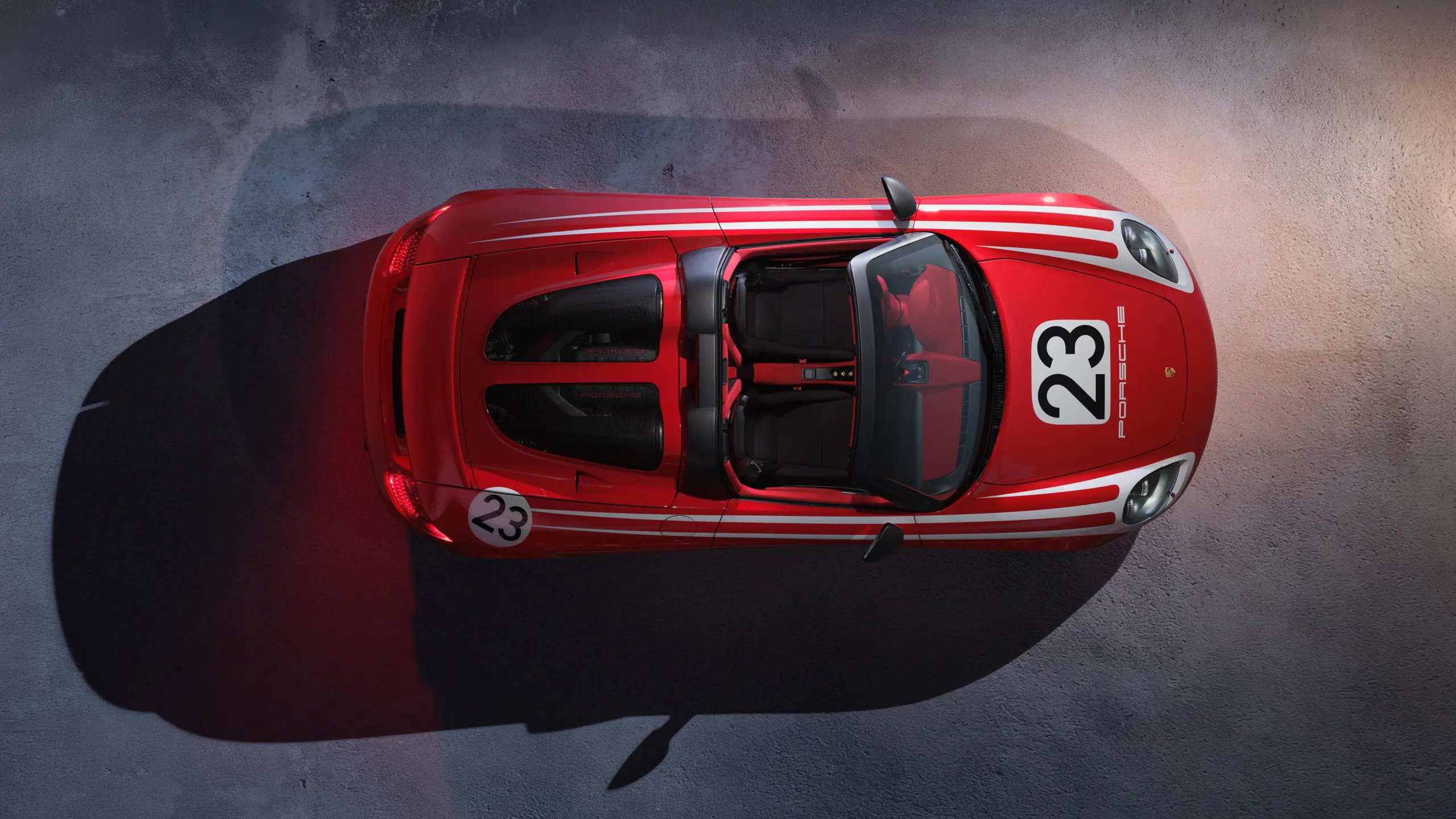
Some cars age gracefully. Others become untouchable. And then there are a very rare few that are invited back to the factory, not to be preserved, but to be reborn. Victor Gómez’s Porsche Carrera GT belongs firmly in the latter category. Two decades after leaving Stuttgart, Gómez’s 2005 Carrera GT returned to Porsche as part of the brand’s most exclusive offering: Factory Re-Commission under the Sonderwunsch programme. The brief was as ambitious as it was respectful, restore the car mechanically to as-new condition, then reimagine it visually in one of Porsche motorsport’s most iconic liveries: Salzburg Design. Few colour schemes carry the same emotional weight. In 1970, Hans Herrmann and Richard Attwood secured Porsche’s first overall Le Mans victory in a red-and-white 917 short-tail wearing the now-legendary number 23. Prepared by Porsche Salzburg, then known as Porsche Alpenstraße, the car etched its image into racing history. Reinterpreting that livery for the Carrera GT was never going to be a simple exercise in paint. It became a dialogue between eras.


Salzburg Design, Reinterpreted for Carbon and V10
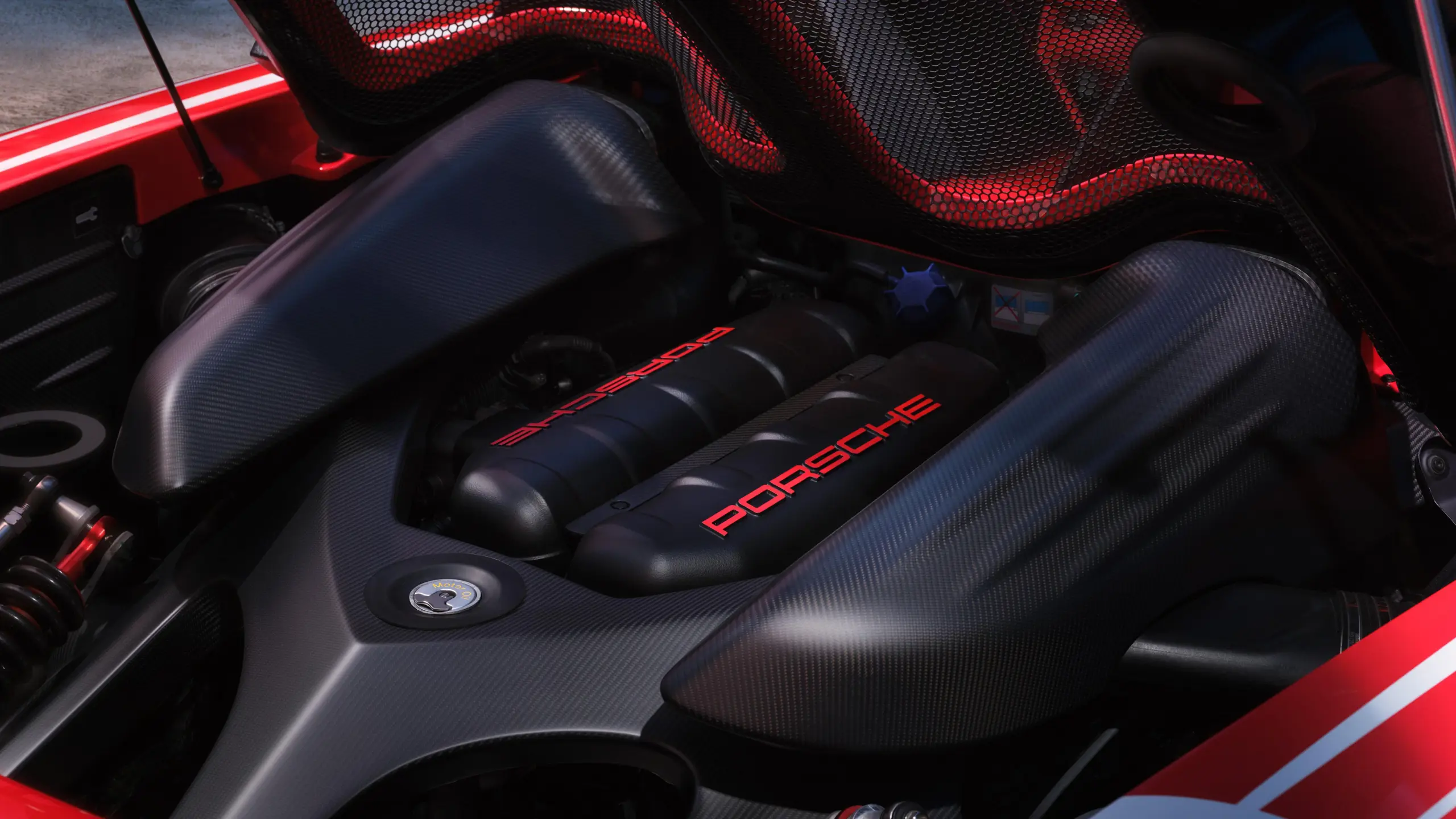
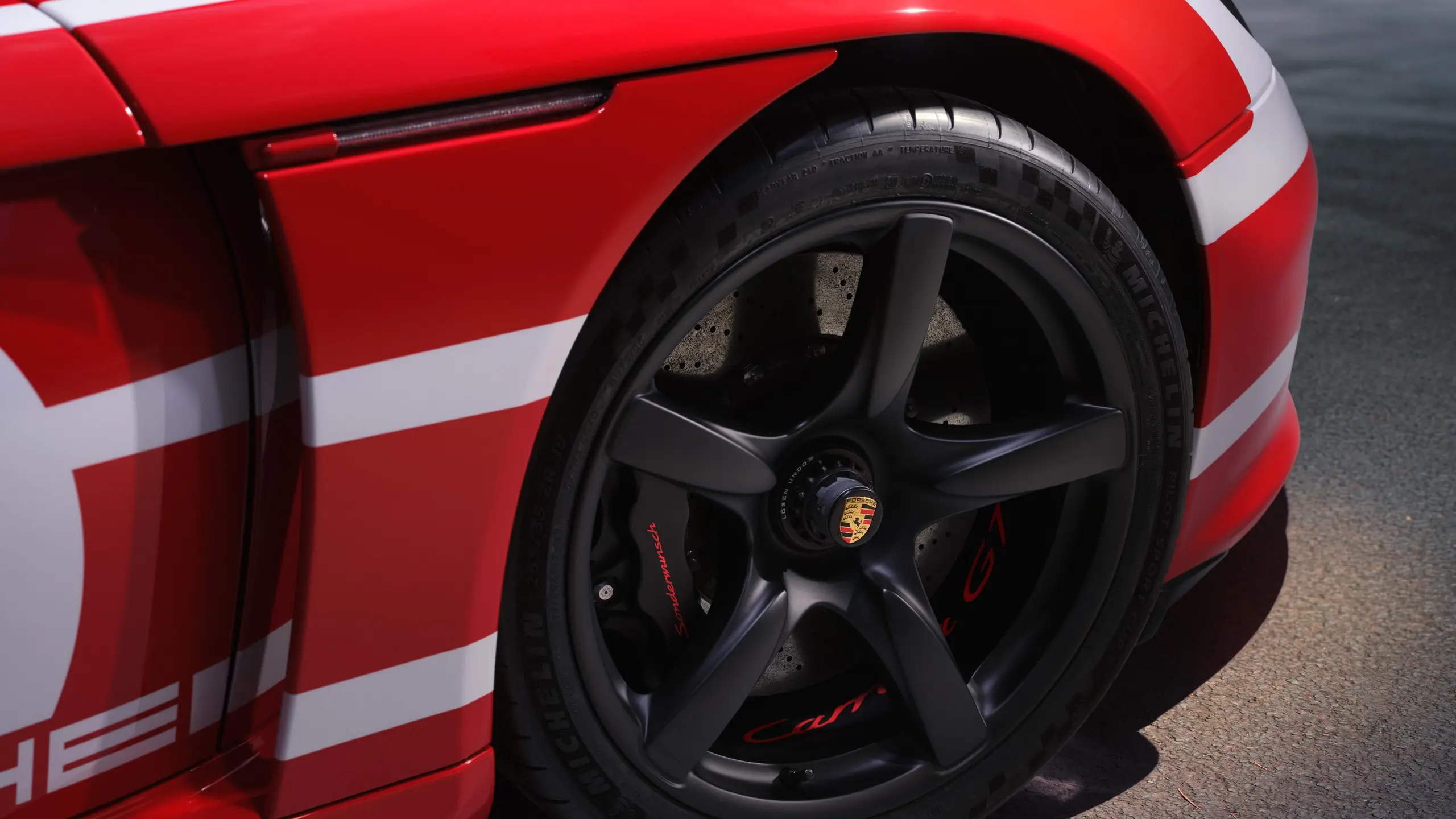
Unlike the boxy, purpose-built proportions of the 917, the Carrera GT is defined by flowing carbon-fibre surfaces, complex aero channels and tight panel geometry. Translating Salzburg Design onto such a form required far more than digital renderings. The process began traditionally, with hand sketches, followed by full-scale renderings. To truly understand how the red and white surfaces would interact with the Carrera GT’s sculptural bodywork, Porsche designers physically taped the car, refining line flow by eye before final templates were created. Only then did the car receive its hand-painted Indian Red and white finish, complete with the historic starting number 23. Because Gómez intends to drive the car on public roads in Puerto Rico, the entire livery is protected beneath a transparent film, preserving both paint and provenance. Complementing the historic colours is a carefully judged use of matt black carbon fibre, introducing a contemporary motorsport edge. The roof halves, A- and B-pillars, mirror caps, front air ducting and rear diffuser are all finished in exposed carbon, contrasting sharply with the gloss paint. Black matt anodized engine cover grilles and black-painted five-spoke alloy wheels, retaining the original Carrera GT design, complete the exterior. Subtle details, such as the coloured Porsche crests, reinforce the factory-correct execution. This is homage without nostalgia, reverence without restraint.

A Cabin Signed in Red and Carbon
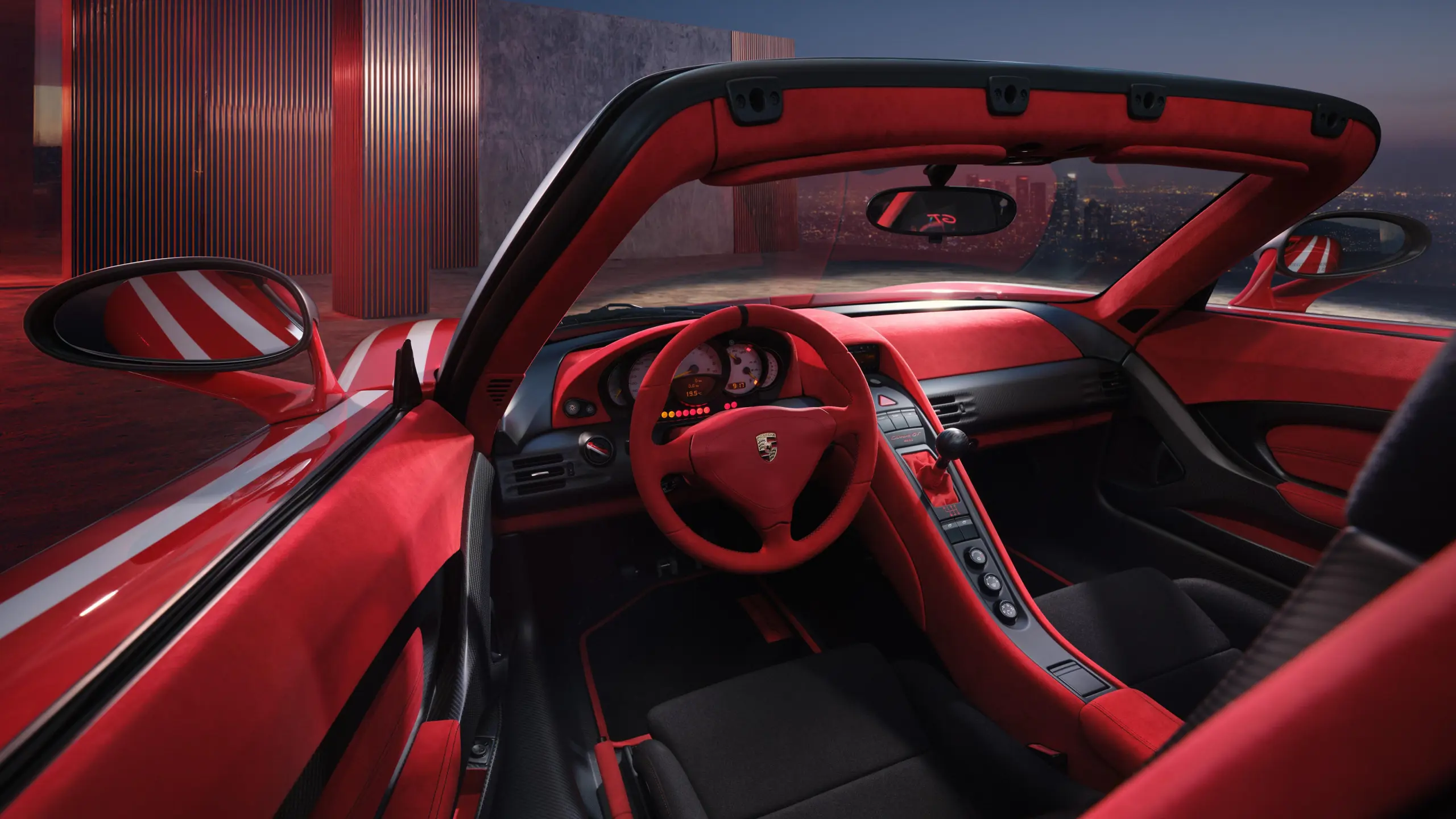
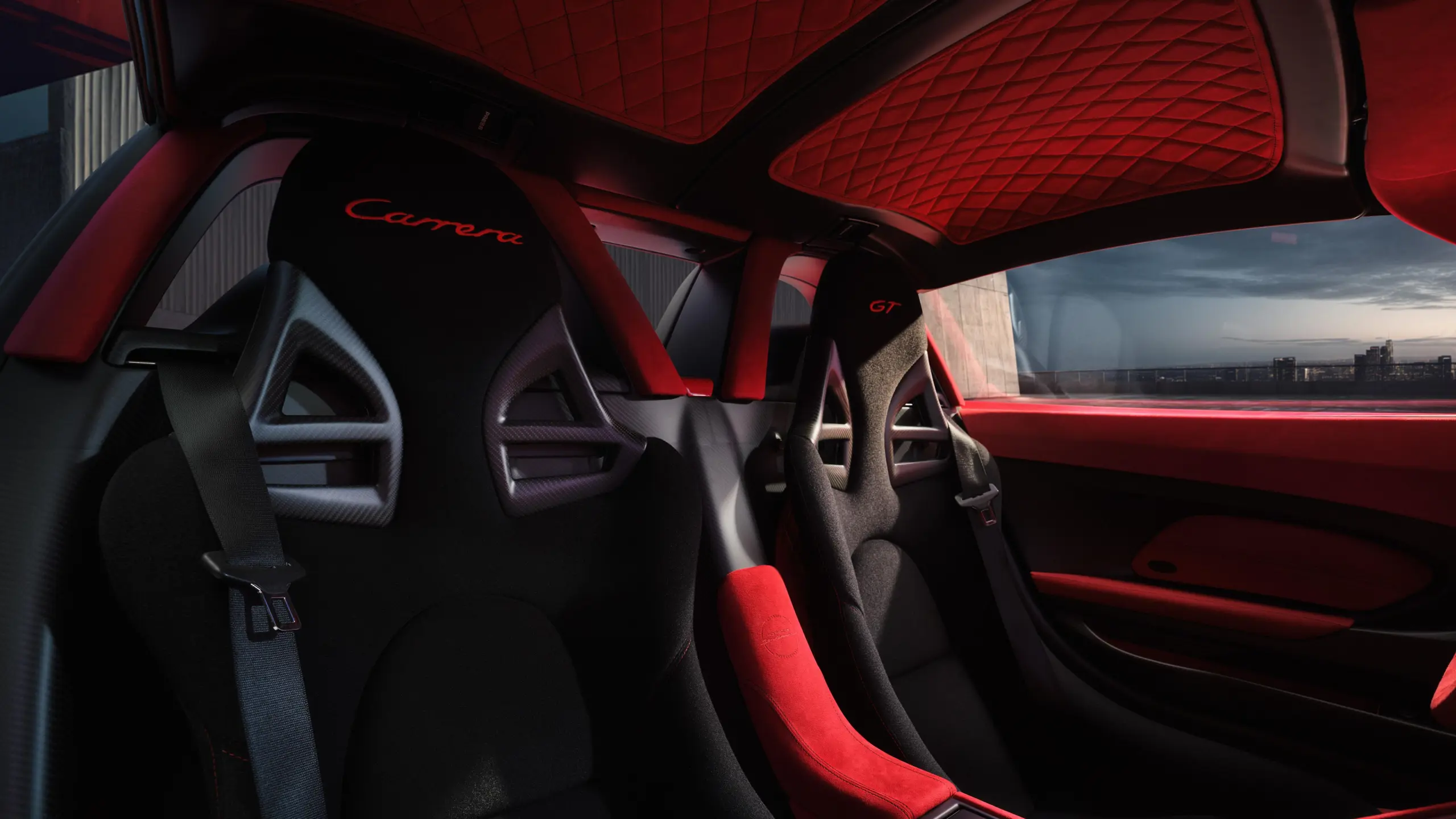
Inside, the Carrera GT departs decisively from its original minimalist aesthetic, yet never compromises its racing DNA. At Gómez’s request, the Porsche upholstery department reimagined the interior almost entirely in Alcantara Indian Red, a bold yet controlled choice that mirrors the exterior’s emotional impact. The suede-like material covers large sections of the dashboard and door panels, the steering wheel rim, the centre console, and even extends into the front luggage compartment and custom luggage set, a level of consistency rarely seen even in bespoke programmes. As with the exterior, matt carbon fibre provides a counterpoint. Seat shells, dashboard air vent surrounds and the instrument cover are finished in exposed carbon, maintaining the Carrera GT’s unmistakable motorsport character. For the seat centres, side bolsters and headrests, Porsche selected black FIA-approved textile, the same non-flammable fabric used in the 918 Spyder, a quiet but meaningful nod to endurance racing. It is worth remembering that the original 917 Salzburg winner featured two seats, a necessity under endurance regulations of the era. In that sense, the Carrera GT, itself born from a Le Mans-derived V10 programme, becomes a natural modern canvas for this historic design language.
Factory Re-Commission: Returning to Zero
What truly elevates this project beyond visual spectacle is the depth of the technical restoration. As part of the Factory Re-Commission process, the Carrera GT was completely disassembled. Every major component, including the 5.7-litre naturally aspirated V10, was overhauled from the ground up. Carbon-fibre structures were recoated, systems recalibrated, and tolerances reset to factory specification. The result is extraordinary: a Carrera GT returned to “zero-kilometre condition”, fully documented and archived by Porsche. In effect, Gómez now owns a brand-new Carrera GT, one that simply happens to carry 20 years of history and one of motorsport’s most evocative liveries. This is precisely the philosophy behind Factory Re-Commission. Working directly with Porsche designers and engineers, customers are invited to shape their vision within strict technical and quality parameters. Every change is validated, approved and recorded, ensuring traceability and authenticity at a level unmatched outside the factory walls. When the Carrera GT debuted in 2003, its 612 PS V10, carbon-fibre chassis and 330 km/h top speed placed it among the fastest and most technically advanced road cars in the world. Today, its status has only grown. Projects like this Salzburg Design commission do more than preserve that legacy, they extend it. In returning a Carrera GT to Porsche, Victor Gómez did not merely restore a supercar. He allowed history to speak again, this time, in red and white.