Where the Solent Meets Goodwood
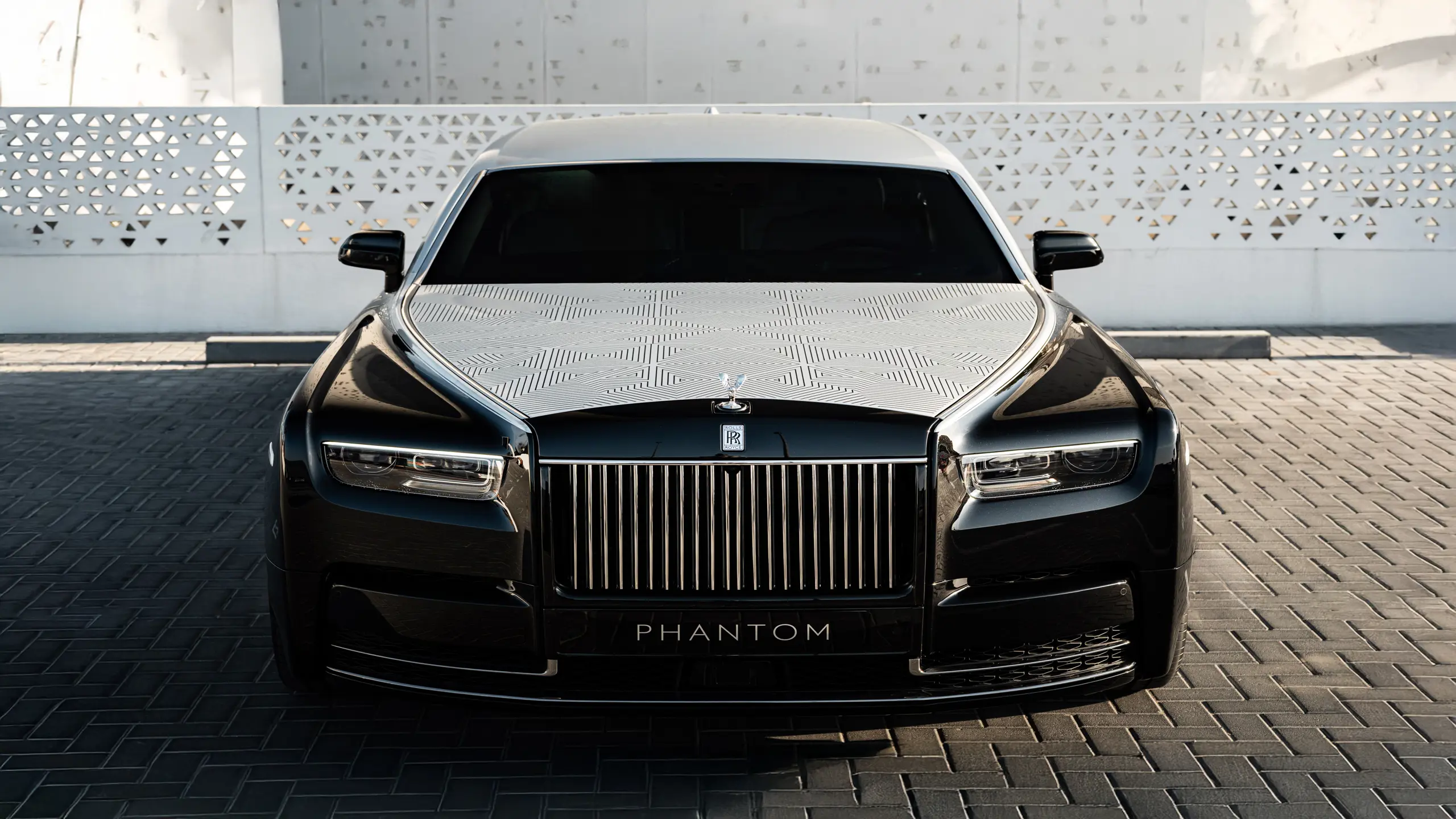
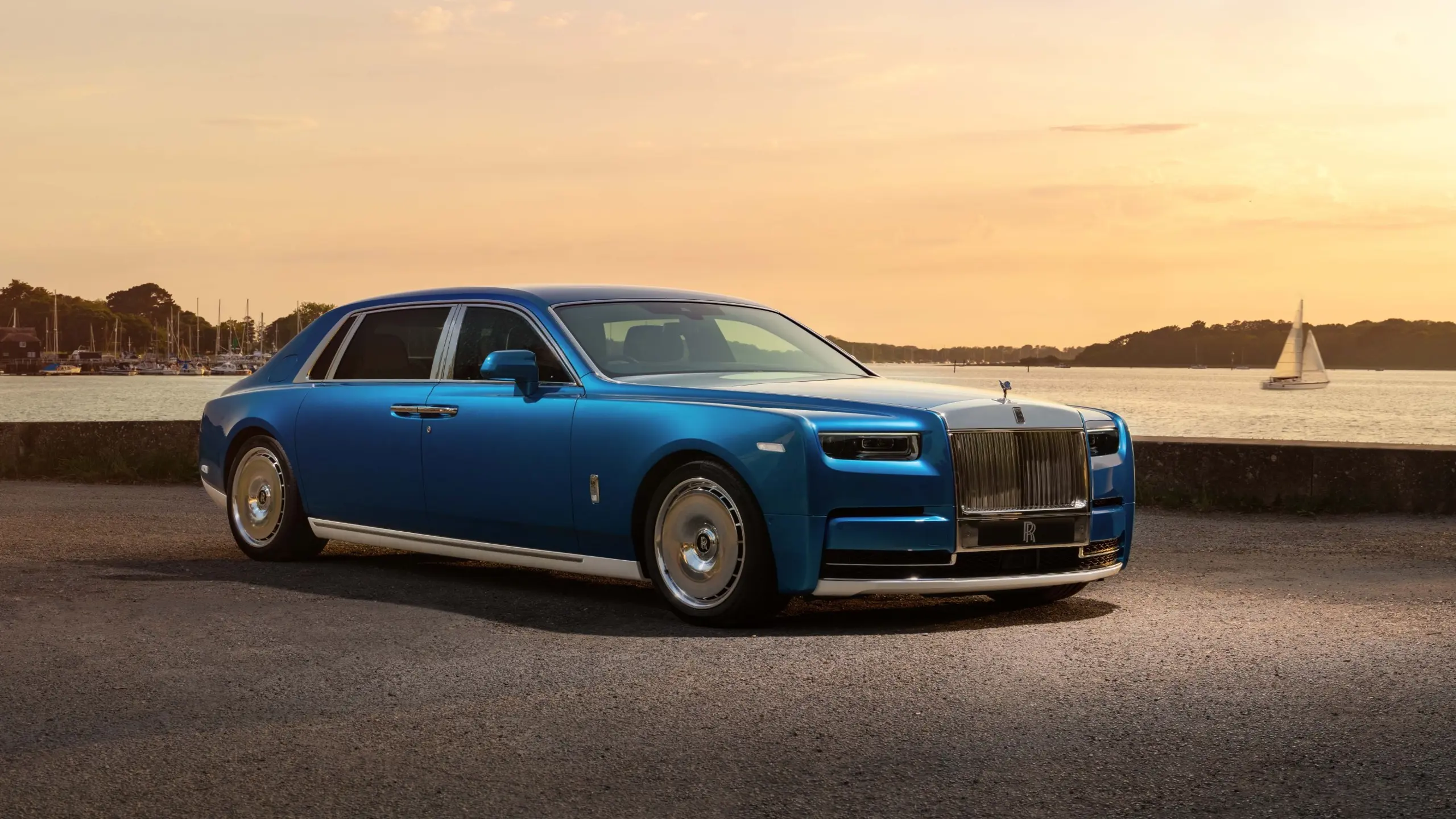
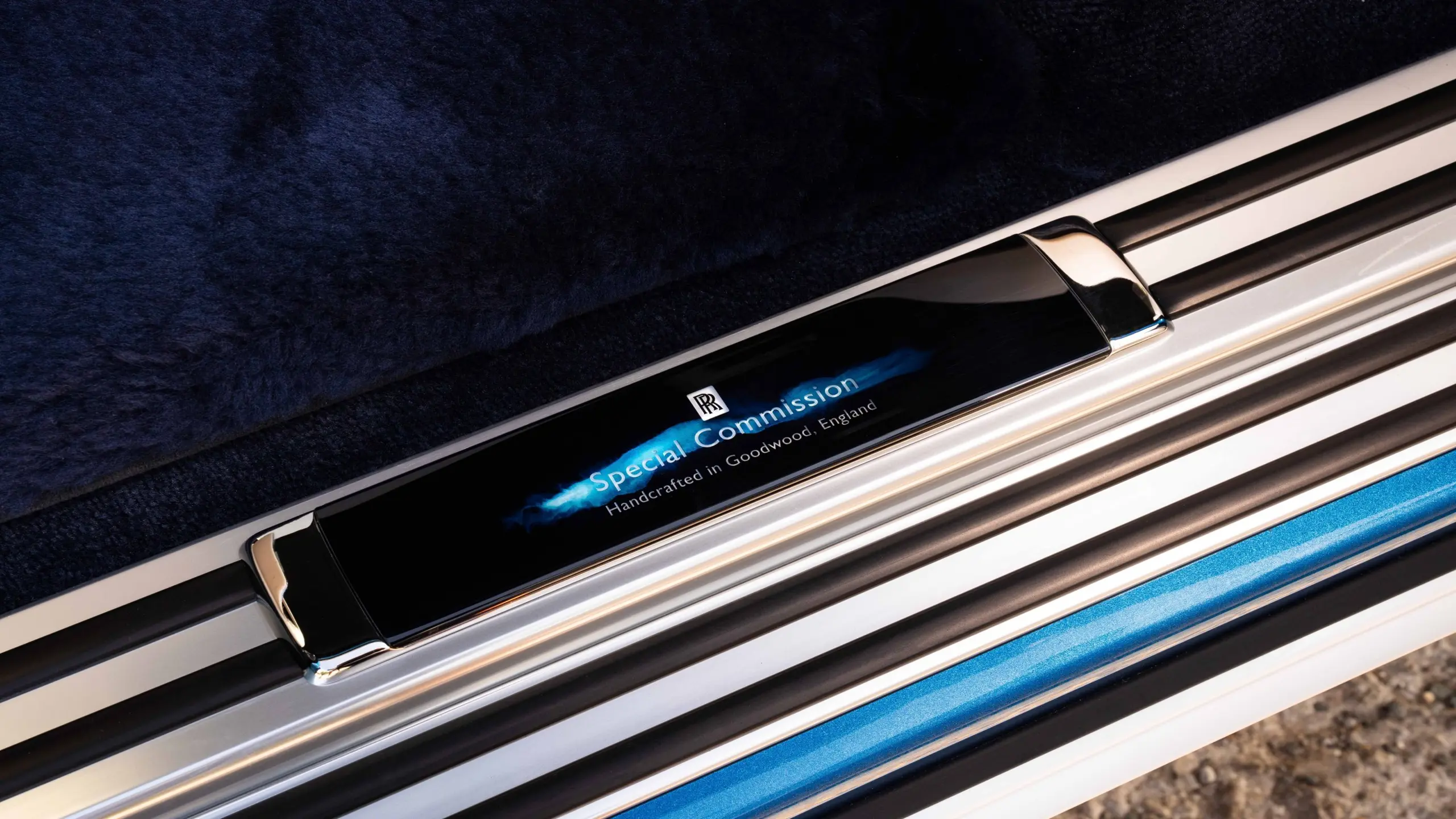
There is a particular kind of inspiration that comes not from distance or exoticism, but from intimacy with a place, from knowing a stretch of coastline well enough to understand what it sounds like in the morning, what colour it turns in the afternoon, and what it means to the people who have lived beside it for generations. Phantom Regatta, a one-of-one Phantom Extended unveiled at the 2026 Goodwood Festival of Speed, draws its entire character from precisely that kind of knowledge. The waters it celebrates the Solent, Chichester Harbour, the regattas that animate them each summer, are visible from the Goodwood Estate itself, and lie within eight miles of Elmstead, the beloved coastal home of Rolls-Royce co-founder Sir Henry Royce in the village of West Wittering. This is not a car inspired by the idea of yachting. It is a car made by people who can see the water from where they work, paying tribute to a tradition that has shaped the landscape around them for centuries.
The Colour of the Coast, the Polish of the Winch
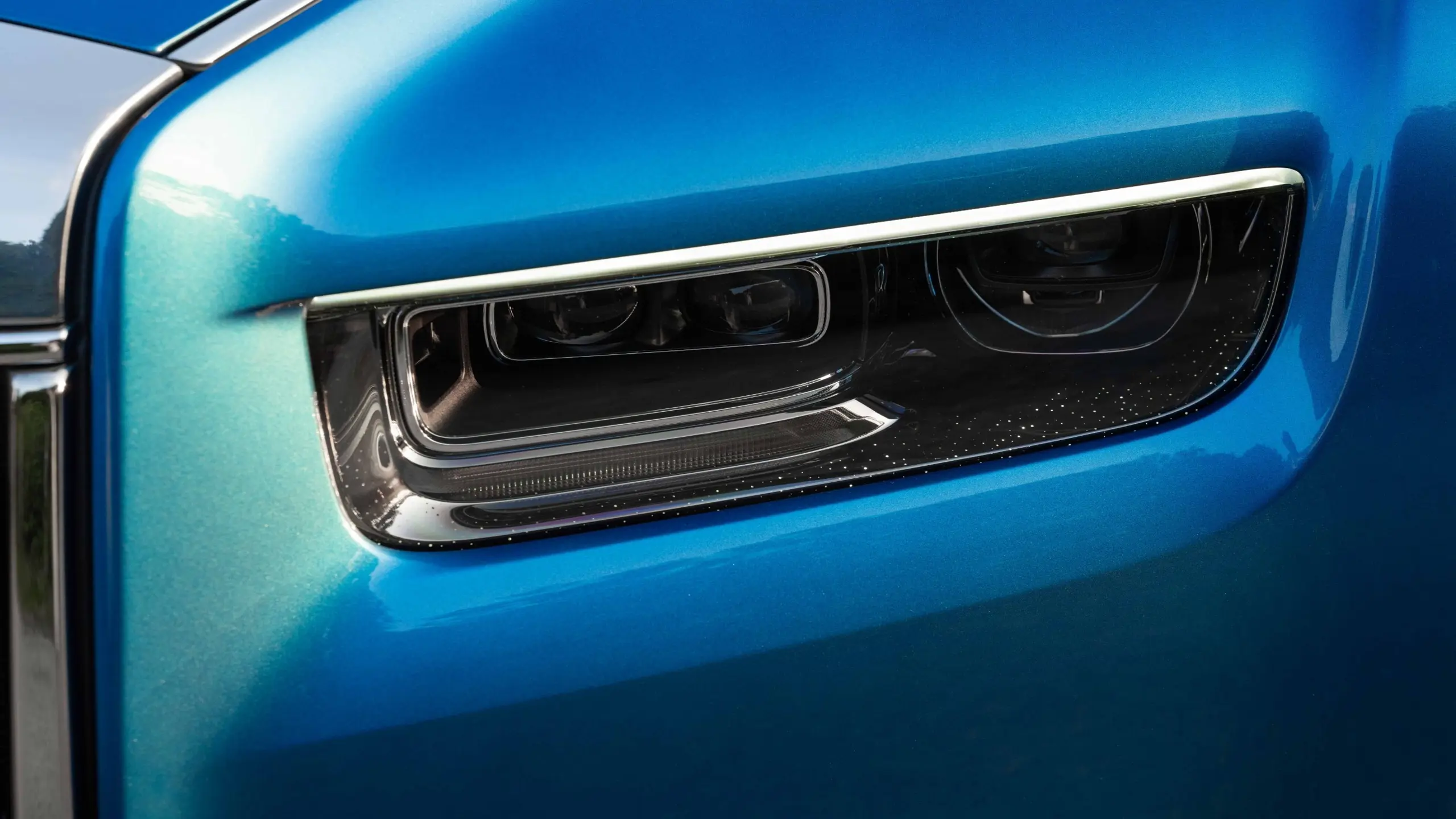
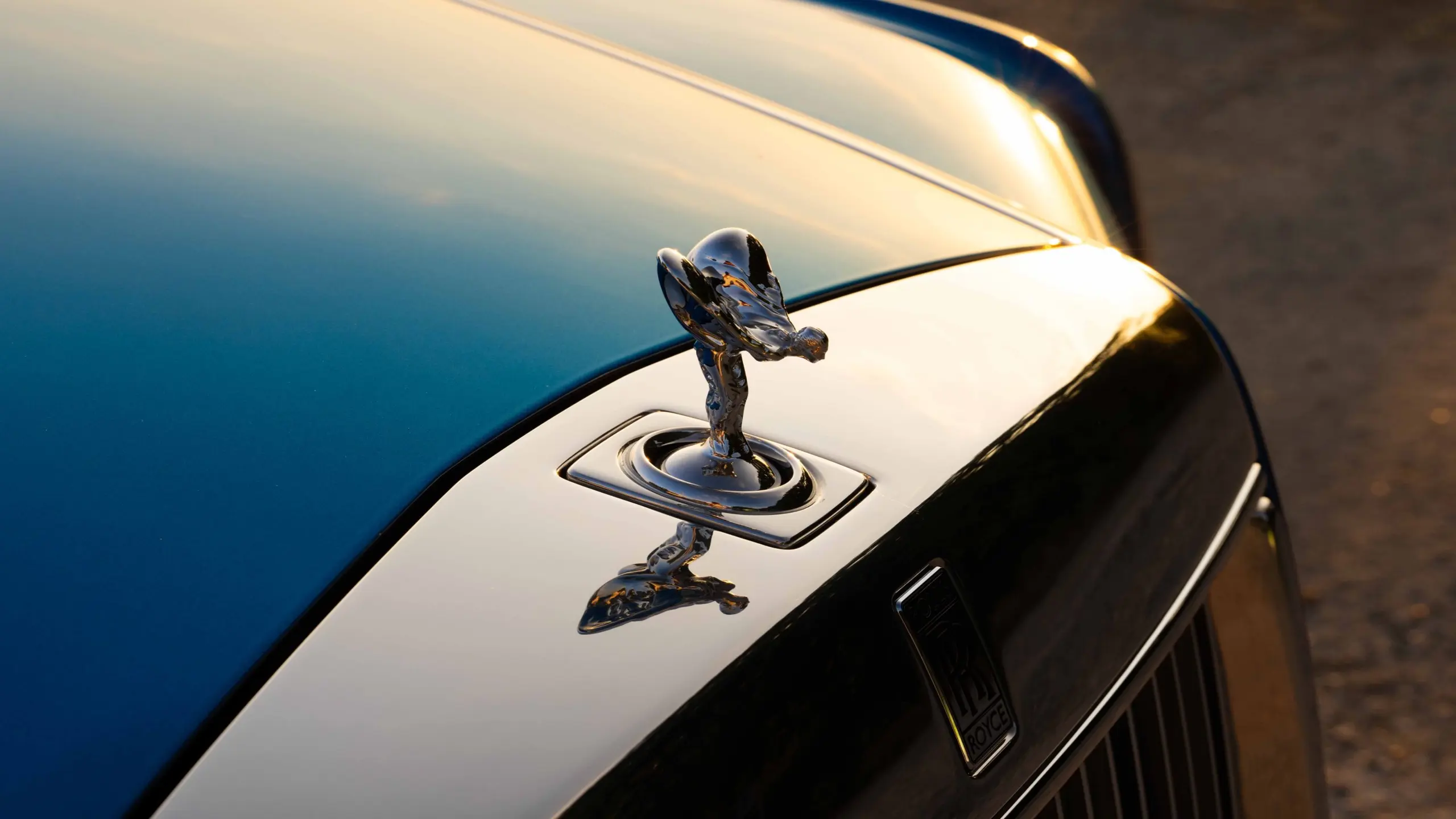
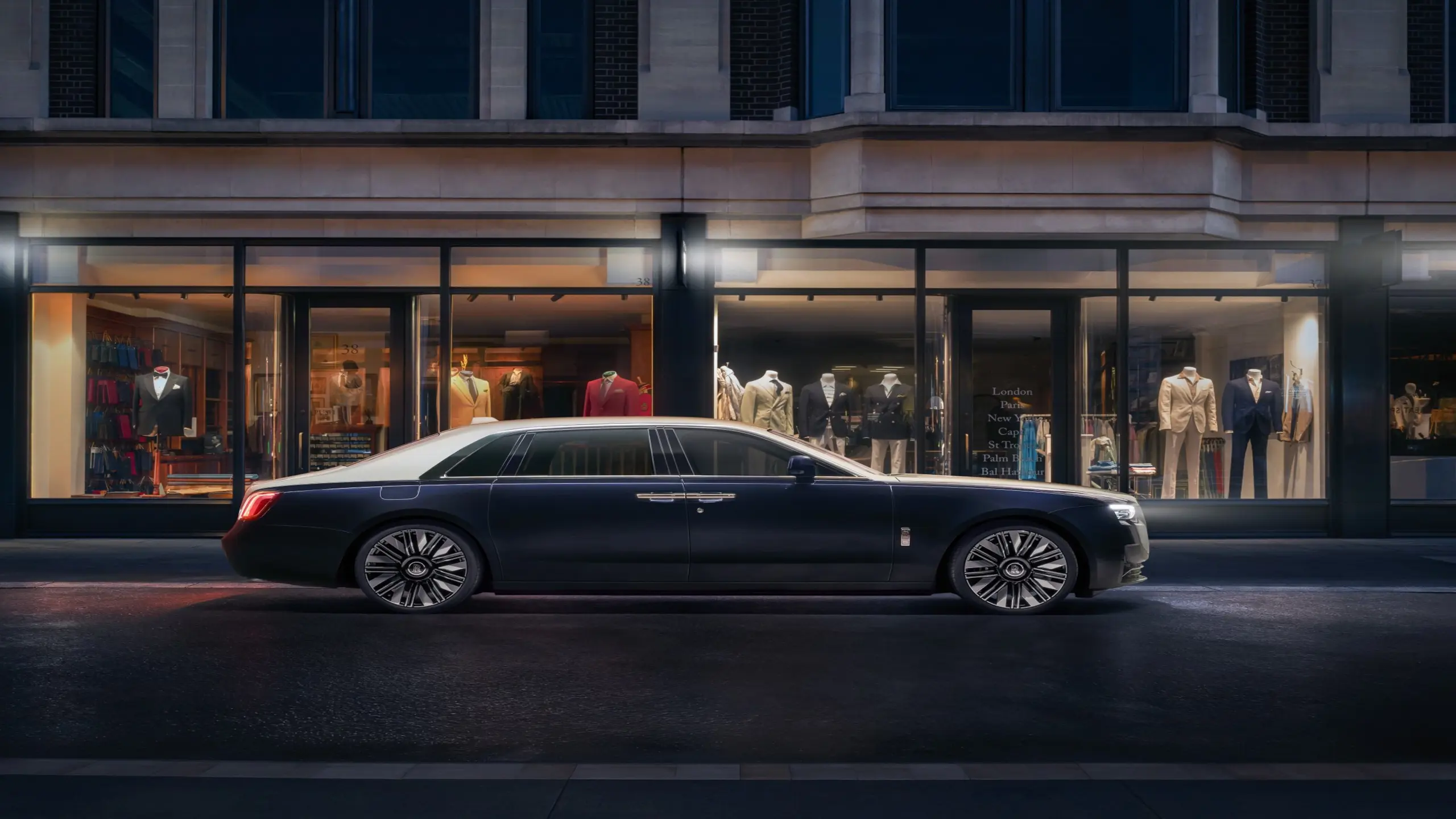
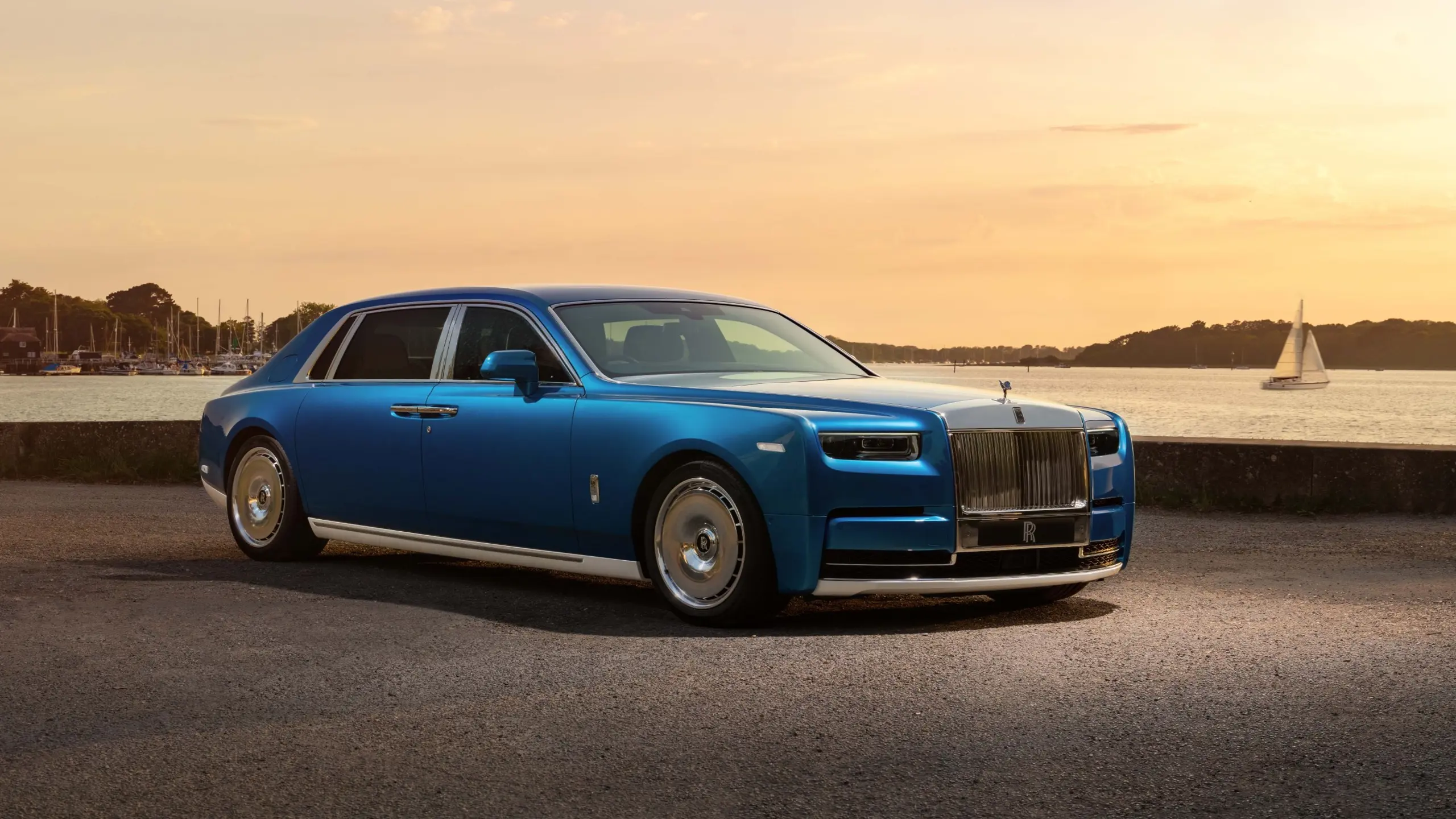
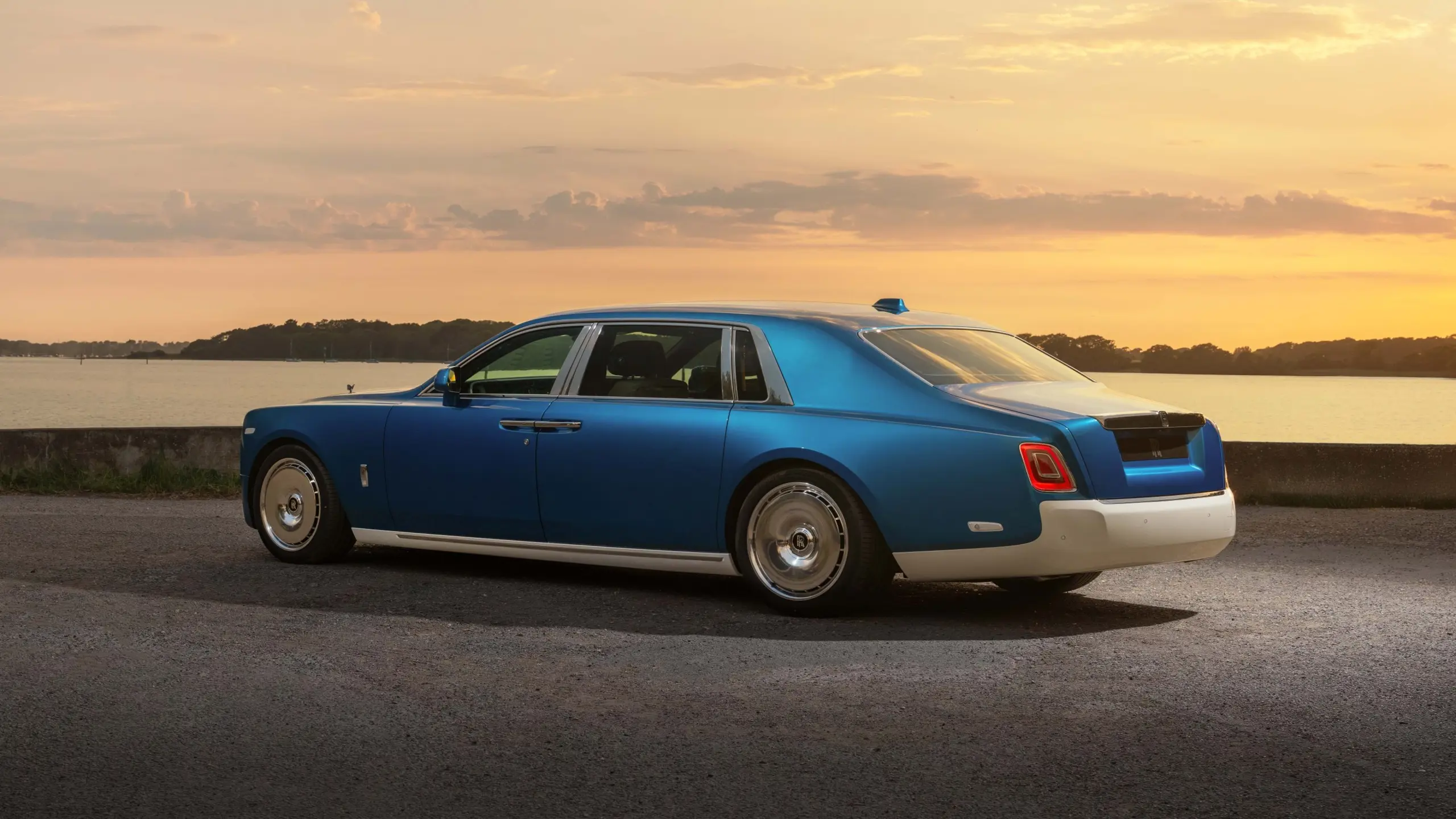
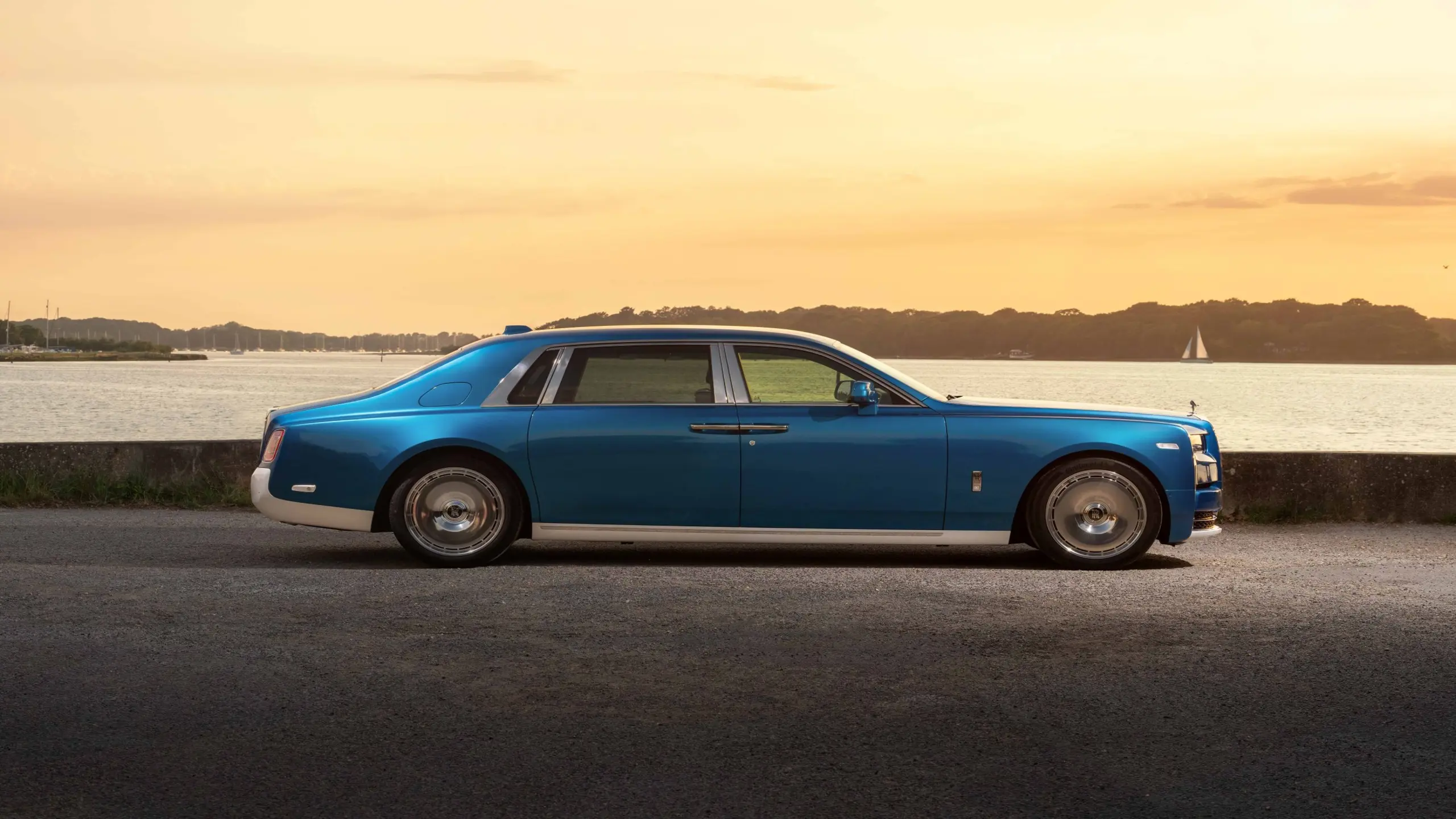
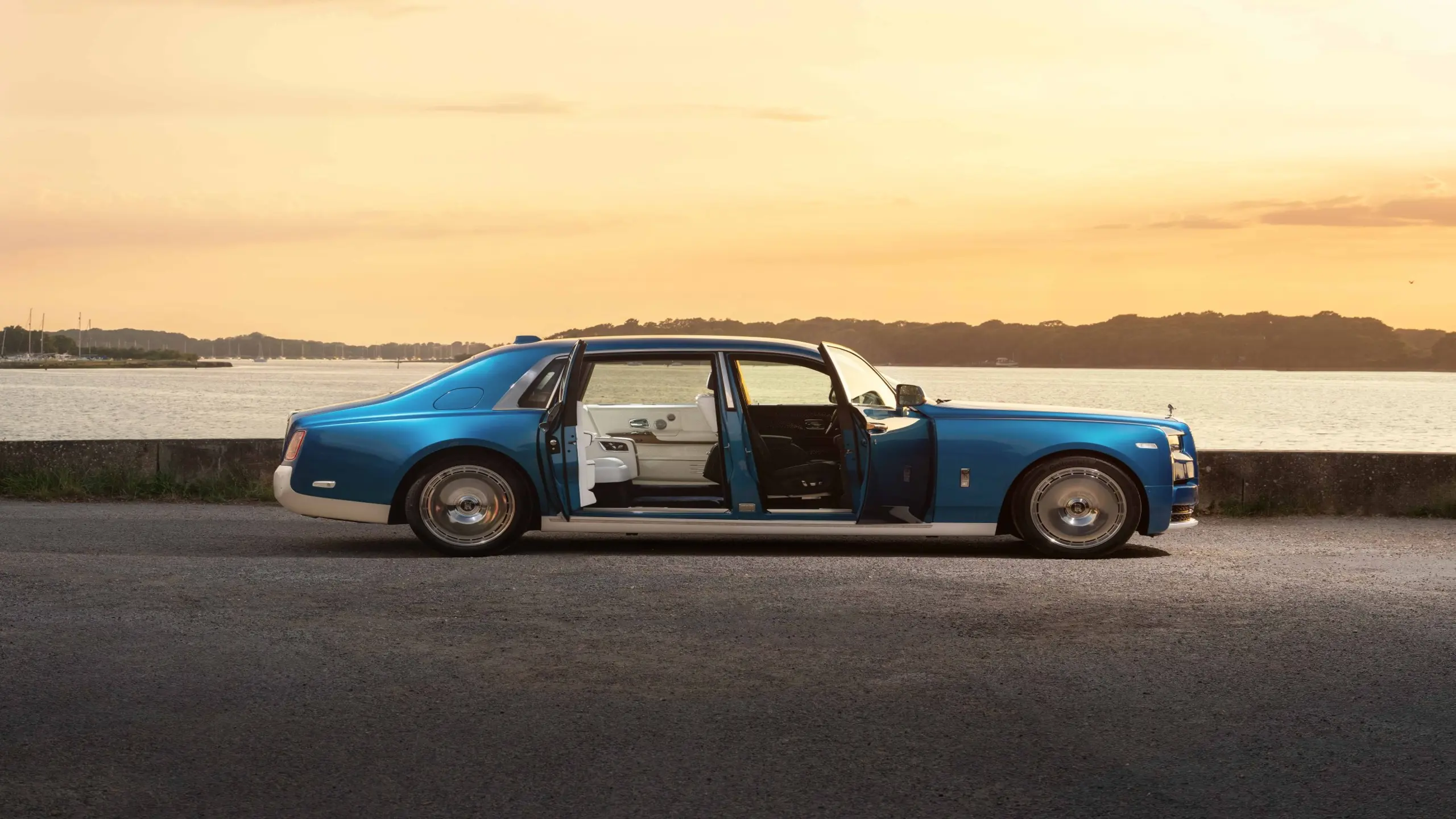
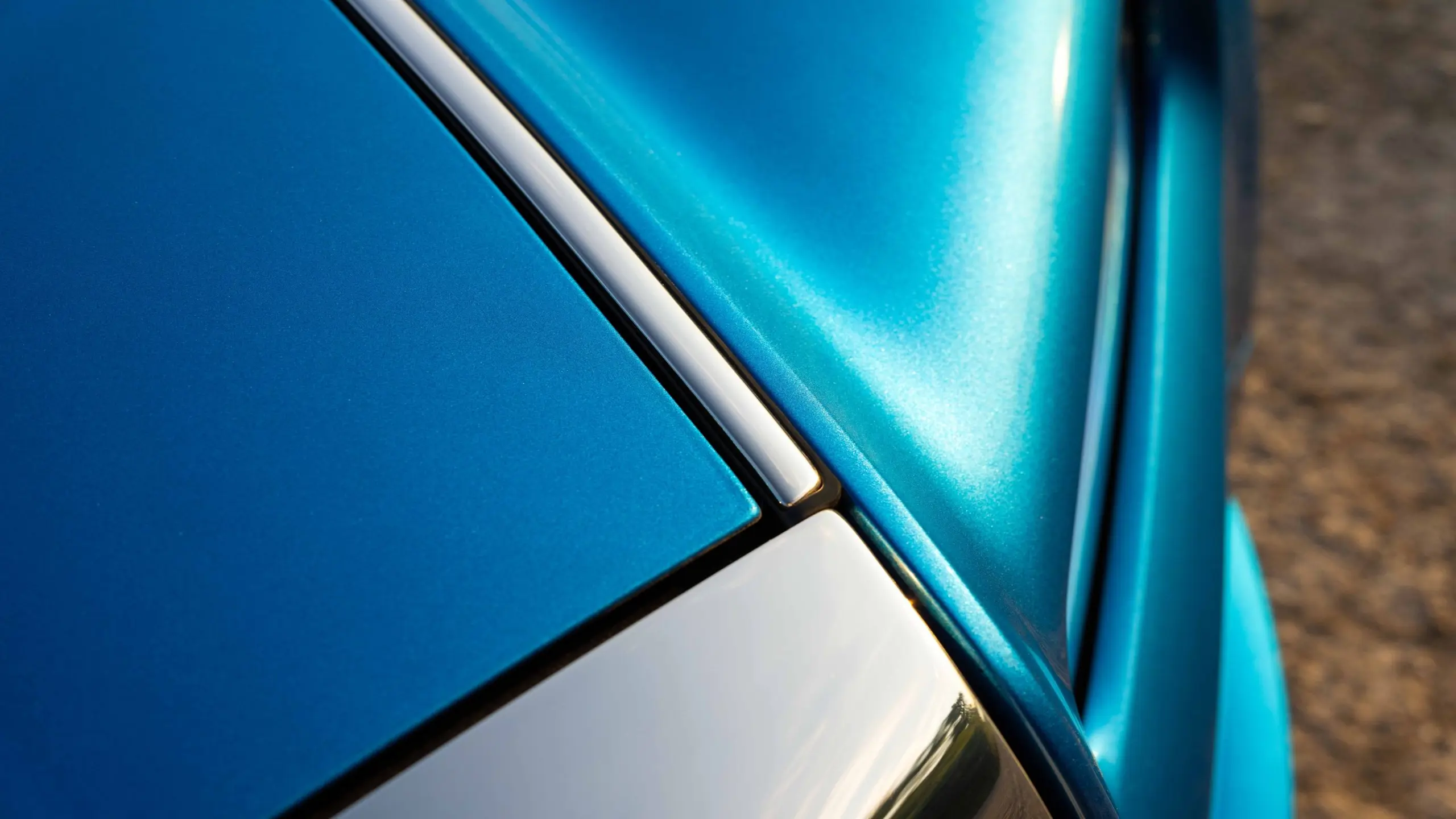
The exterior establishes the commission's visual grammar immediately and without ambiguity. Regatta Blue, a deep, considered marine tone, covers the upper body, while English White defines the lower, the two shades meeting in a hand-laid two-tone treatment that recalls the precise line where a yacht's hull divides from the water it sits in. Set on 22-inch fully polished disc wheels, whose mirror surfaces deliberately evoke the polished steel winches of a racing yacht, the Phantom wears its nautical references with the restraint of something that has earned the right to understatement. Every exterior detail traces back to a specific material or visual reality of the South Coast sailing world rather than to a generalised aesthetic of luxury. The result is a car whose colour and surface language reads as documentary rather than decorative, a faithful translation of a specific place into a specific object, executed with the precision that the subject demands.
Sailcloth, Deck Planking and 120 Hours of Craftsmanship
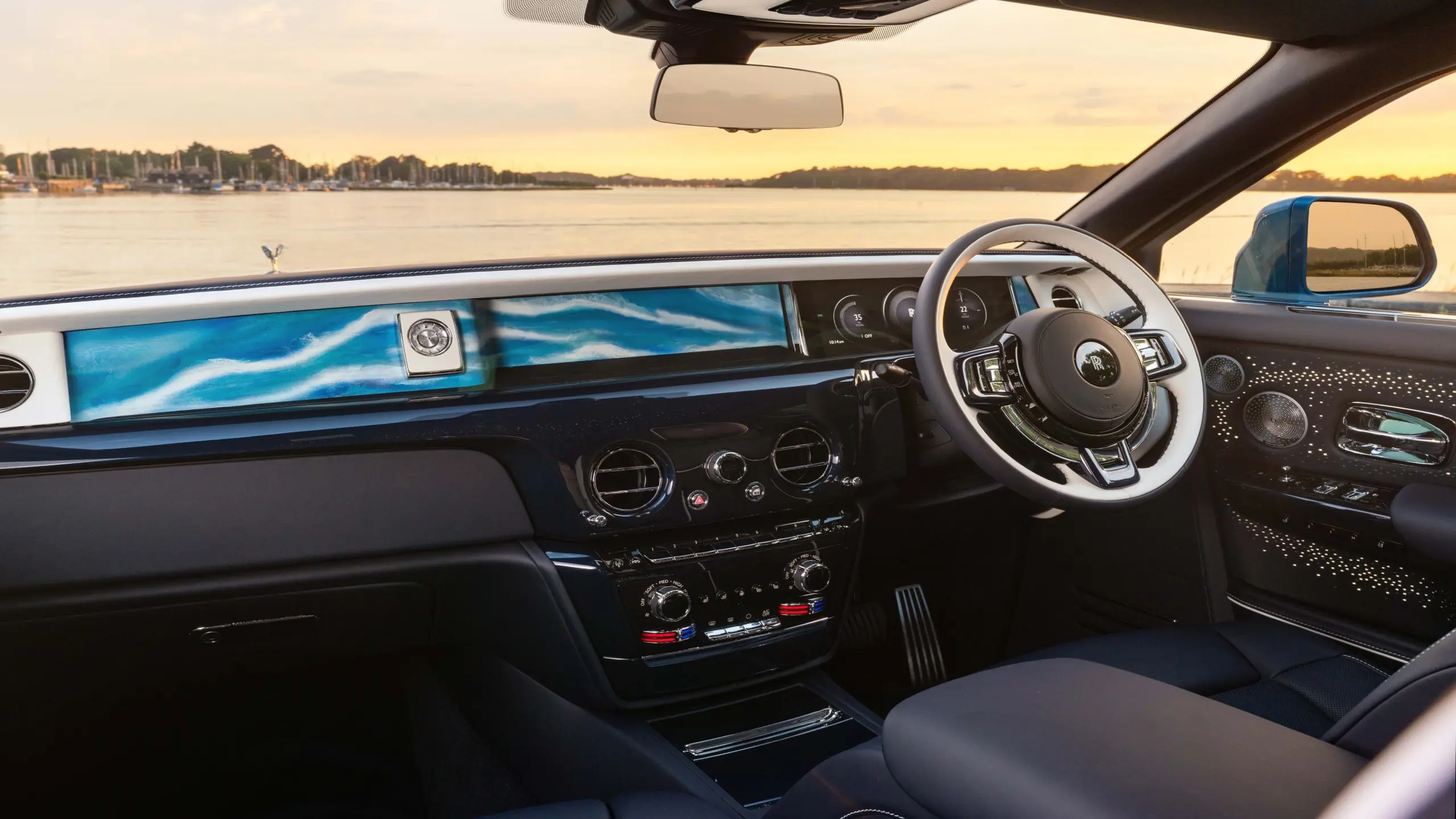
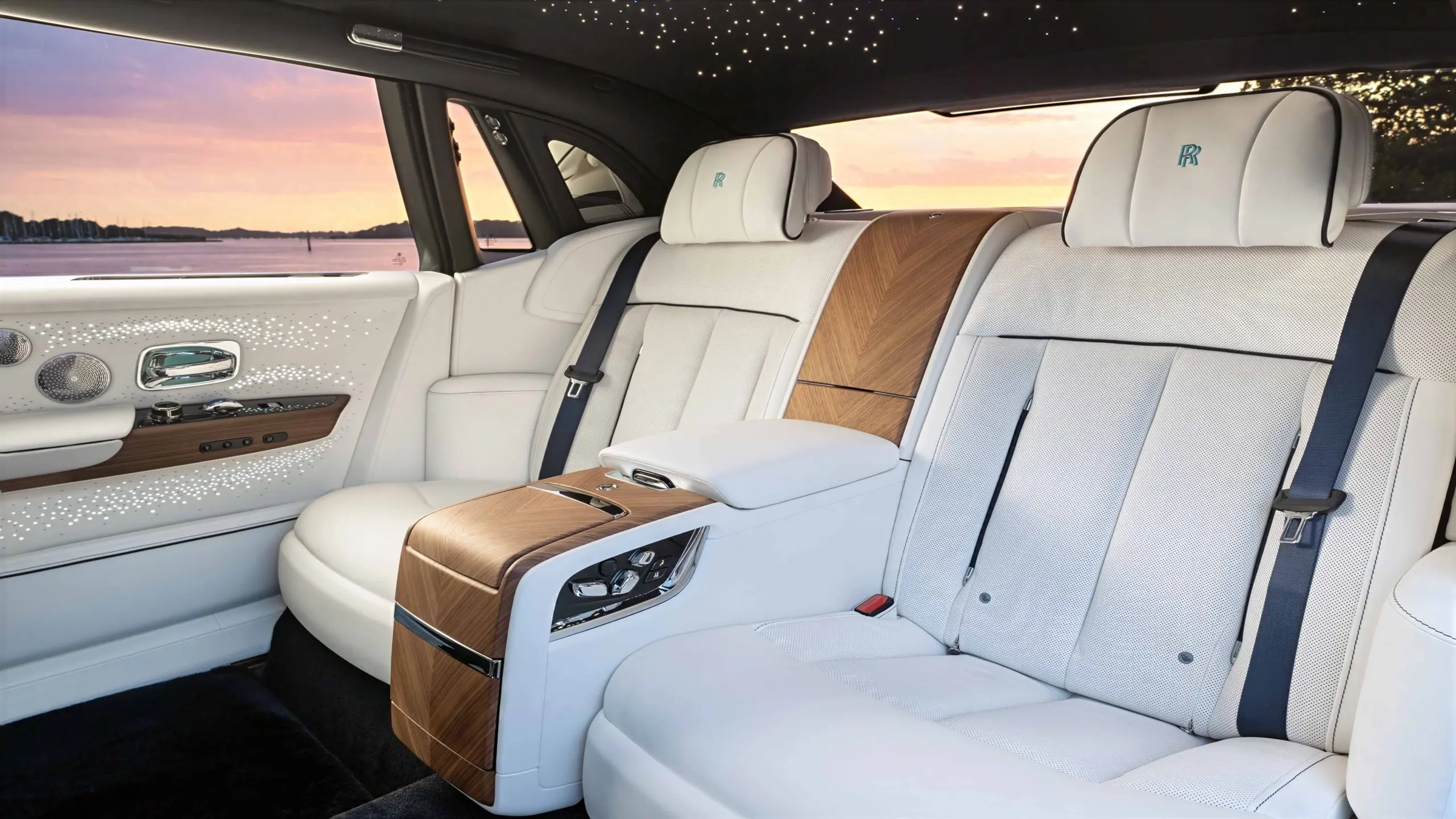
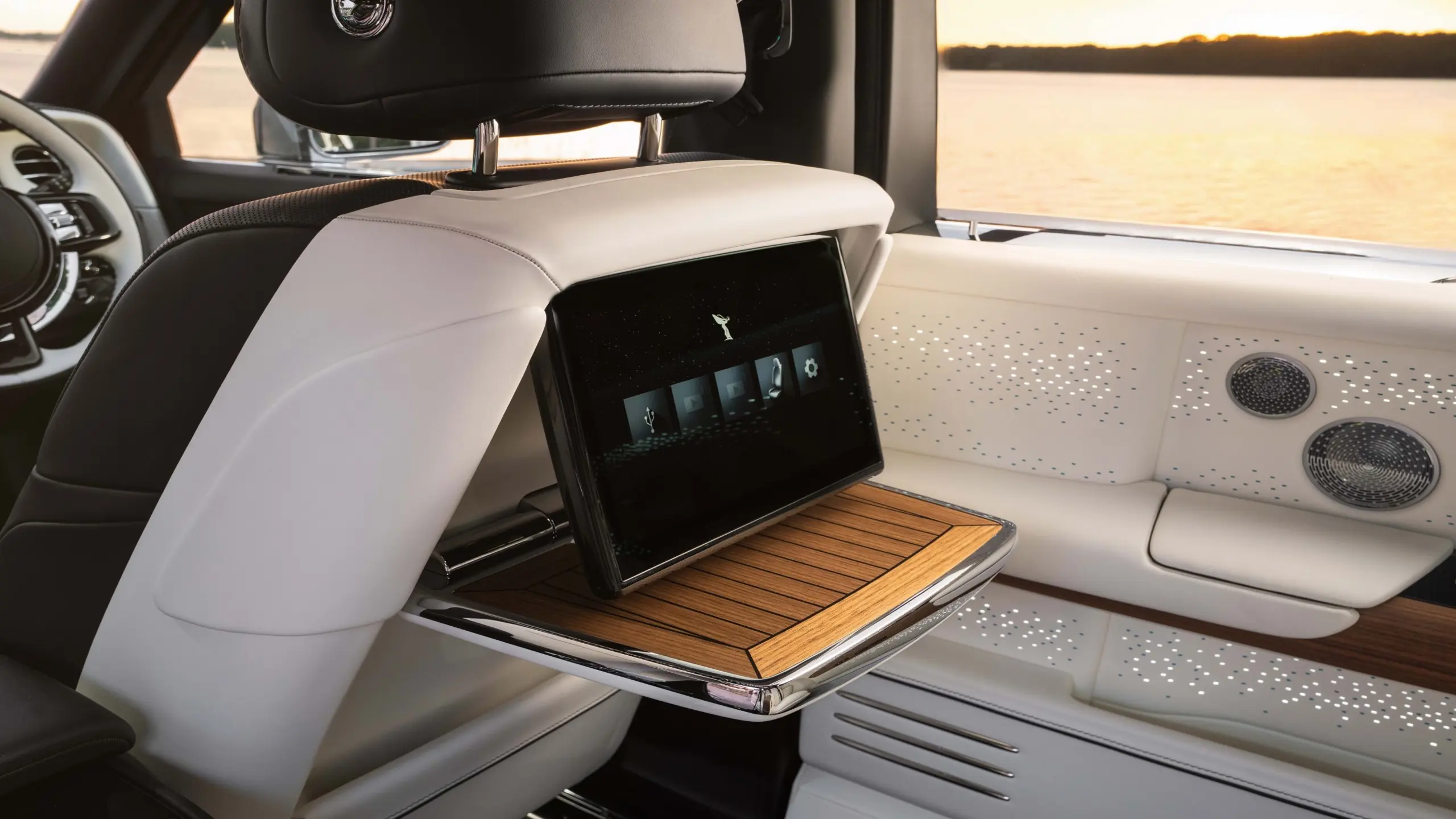
The interior continues the dialogue between yacht and motor car with a completeness that rewards sustained attention. The front cabin is appointed in Navy Blue leather; the rear suite shifts to Grace White, suggesting sailcloth and wake, with seat and door piping, contrast stitching and the steering wheel presented in both tones. The RR monograms are embroidered in Turchese, the precise turquoise of clear inshore water, a detail whose specificity speaks to the depth of research underlying every decision made within this commission. The picnic tables alone required approximately 120 hours of precision craftsmanship to complete. Each is composed of 16 Royal Walnut planks, cut from the same section of wood to ensure uniformity of grain, laid by hand from the centre outward in a bookmatched pattern. Between each plank runs a two-millimetre length of Black Bolivar wood, cut as a single continuous piece to eliminate visible joins, a direct reference to the caulking of a yacht's deck, executed in a material and at a scale that makes the analogy feel exact rather than approximate.
Hidden Coordinates and a Headliner Drawn from the Tides
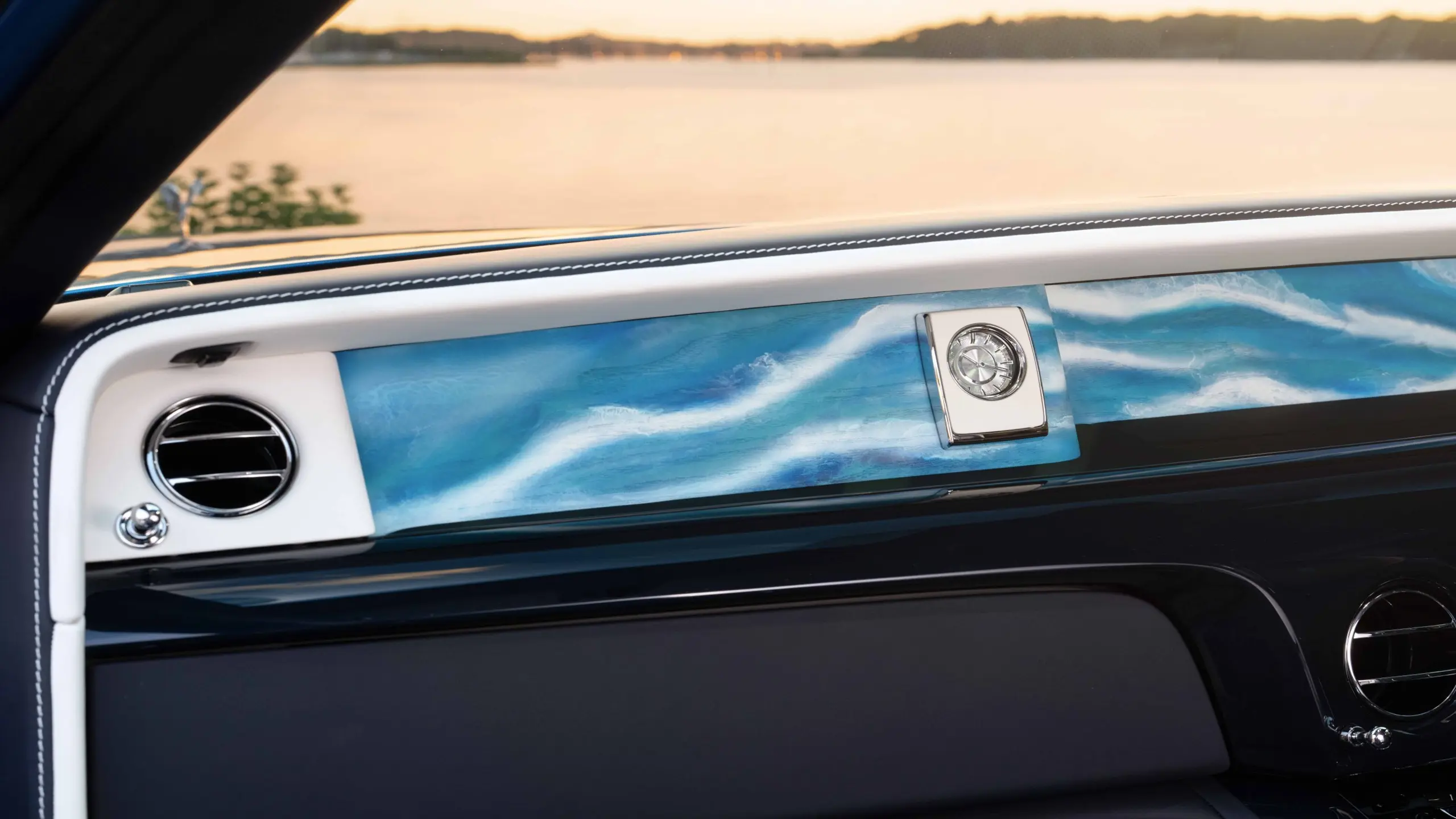
Above the rear suite, 1,307 hand-placed fibre optic stars form a Bespoke Starlight Headliner whose pattern was drawn not from the night sky but from the swirling tidal currents around the Isle of Wight, a navigational chart rendered in light, invisible to anyone who does not know to look for it. The centrepiece of the interior is a hand-painted Gallery artwork named Watercolour, created by Rolls-Royce's in-house artist using specially developed paints on an open-pore wooden substrate. To capture the movement of open water convincingly, the artist developed a new blending technique refined over two weeks and numerous test panels, the kind of process that separates a painted detail from a genuine work of craft. One detail remains deliberately hidden. Each eyeball air vent carries a set of geographic coordinates, visible only when the vent is tilted forward. The passenger-side vent holds the coordinates of Goodwood House, 50°52'12"N 00°44'24"W; the driver-side vent carries those of the Home of Rolls-Royce, 50°51'13"N 00°44'40"W. The two points lie within a mile of one another. Together, they fix Phantom Regatta to the exact ground from which it came, embedding place into the object with a precision that no paint colour or veneer alone could achieve. It is the kind of detail that will never appear in a photograph, never feature in a specification sheet, and never be noticed by anyone who doesn't reach for it, which is, of course, entirely the point.