A New Benchmark for Audi Performance Engineering
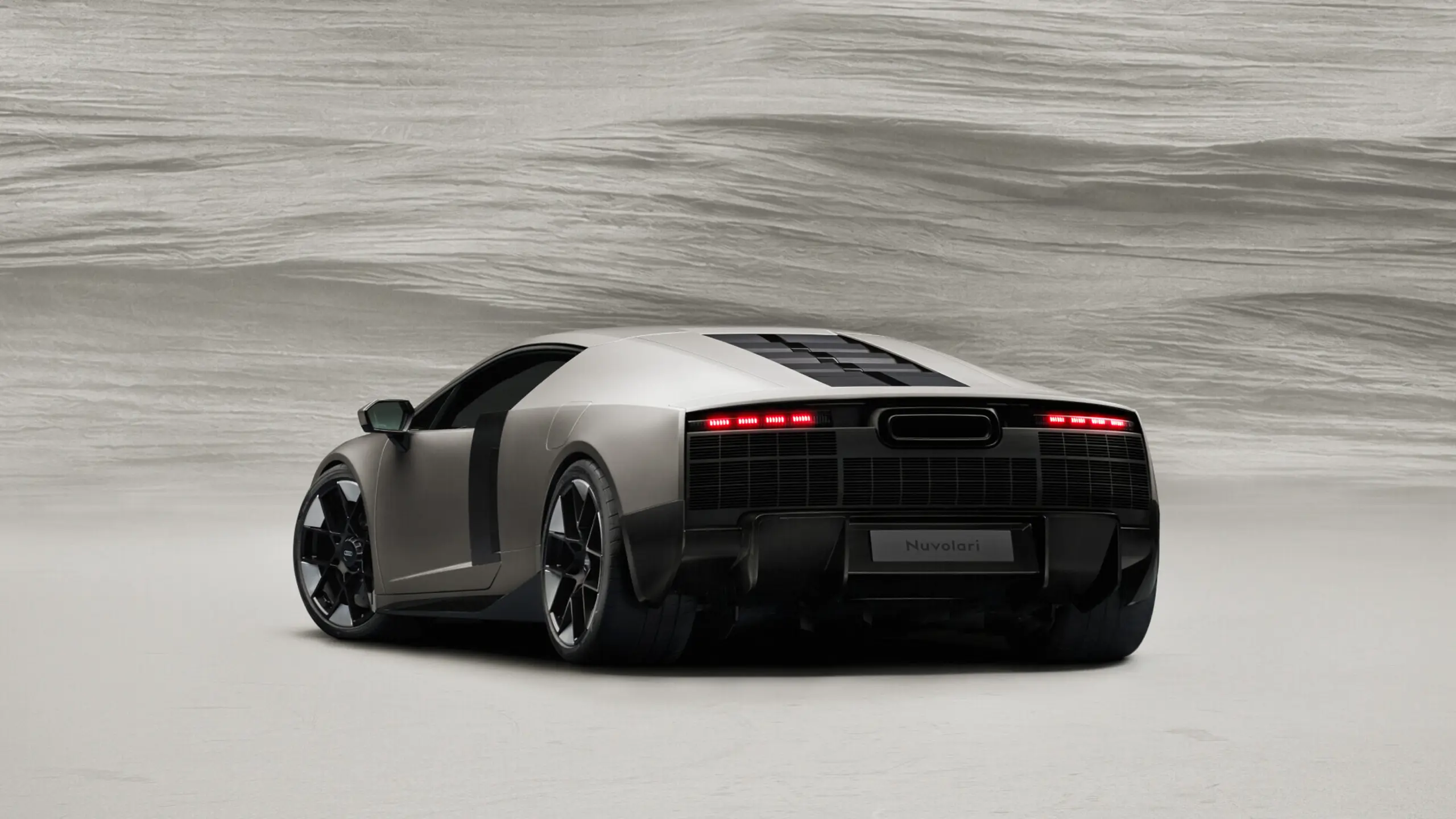
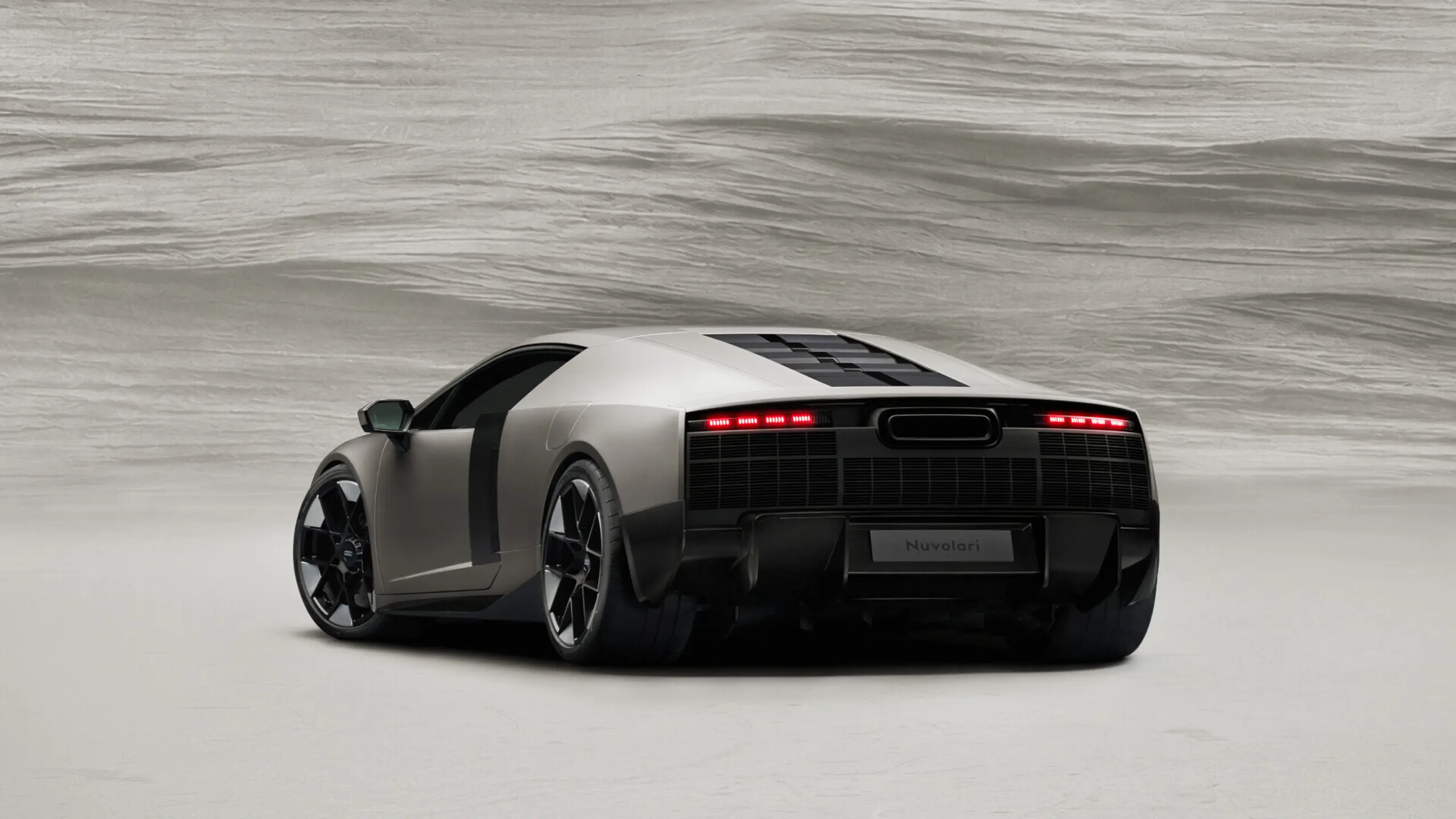
The Audi Nuvolari marks a decisive step into the brand’s most extreme performance territory yet, positioning itself as a flagship supercar that fuses hybrid innovation with Formula 1–inspired engineering logic. Limited to just 499 units, it becomes not only the most powerful production vehicle in Audi’s history, but also the fastest expression of the four rings ever conceived, with a clear ambition to redefine what a modern performance hybrid can represent. At its core, the Nuvolari is built around a high-performance hybrid system delivering a combined 1,001 PS, enabling acceleration from 0–100 km/h in 2.6 seconds and a top speed exceeding 350 km/h. This performance is achieved through a tightly integrated architecture that combines a 4.0-litre twin-turbo V8 with three axial-flux electric motors, supported by a compact 7.3 kWh battery system focused on instant power delivery rather than range-oriented compromise. The development philosophy is rooted in precision and predictability, with Audi’s leadership emphasising execution through teamwork and rapid transfer of motorsport technology into road applications. The result is a car engineered not simply for peak numbers, but for repeatable, controlled performance across varying conditions, from road usability to sustained track intensity.
Monolithic Design and Titanium Identity
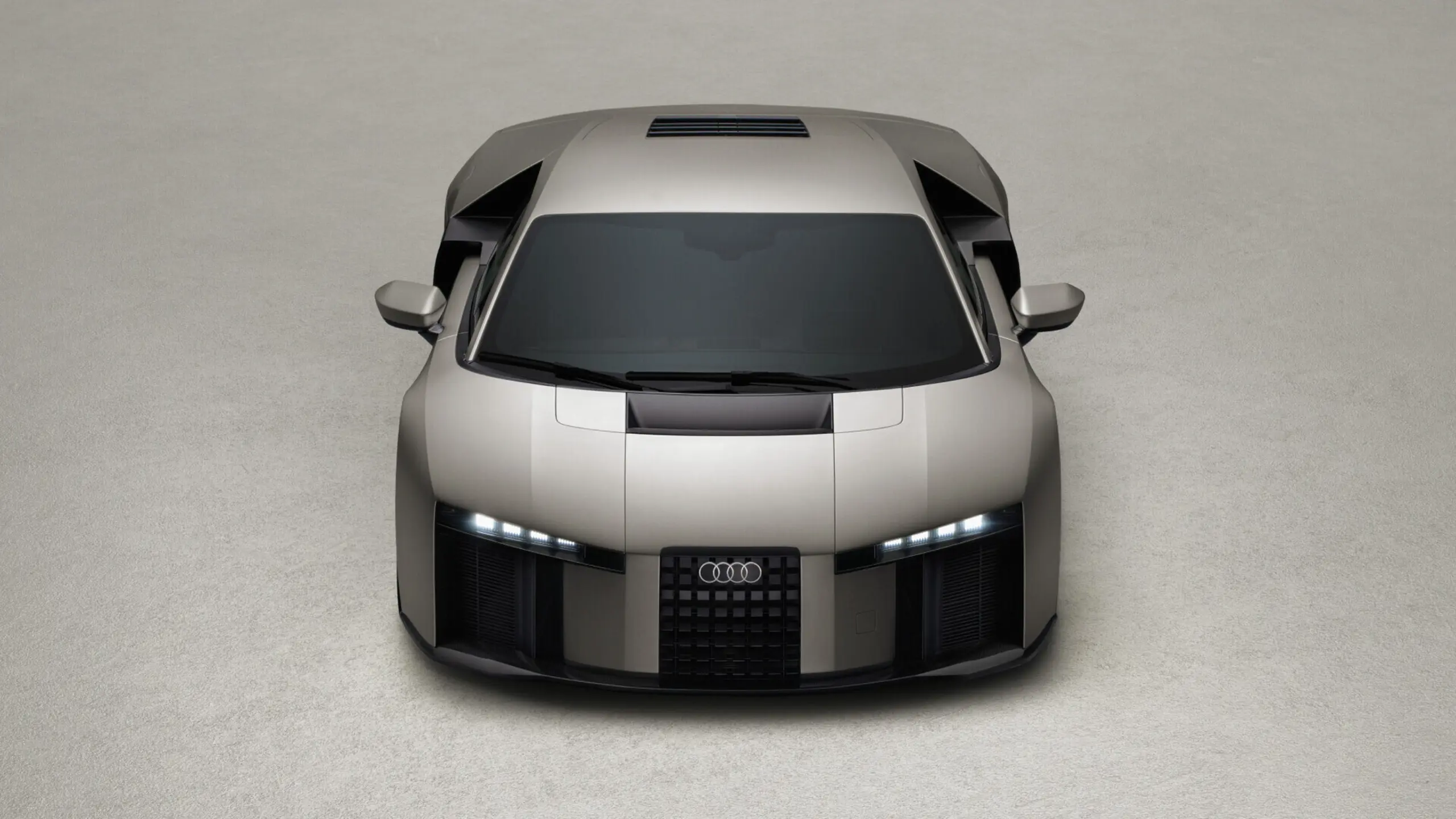
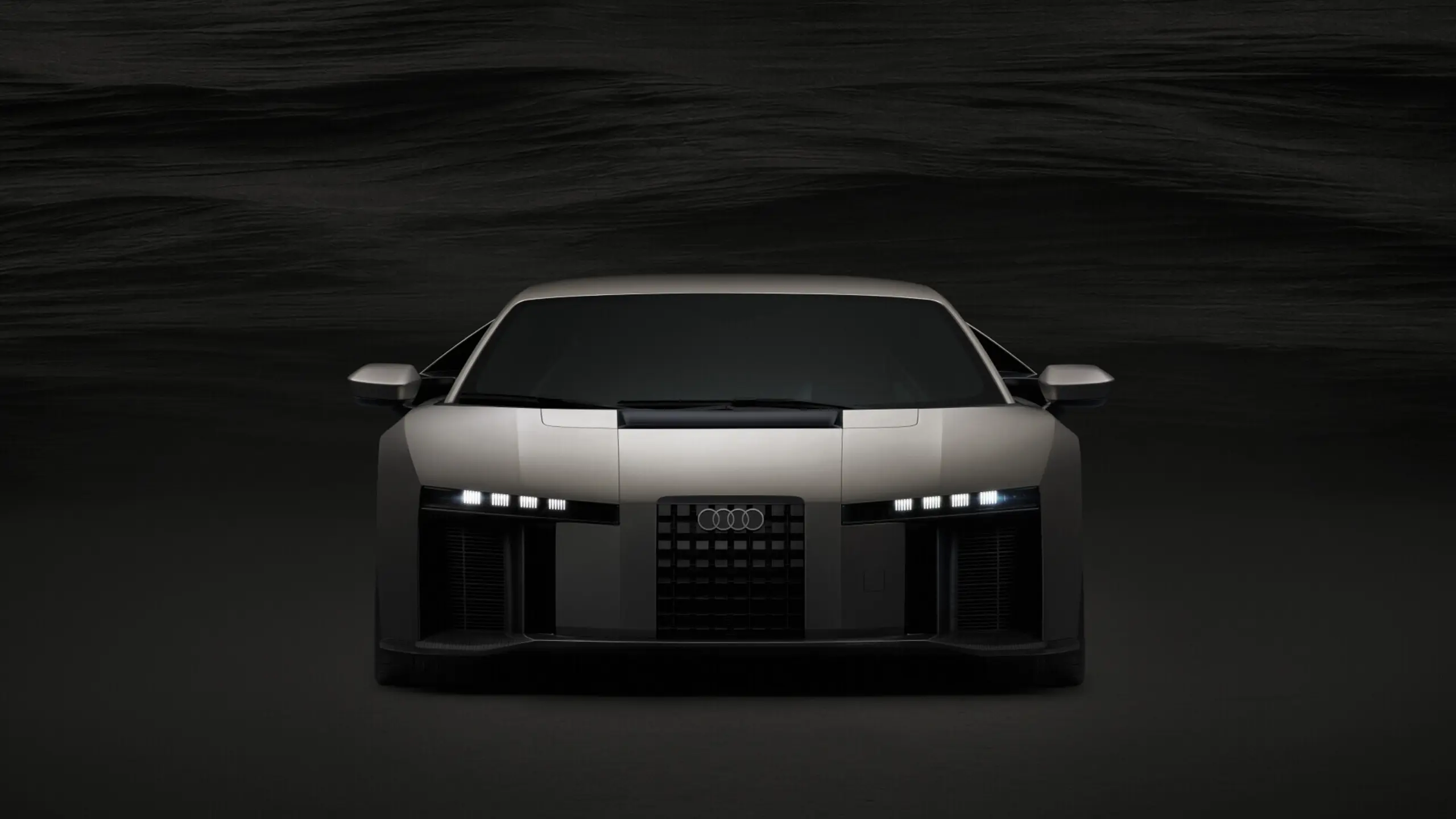
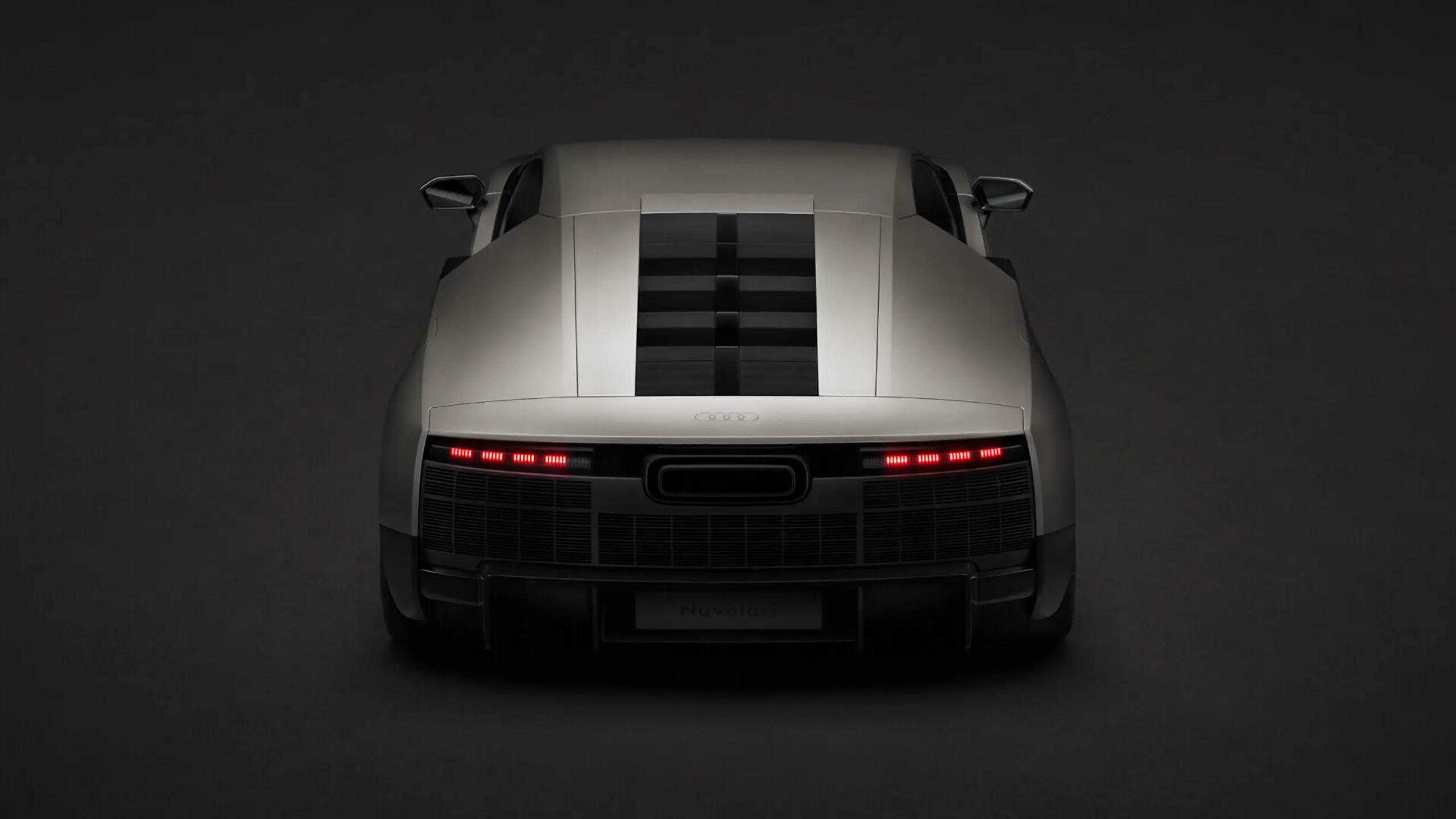
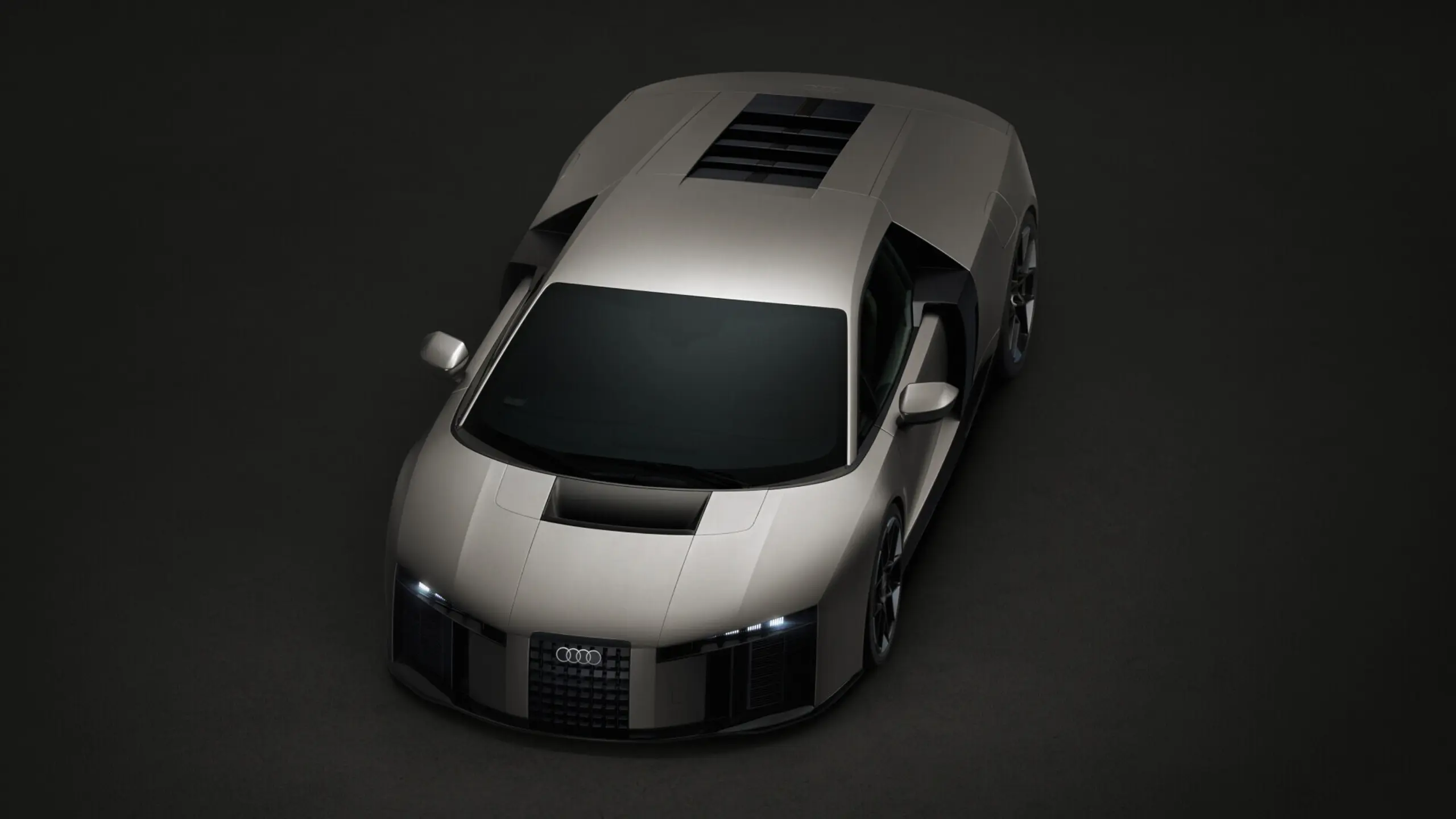
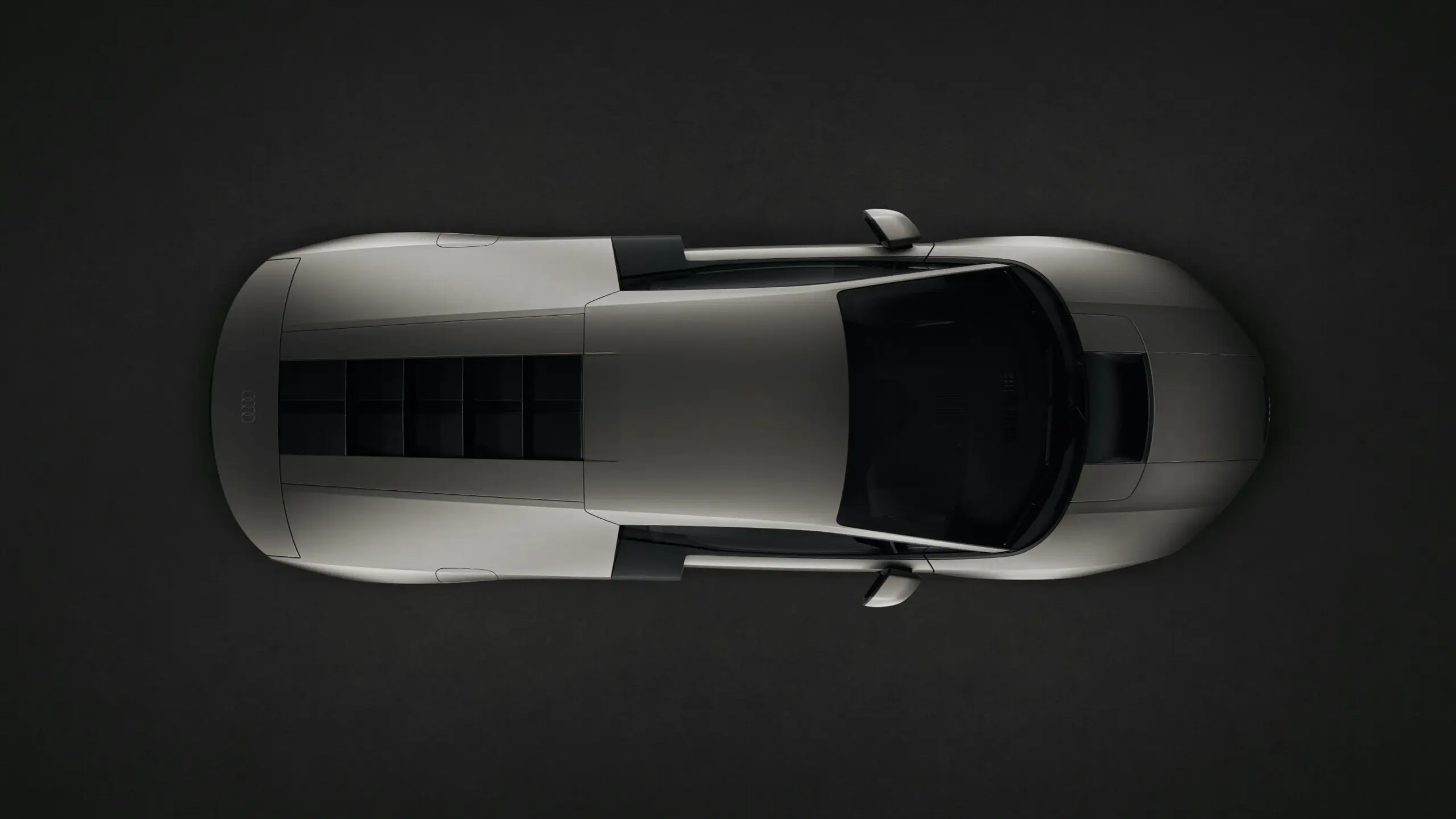
The exterior of the Nuvolari introduces Audi’s next design language, defined by taut surfaces, uninterrupted volumes, and a mid-engine proportion that creates a low, sculpted and almost architectural stance. The body is conceived as a monolithic form, where aerodynamic function is integrated into the surface rather than added onto it, reinforcing a sense of technical purity. A defining visual signature is the Titanium colour finish, previously seen on Audi’s concept and motorsport programmes, now applied as the primary identity of the Nuvolari. Combined with exposed carbon elements, it enhances the clarity of the car’s structural lines and emphasises its performance-driven geometry. Active aerodynamic elements, including a deployable rear wing and S-duct front architecture, are seamlessly embedded into the bodywork to maintain visual coherence even in motion. Forged centre-lock wheels, carbon exterior architecture and precision airflow channels underline the car’s dual purpose: efficiency at high speed and stability under extreme load. Every surface is shaped to manage airflow, cooling and downforce, resulting in a design that communicates function as much as aesthetic intent.
Driver-Centric Interior and Predictive Control Logic
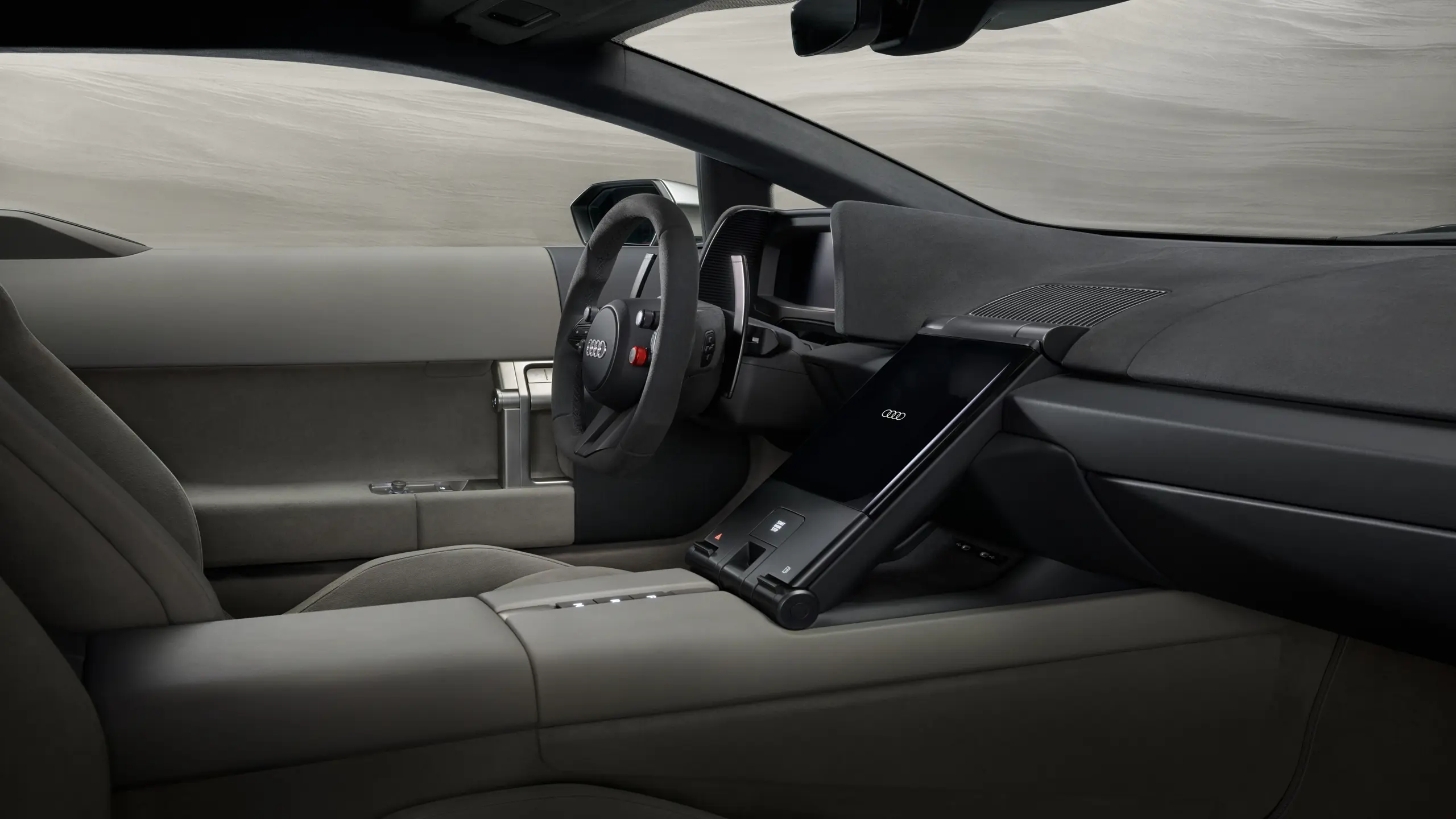
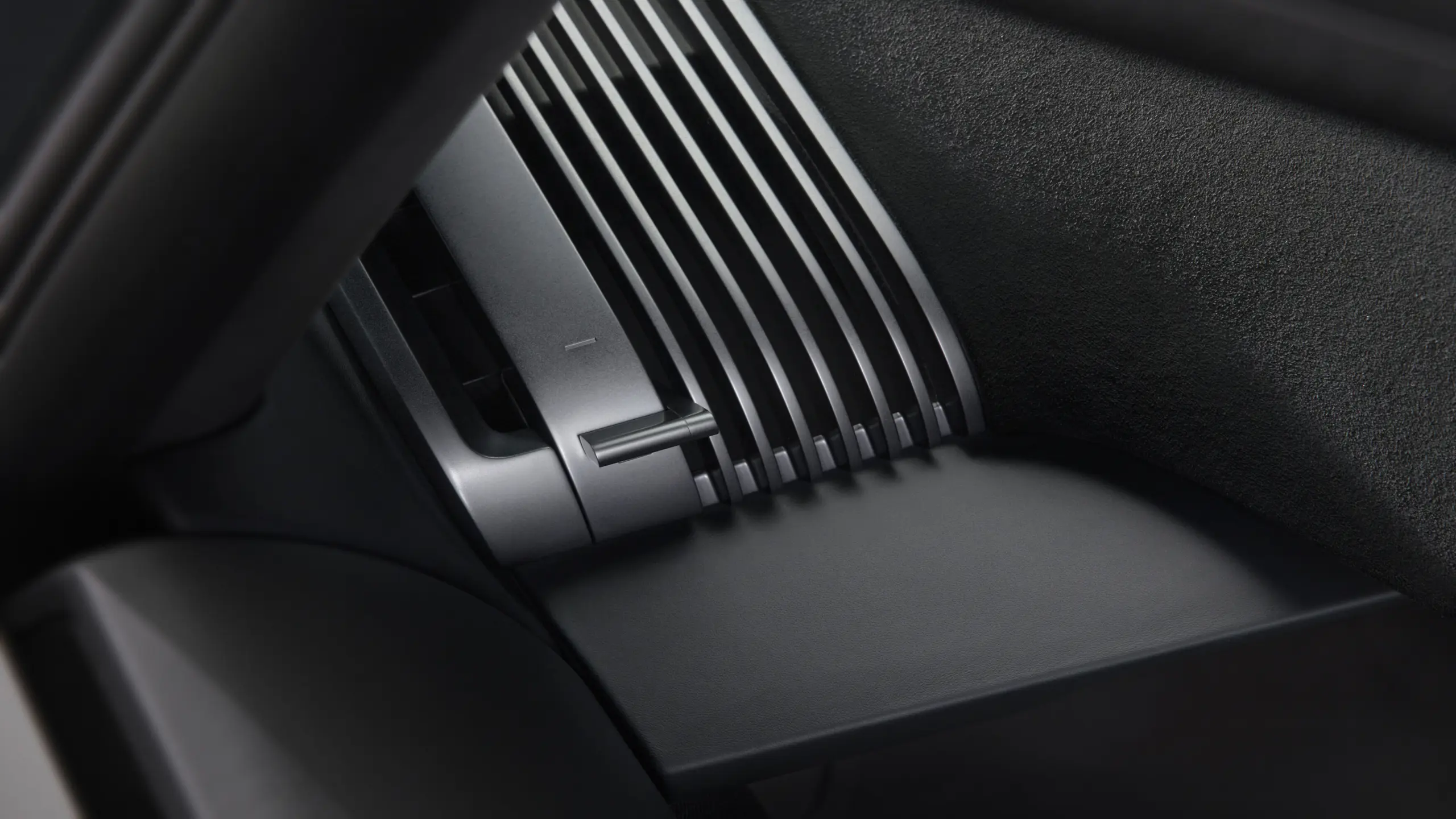
Inside, the Nuvolari adopts a radically focused cockpit philosophy, stripping away non-essential complexity in favour of a driver-first environment. The interior is structured around a clear separation of information hierarchy, where critical driving data is placed directly within the driver’s line of sight, while secondary functions remain subtly integrated into the background architecture. Materiality plays a central role in reinforcing this focus, with anodised aluminium, carbon fibre structures and performance-oriented seating designed to maximise feedback and control. Lightweight seats with integrated carbon shells provide both structural rigidity and ergonomic precision, ensuring that the driver remains physically connected to the chassis behaviour at all times. The digital interface follows the same philosophy of functional clarity, supported by colour references to Audi’s motorsport heritage. The cabin is visually divided into two tonal zones, with a darker forward section dedicated to concentration and a lighter rear section that adds spatial contrast, reinforcing the sense of forward momentum and performance intent.
Predictive Dynamics and Formula 1–Level Systems Integration
Beyond its raw performance, the Nuvolari’s most defining characteristic lies in its predictive vehicle dynamics system, which uses real-time sensor data to anticipate grip changes and adjust torque, braking and aerodynamics pre-emptively. This system effectively transforms the car into a continuously adapting platform, capable of responding before physical limits are reached. The quattro predictive ride system distributes torque not only longitudinally but also laterally, integrating electric front-axle motors to enable precise vectoring under all conditions. This is complemented by adaptive driving modes that range from efficiency-focused E-Hybrid operation to fully dynamic Track settings, where traction control and stability systems can be finely adjusted to driver preference and surface conditions. Supporting this is a brake-by-wire system with hybridised deceleration logic, combining hydraulic and electric braking for maximum consistency. Capable of managing up to 2.8 megawatts of energy absorption, the system operates at Formula 1 performance thresholds while maintaining a controlled and repeatable pedal feel, even under extreme thermal load. Ultimately, the Audi Nuvolari represents a convergence of motorsport intelligence, hybrid innovation and design precision, positioning itself as a technically ambitious supercar that redefines how performance, control and efficiency can coexist within a single integrated system.