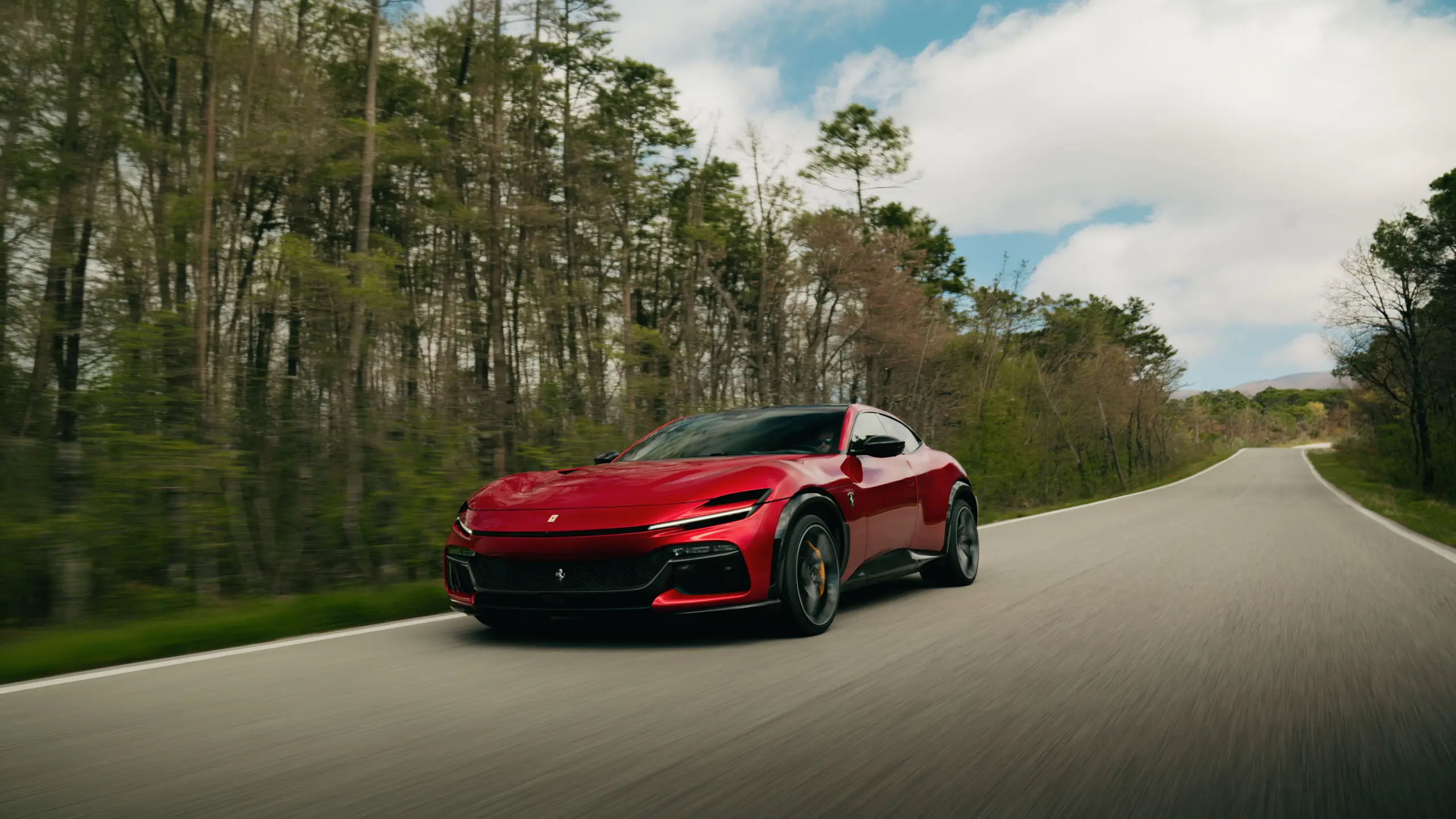
A Singular Creation From Maranello’s Most Exclusive Programme
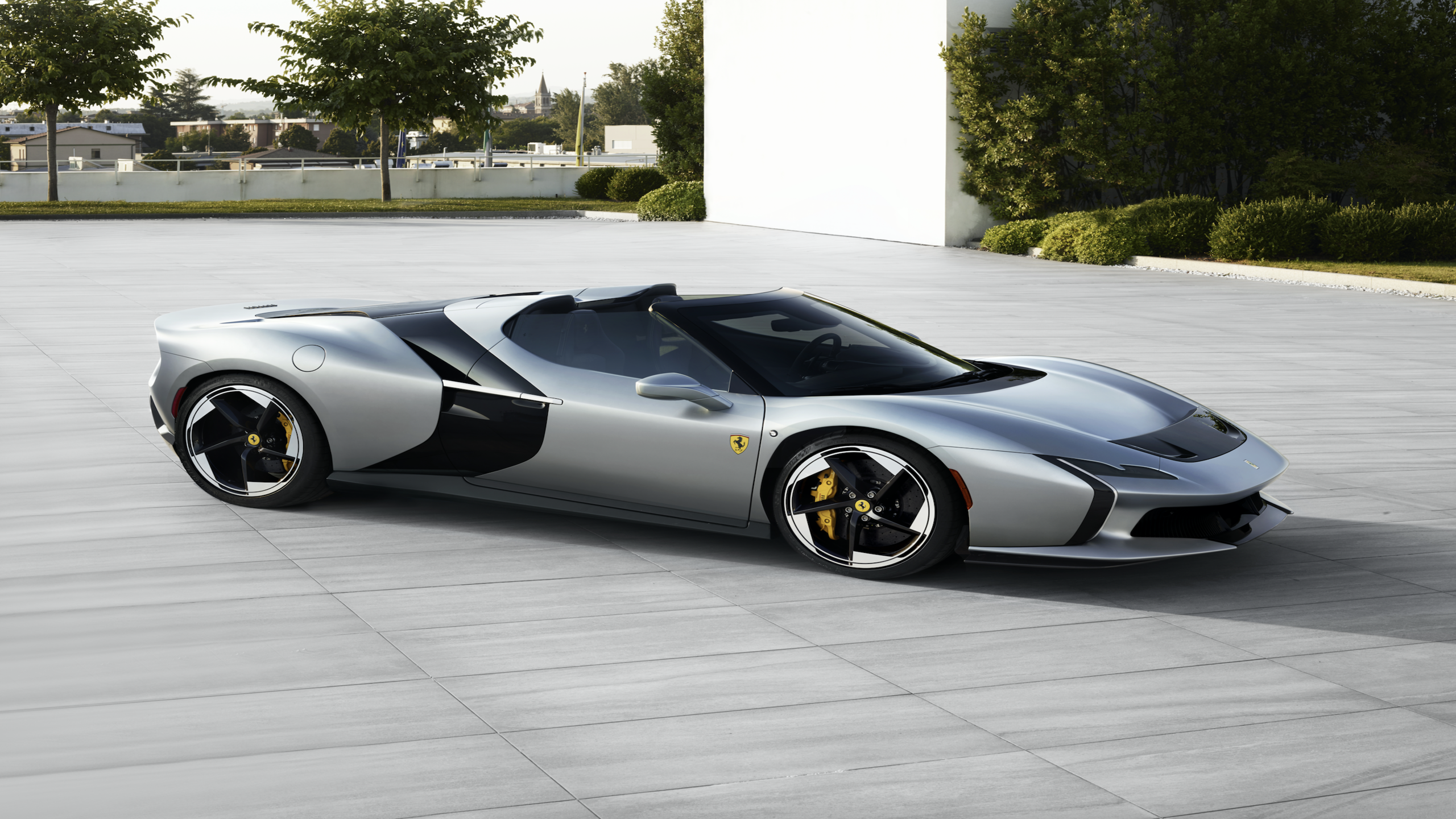
There are Ferrari models designed to push performance boundaries, and then there are those created to transcend convention entirely. The new Ferrari HC25 belongs firmly to the latter category, a deeply bespoke creation developed through Ferrari’s ultra-exclusive Special Projects programme, where the desires of a single client become automotive reality. Unveiled during Ferrari Racing Days at the Circuit of the Americas, the HC25 represents far more than a customized supercar. Designed by the Ferrari Design Studio under the direction of Flavio Manzoni, the one-off roadster reinterprets the brand’s iconic mid-rear-engined V8 lineage through a futuristic and sculptural design language that feels unlike anything else in modern Ferrari history. Built upon the architecture of the Ferrari F8 Spider, the HC25 inherits the celebrated chassis, layout and non-hybrid twin-turbocharged V8 powertrain of Ferrari’s final open-top mid-engined combustion V8 model. Yet visually and emotionally, it exists in an entirely different universe, one that simultaneously honours Ferrari’s past while previewing the aesthetic direction of its future halo cars. In many ways, the HC25 feels less like a derivative model and more like an automotive concept brought fully to life.
A Radical Design Language Defined by Sculpture and Contrast
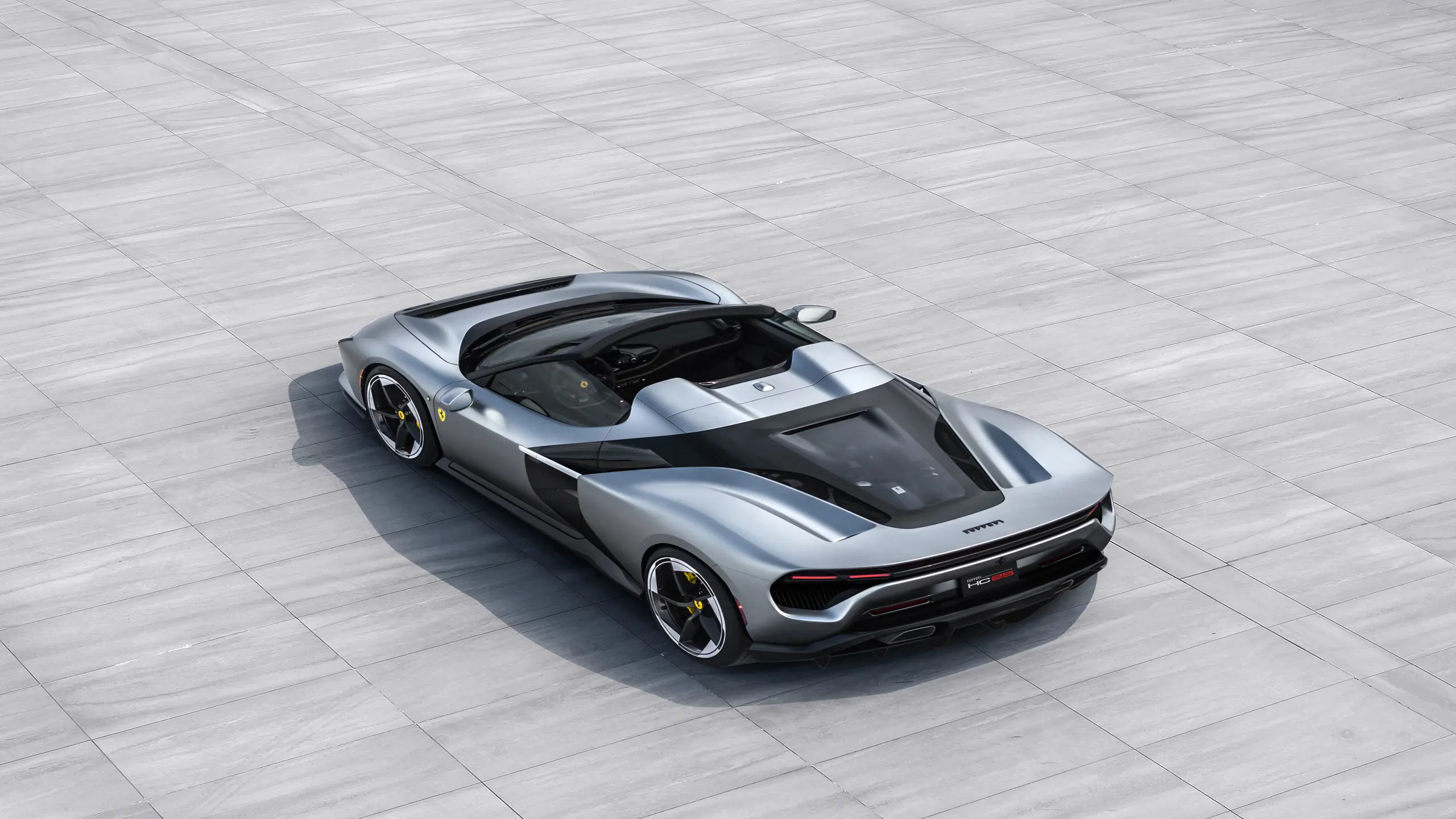
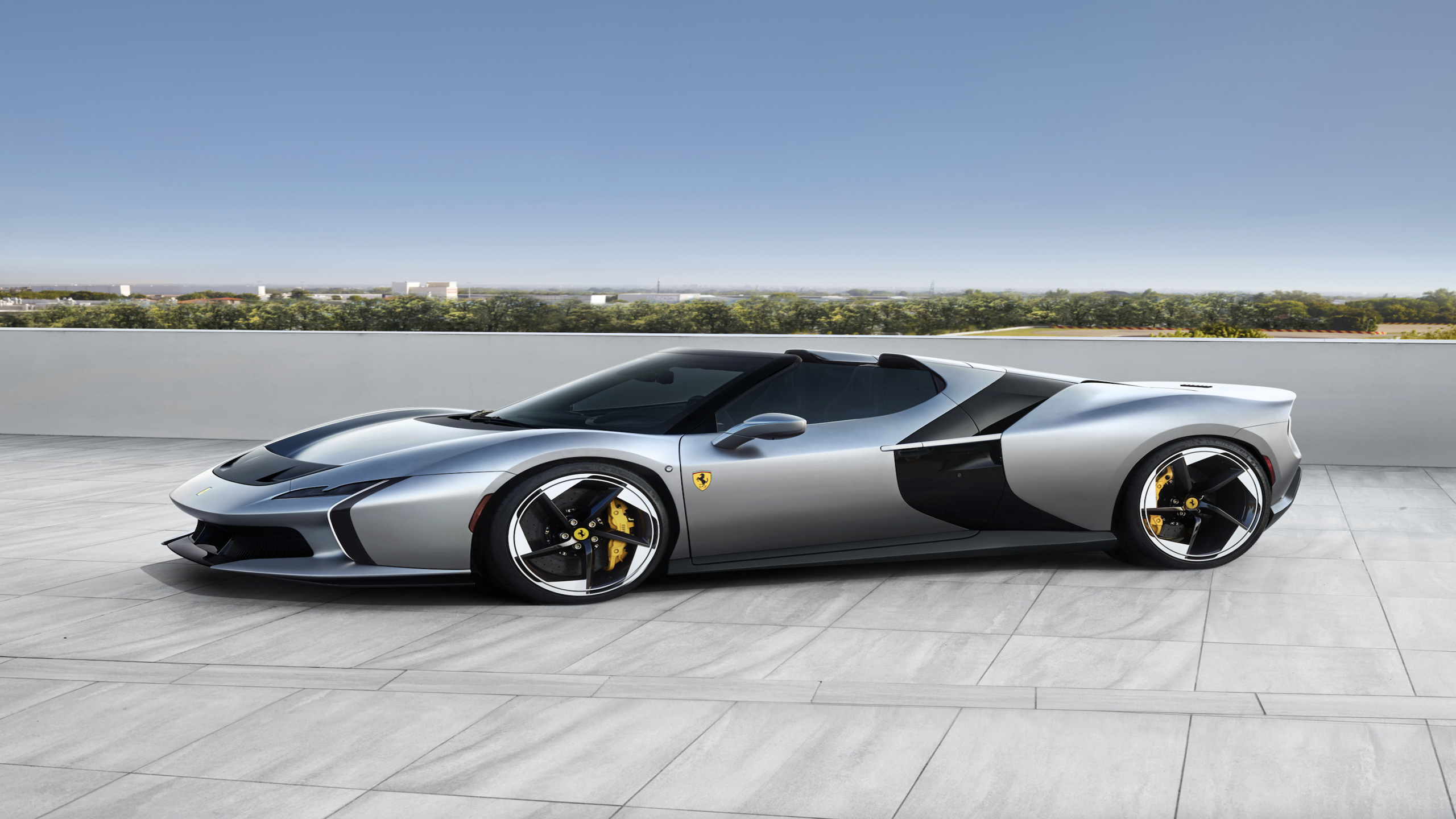
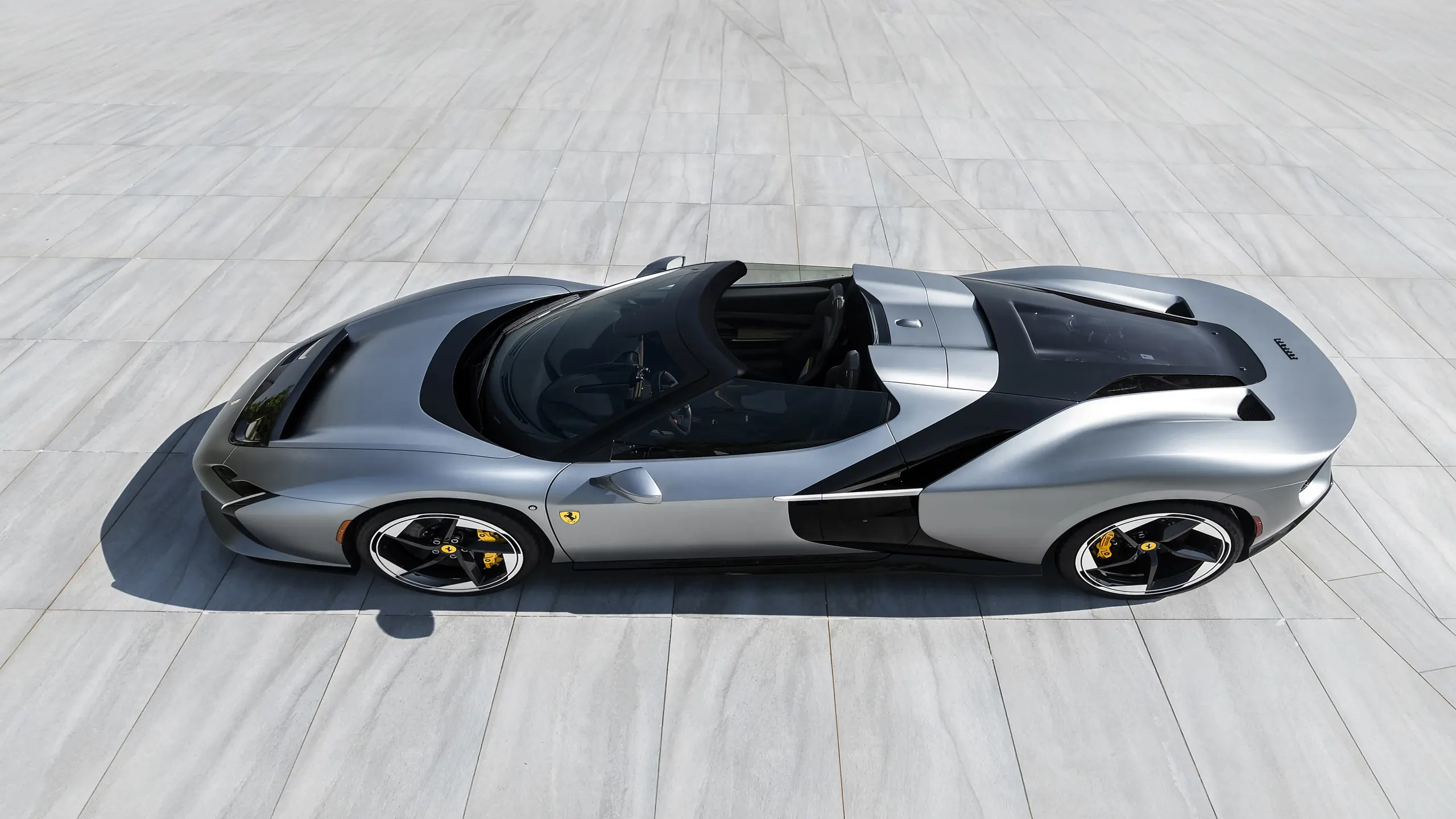
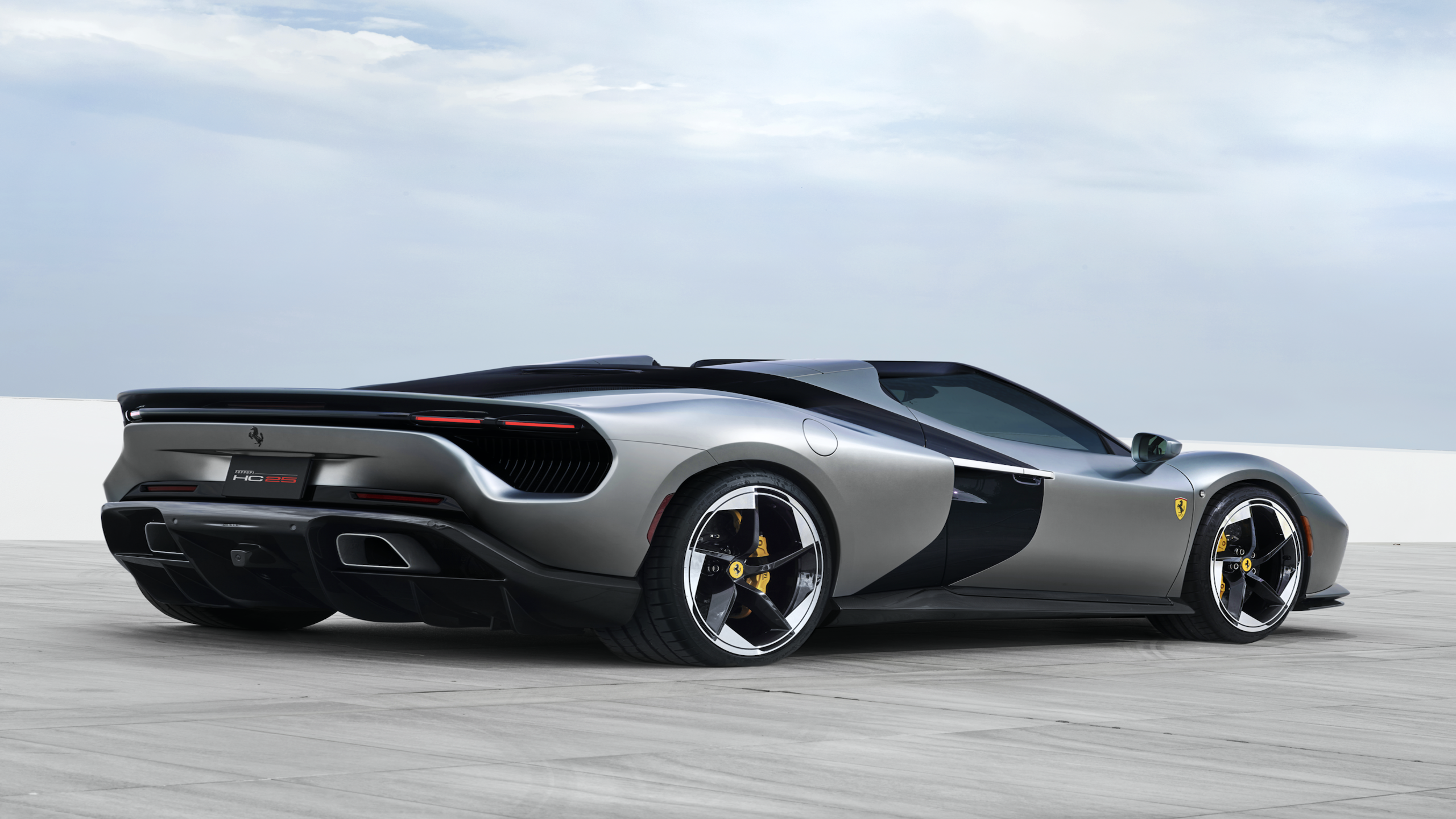
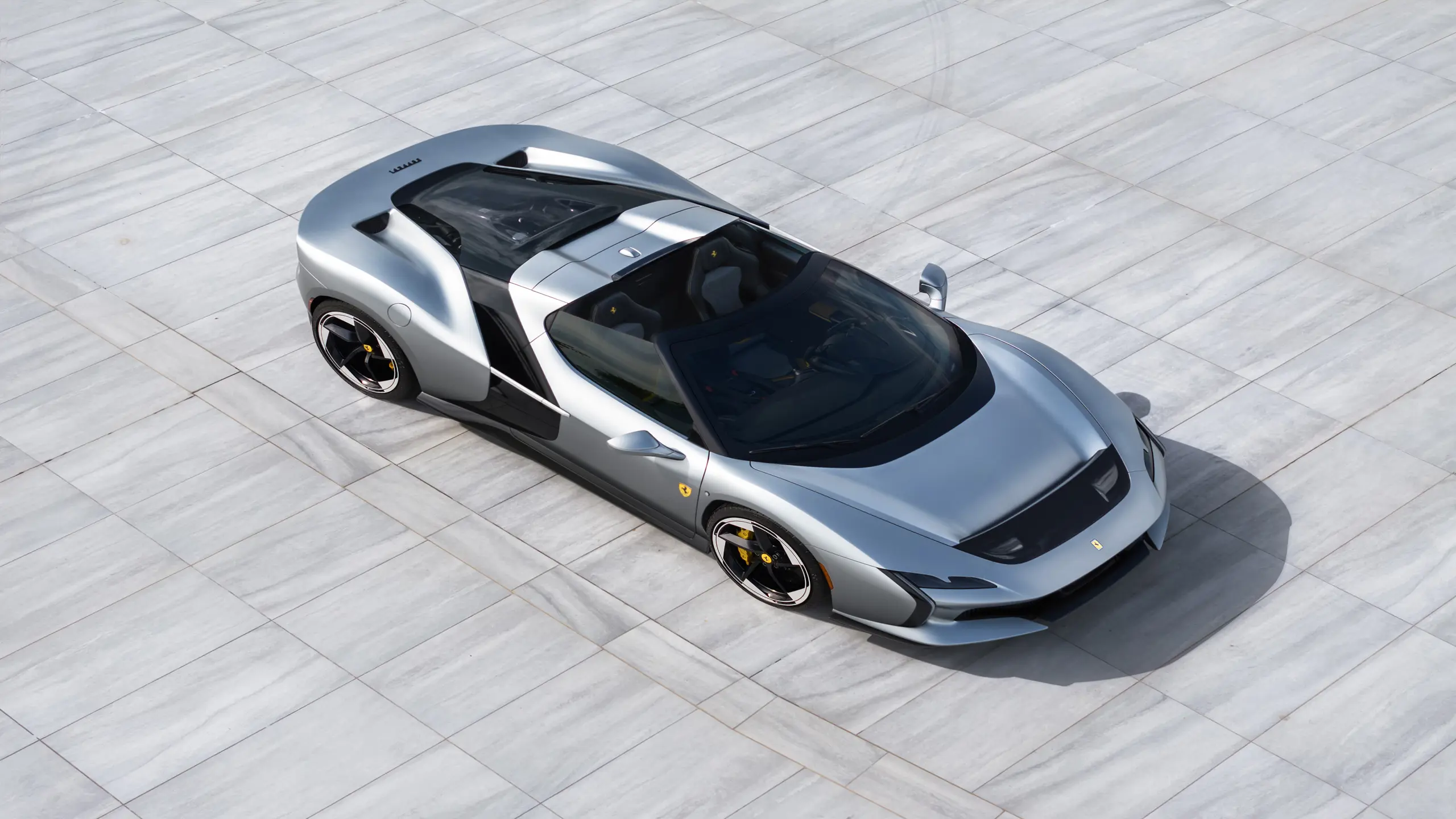
What immediately distinguishes the HC25 is its dramatic reinterpretation of Ferrari’s traditional spider proportions. While the sensuality and muscularity associated with Maranello’s mid-engined supercars remain intact, the surfaces and volumes have been transformed into something more architectural and experimental. Ferrari describes the car as an “ideal bridge” between the outgoing V8 era and the futuristic design philosophy introduced by the Ferrari F80 and Ferrari 12Cilindri. That influence is unmistakable throughout the HC25’s bodywork. The overall form is clean and almost minimalist, yet deeply sculptural. Vertical flanks framed by sharply defined creases create geometric tension across the body, while Ferrari’s signature flowing surface transitions preserve a sense of organic sensuality. The muscular rear wheel arches remain unmistakably Ferrari, but their execution feels sharper, more futuristic and more assertive than previous generations of V8 spiders. At the centre of the design lies the car’s defining visual signature: a highly three-dimensional black ribbon running through the body, separating the front and rear volumes as though they were distinct structures connected by a functional spine. Beyond its dramatic aesthetic role, the black band integrates thermal-management elements including air intakes and heat extraction systems for the powertrain itself. The side profile is particularly striking. The black ribbon sweeps dynamically from the rear wheels toward the front before curving upward across the doors and merging into the rear screen, visually shifting the cabin forward and exaggerating the car’s muscular rear stance. Even the door handles disappear within this graphic movement, integrated into a sculpted aluminium blade milled from solid metal. The result is a Ferrari that appears simultaneously elegant, aggressive and experimental, a rare combination even within the world of one-off automotive design.
Lighting, Materials and Details That Redefine Ferrari Minimalism
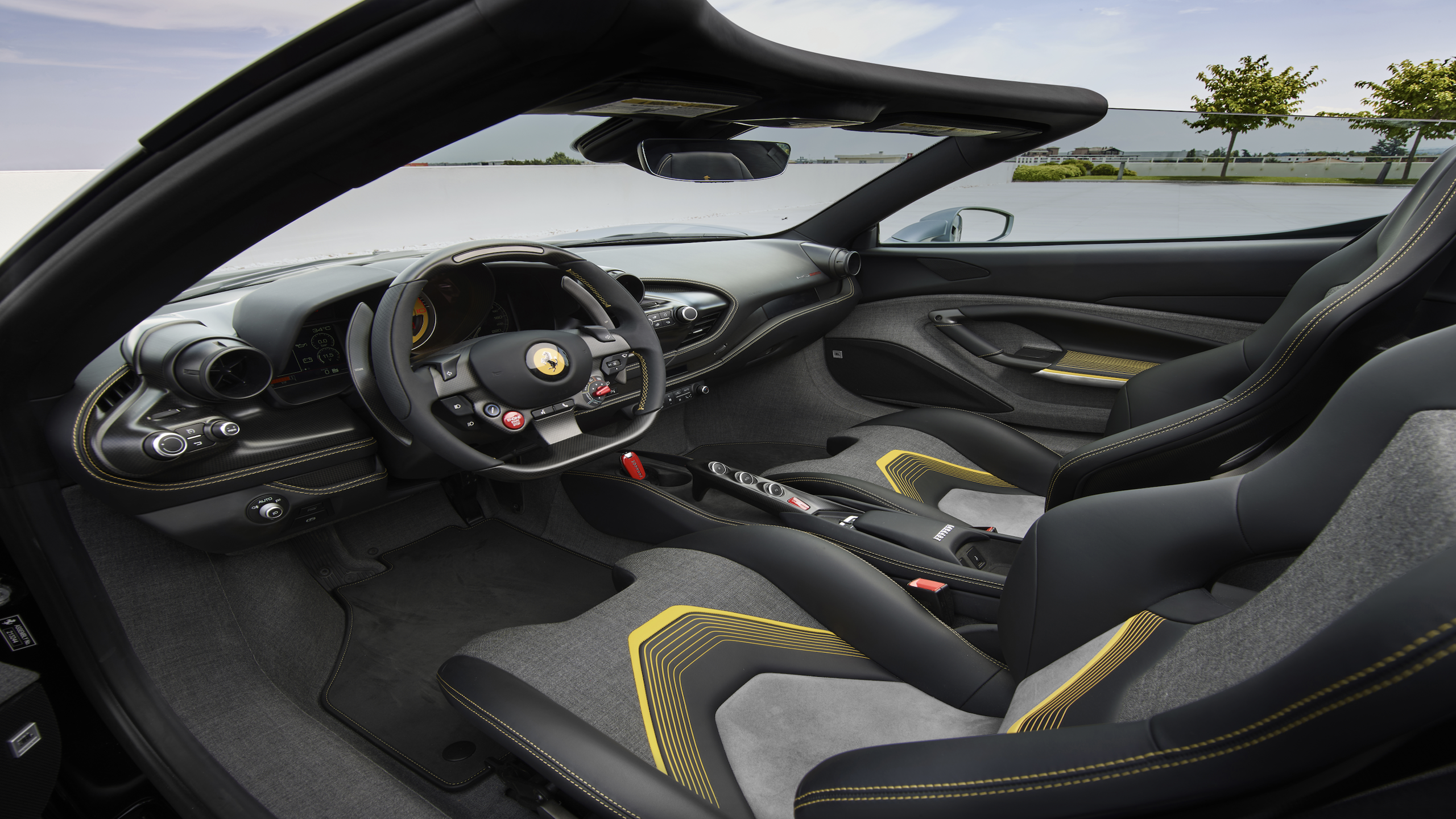
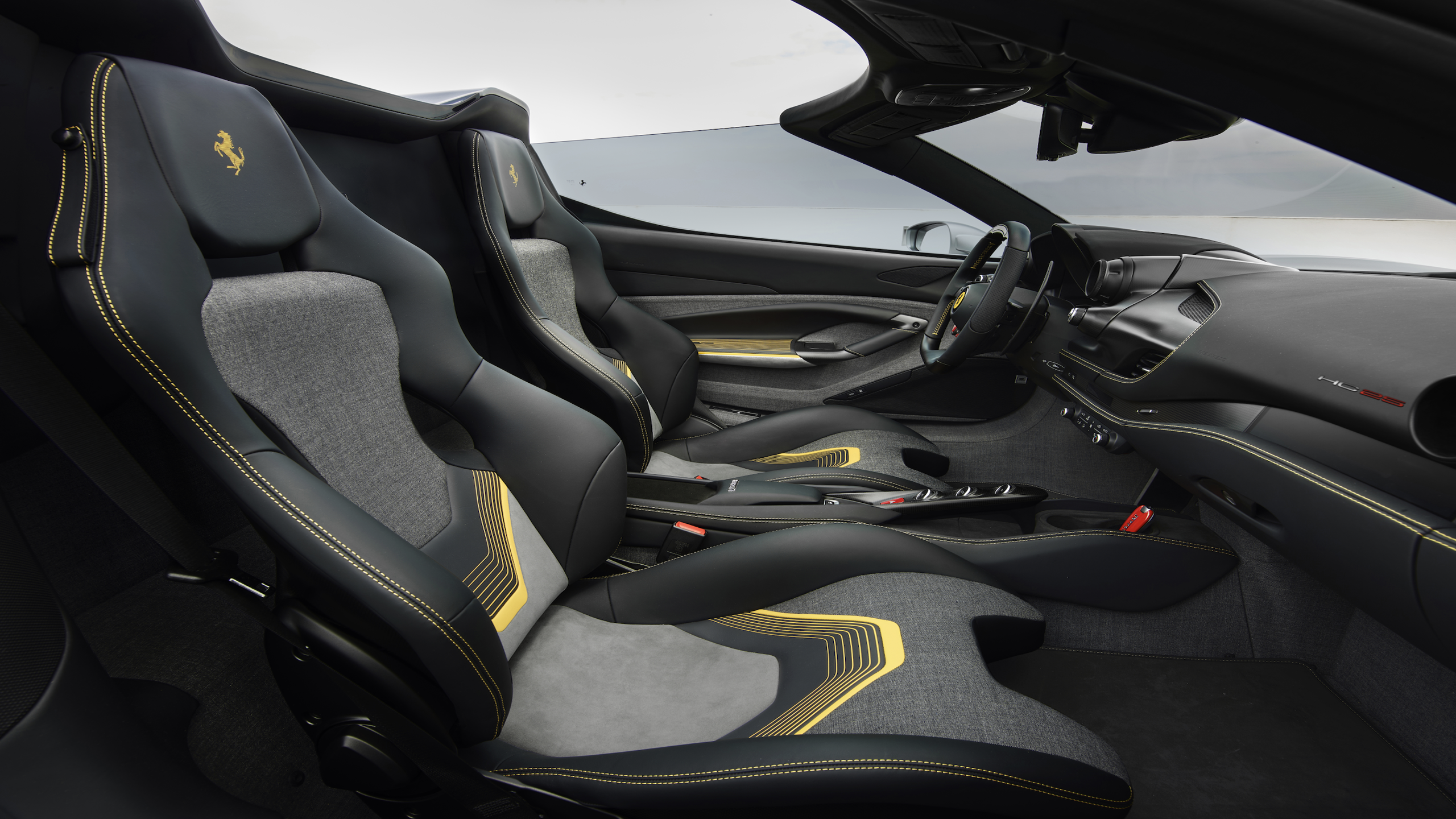
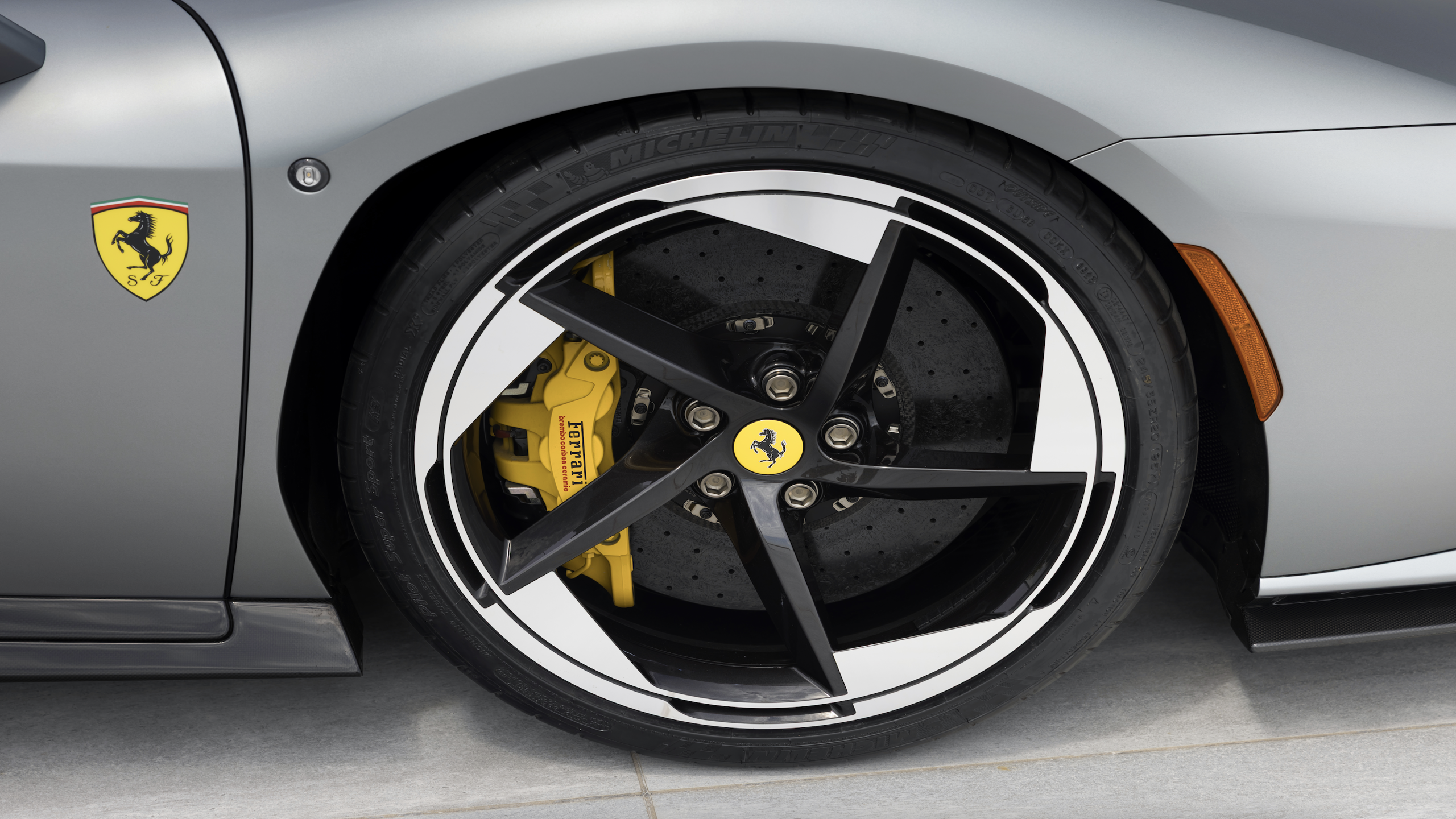
The HC25 also introduces several design details never previously seen on a Ferrari production or special-project model. The lighting architecture, for example, has been created specifically for this car, using entirely new modules that allow for exceptionally slim front headlamps featuring a central split design mirrored by the rear lighting units. Most notable are the vertical daytime running lights, arranged in a dramatic boomerang shape along the leading edges of the front wings. It is a bold departure from traditional Ferrari lighting signatures and contributes heavily to the HC25’s futuristic character. The exterior colour palette further reinforces the car’s duality between purity and technical sophistication. The body itself is finished in matt Moonlight Grey, giving the sculpted surfaces visual solidity and depth, while the glossy black central band introduces dramatic contrast and emphasises the car’s layered construction. Yellow accents appear selectively throughout the design, from the Ferrari emblems and brake calipers to interior graphics inspired by the boomerang lighting motif. Inside the cabin, sophisticated grey technical fabrics interact with vivid yellow detailing, maintaining continuity between exterior and interior design themes without overwhelming the minimalist atmosphere. Even the wheels receive entirely bespoke treatment. Their five-spoke design highlights a diamond-finished outer rim with recessed grooves that visually enlarge the wheel diameter, while dark-finished spokes add technical sophistication and visual lightness. Every detail appears obsessively curated, not merely decorative, but integrated into a complete artistic vision.
The Final Expression of Ferrari’s Mid-Engined V8 Era
Beneath the radical styling and one-off craftsmanship lies perhaps the most emotionally significant aspect of the HC25: its powertrain. In an era increasingly defined by hybridisation and electrification, the HC25 preserves the essence of Ferrari’s legendary non-hybrid turbocharged V8 architecture. Because it is based on the F8 Spider, the HC25 effectively becomes one of the final and most exclusive interpretations of Ferrari’s iconic mid-rear-engined combustion V8 lineage, a chapter that has defined the brand’s modern supercar identity for decades. That gives the car a unique emotional weight. It is not simply a bespoke collector’s item, but a symbolic transition point between Ferrari’s analogue-inspired combustion heritage and its increasingly electrified future. As a result, the HC25 achieves something extremely rare within the modern automotive world. It feels simultaneously retrospective and visionary, emotional yet technically progressive, minimalist yet unmistakably theatrical. For Ferrari’s Special Projects division, it is another demonstration of how deeply personal automotive design can become when engineering, artistry and client vision are allowed to operate without compromise.